
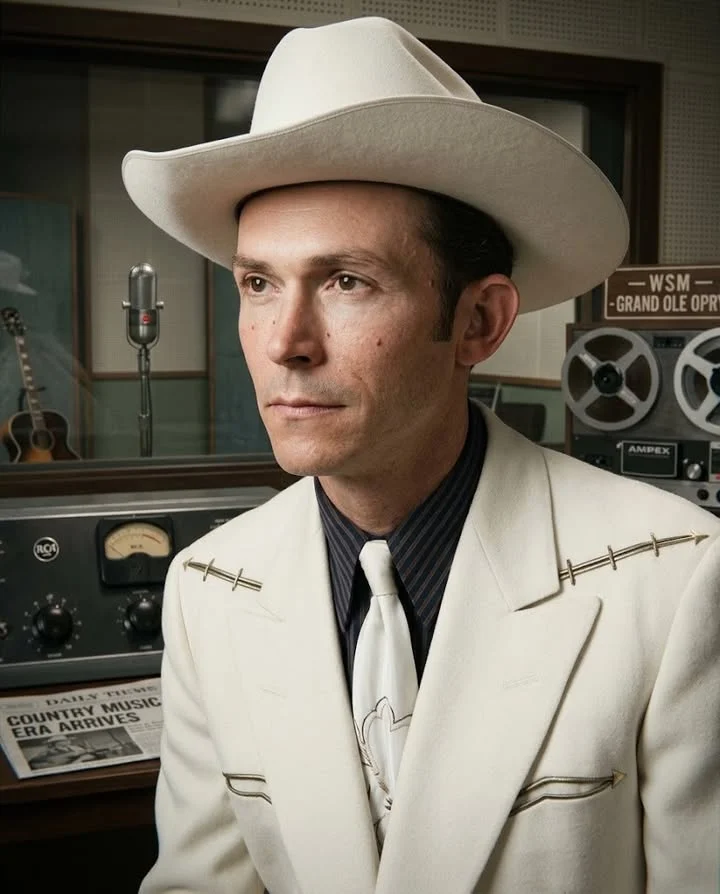
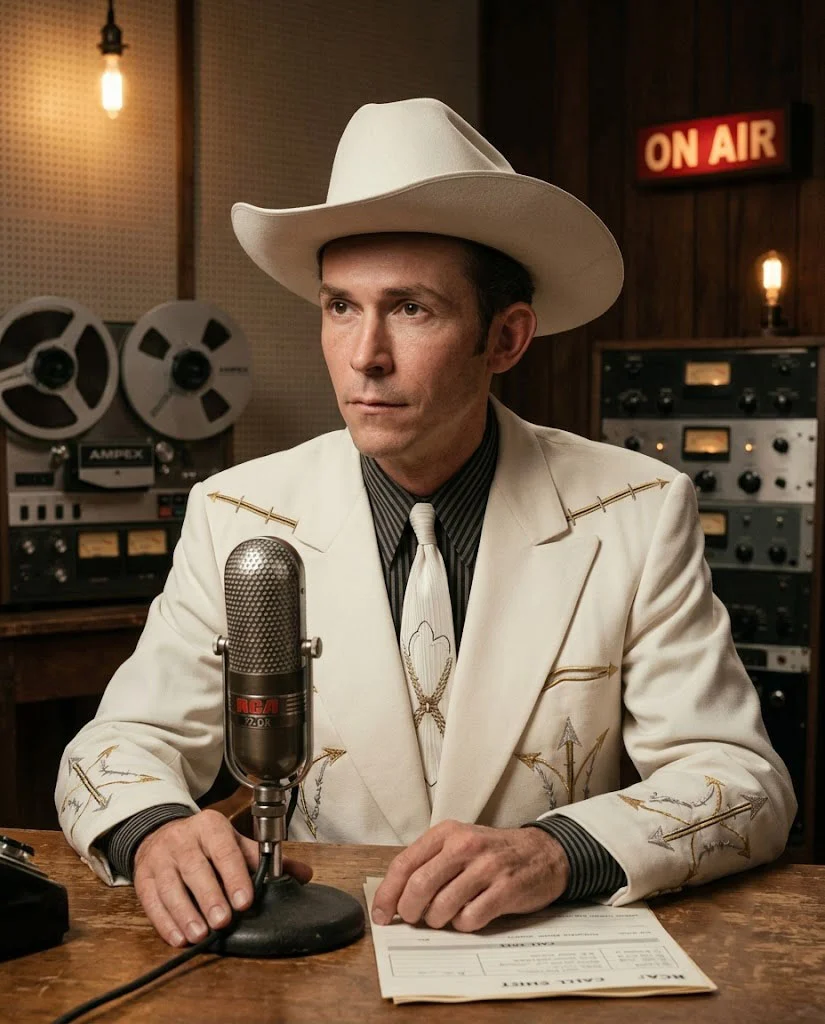
For a few minutes, Hank Williams made the whole country feel invited to a Louisiana Saturday night. But behind the fiddle and laughter, a man was singing from the edge of a vanishing world.
In 1952, Hank Williams did not release a sad song. He released a celebration. ‘Jambalaya’ arrived with bayou smoke in its lungs, river mud on its boots, and the sound of people making room at the table. It smelled like crawfish pots and Saturday night laughter. It kicked the door open.
There was a pirogue gliding through Louisiana water. There was “me oh my oh” and a Cajun dance floor glowing somewhere deep in the bayou. For just over two minutes, Hank gave America something rare from him: pure joy without the usual ache.
But that is the strange ache hidden inside the joy. Hank was not a carefree man by then. He was only 28, but pain had already made him older than the calendar.
The bad back, the endless road, the loneliness, the bottles, the applause that could never follow him into the dark — all of it waited just beyond the song’s bright grin. Still, ‘Jambalaya’ did not walk in sorrowful. It moved toward supper, music, and a woman called ma chère amie.
Hank had already made loneliness sound sacred with ‘I’m So Lonesome I Could Cry.’ He had turned wounded pride into something unforgettable with ‘Cold, Cold Heart.’ America knew he could break a heart with one bend of a note. Then he gave them a party.
But joy can confess too. Sometimes a bright song tells the truth by showing what a man is trying to reach before he loses the strength to reach it. In ‘Jambalaya,’ Hank was not only singing about a party. He was singing about warmth, belonging, and a small world held together by food, rhythm, and names spoken with affection.
That world felt close enough to touch. A dance floor. A pot on the fire. A boat on the water. A night that wanted to last.
Hank was running out of time while singing like time was still wide open.
A few months later, on New Year’s Day 1953, Hank Williams died in the back seat of a Cadillac. He was only 29. Still traveling. Still becoming a legend even as the man inside the legend was disappearing.
After that, ‘Jambalaya’ changed without changing at all. The chorus stayed bright. The rhythm still jumped. The bayou night still glowed in the mind like a lantern hung above the water. But now, when Hank sings it, there is something fragile beneath the celebration. It feels like a postcard mailed from the last safe place before the road turned cold.
Maybe that is why the song has never faded. It lets people remember Hank not only as the wounded prophet of country music, but as a young man who could still imagine laughter, supper, and a girl waiting at the end of the night.
Sometimes the brightest songs are not escapes from sorrow, but small fires lit against it before the dark comes in.
Every time that chorus rises, the old bayou lights come back on. And for one more night, Hank is still headed to see his ma chère amie-o.