
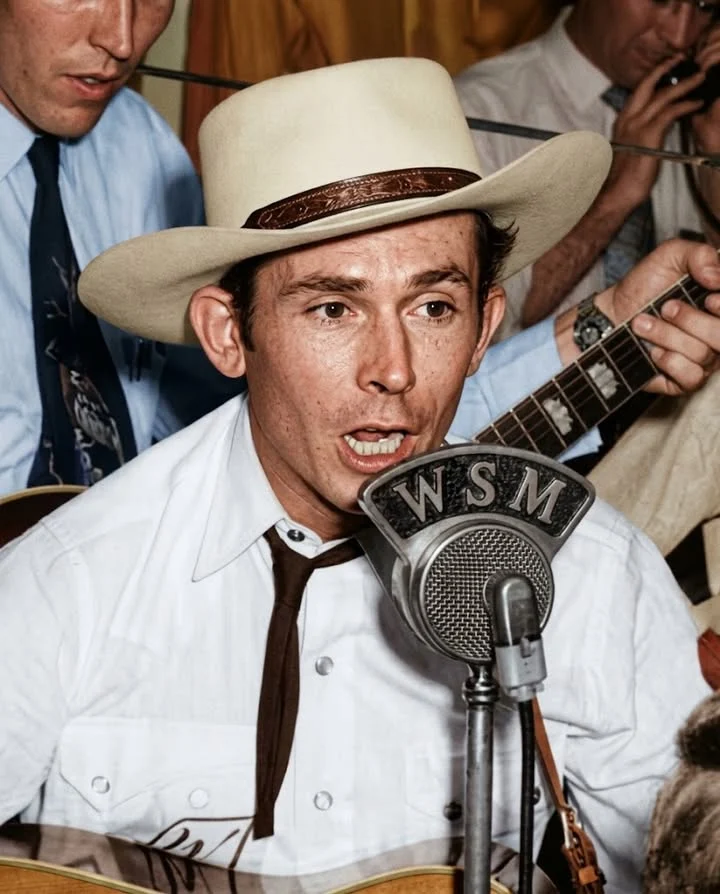
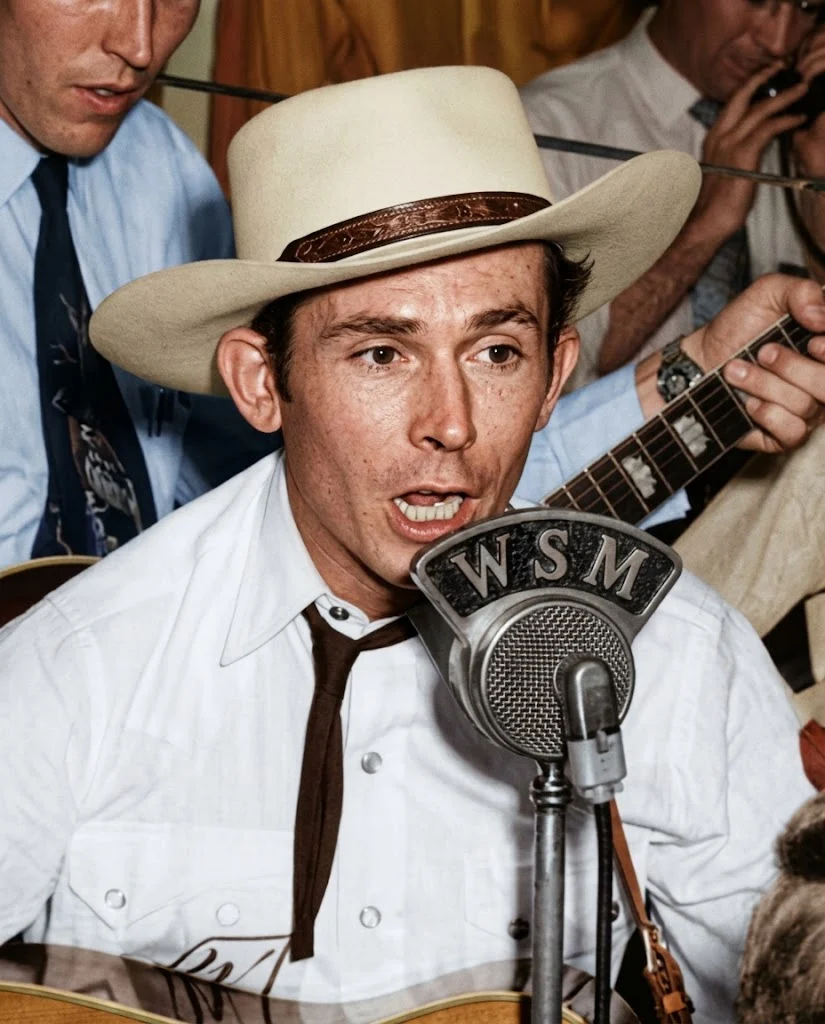
On June 11, 1949, the Ryman Auditorium nearly burst from the sound of one thin young man demanding a second chance.
Hank Williams stepped onto the Grand Ole Opry stage carrying the sting of a 1946 rejection.
Opry leaders had judged him too rough and too unpredictable for the Mother Church of Country Music.
He spent the years between those moments building a roaring audience on the Louisiana Hayride in Shreveport.
By the time he returned to Nashville, he was not asking for permission.
Backstage, veterans and executives watched a nervous twenty-five-year-old in a bright cowboy suit.
He looked frail, yet his quiet intensity filled the wings.
When he reached the WSM microphone, he chose a daring opening.
Instead of a traditional fiddle tune, he launched into Lovesick Blues, a Tin Pan Alley show tune written by Cliff Friend and Irving Mills in 1922.
That choice placed a pop standard inside a strict country sanctuary, and Williams rewrote its emotional temperature.
His yodel cut through the auditorium like a warning and a confession.
The crowd did not politely applaud.
They stomped against the old oak pews until the noise threatened the carefully timed national broadcast.
Six encores pulled him back to the microphone.
Each return turned disbelief into belonging.
That night, honky-tonk stopped sounding like a barroom secret and began beating inside the mainstream heart of American country music.
His smile broke through the tension because the stage finally answered rejection with vindication.
Yet the applause was only a brief shelter from a private storm.
Born with spina bifida occulta, Williams lived with chronic back pain that never left him.
That pain helped feed a lifelong cycle of alcohol and medication, and the cycle often threatened his career, relationships, and health.
Onstage, the ache in his voice was not theater.
It was a man singing his own harsh reality into a room that had once told him he was not ready.
His Opry tenure would end too soon.
He died on January 1, 1953, in the back of a Cadillac at twenty-nine years old.
The noise in the Ryman eventually faded, but the voice that caused it kept echoing through country music for generations.