
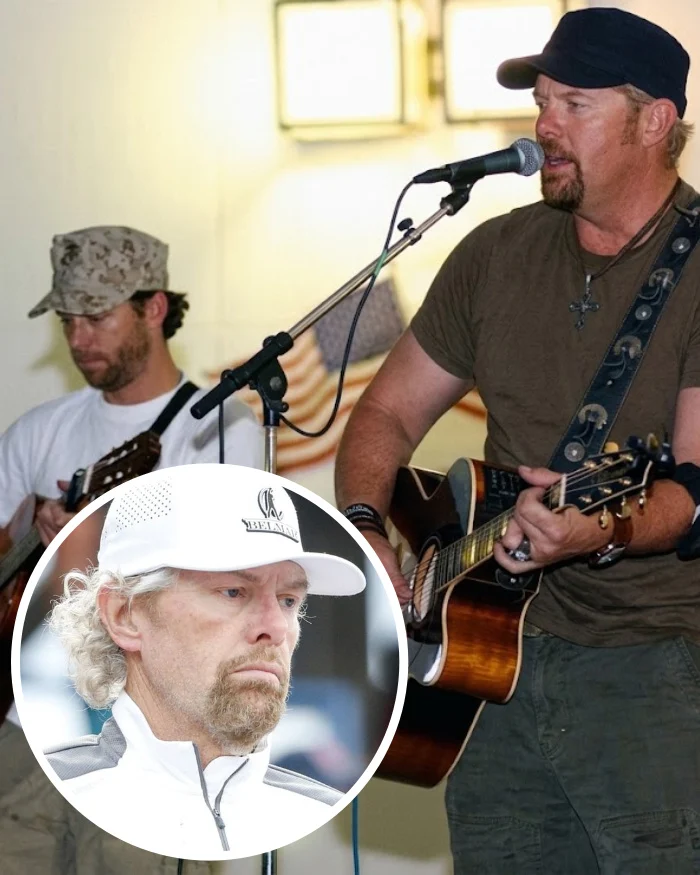
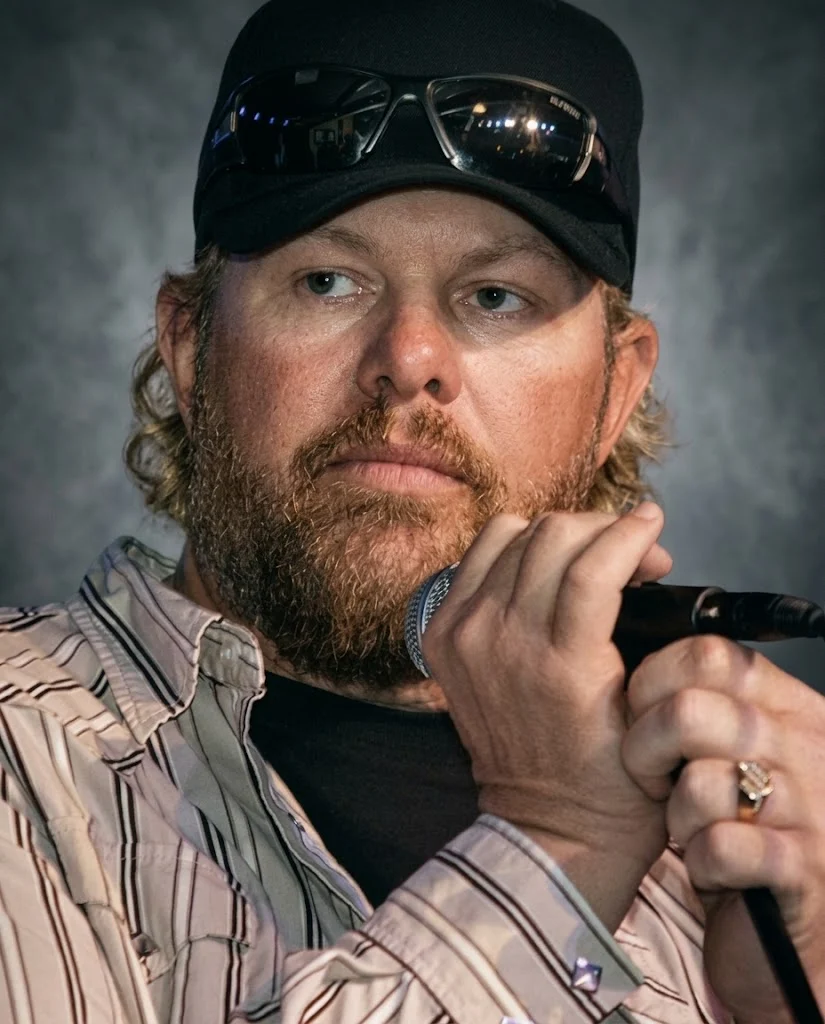
At FOB Sharana, wounded warriors raised crutches in the air while Toby Keith sang on a dirt floor near the Pakistan border. There were no pyrotechnics, no VIP ropes, and no cameras. There was only a worn acoustic guitar, exhausted soldiers, and a quiet promise that they had not been forgotten.
The year was 2009. Keith was deep into his seventh USO tour in Afghanistan. He could have stayed behind fortified walls at Bagram or Kandahar, where thousands of service members swayed with red Solo cups and heard the roaring arena sound he was famous for. Instead, he pushed USO organizers to reroute his schedule toward the most isolated forward operating bases.
Over five grueling days, he completed 15 shows. He stepped off helicopters in body armor. He ate standard MREs. He sat shoulder to shoulder with troops who rarely saw civilian visitors. The man who routinely commanded 50,000 screaming fans delivered the same fire to small groups of dust covered service members.
Reaching them required breaking normal entertainment logistics. USO organizers called it a three pronged attack. Keith split from his main crew, boarded smaller helicopters, and flew through hostile airspace while Apache and Cobra gunships crisscrossed his tail for protection.
He demanded landings at remote camps like FOB Tillman and FOB Boris. Some troops had not seen outside entertainment in more than six months. Some lived without running water. For Keith, those conditions did not make the mission smaller. They made it more necessary.
The emotional weight of the war pressed close at Sharana. A commanding general had recently pinned 26 Purple Hearts on wounded soldiers. In the crowd, wounded warriors sat in the front rows and raised crutches in the air to cheer.
When the music stopped, the soldiers did more than clap. They handed him unit patches and Cuban cigars. They spoke quietly about isolation, fear, duty, and the toll of deployment. Those conversations anchored his deepest tributes to the military.
Keith did not endure sandstorms and front line danger for public relations. His father had been a soldier. He was taught early that freedom required physical, tangible gratitude.
He did not just bring them a song. He brought them a piece of home.
He gave up five star hotels and massive arenas to look exhausted units in the eye. He wanted the most remote troops to know that the country they fought for had not forgotten them. In that dirt floor moment, his true legacy was not sold out stadiums. It was loyalty, presence, and a song carried into the hardest places.