
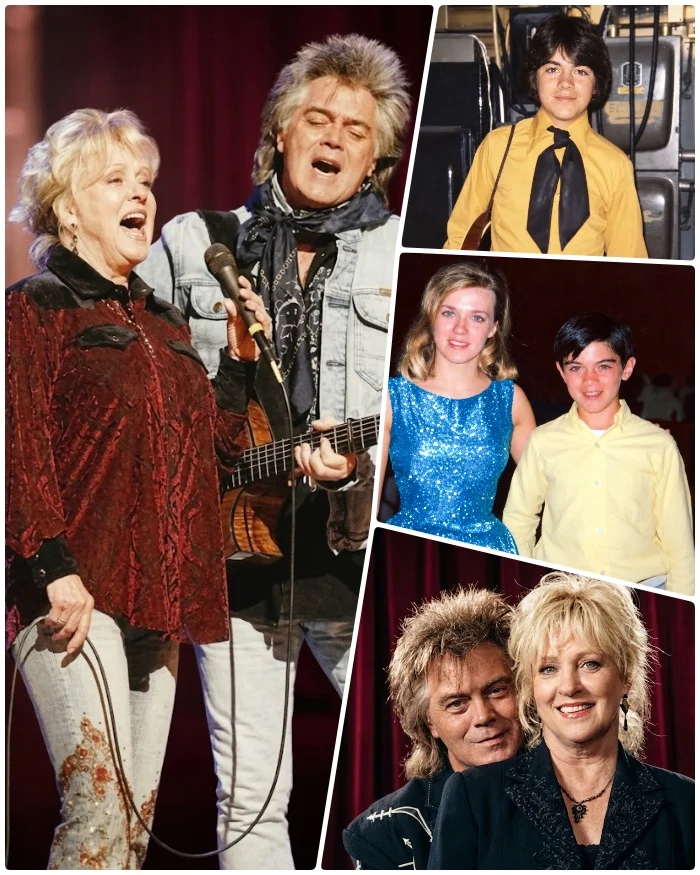
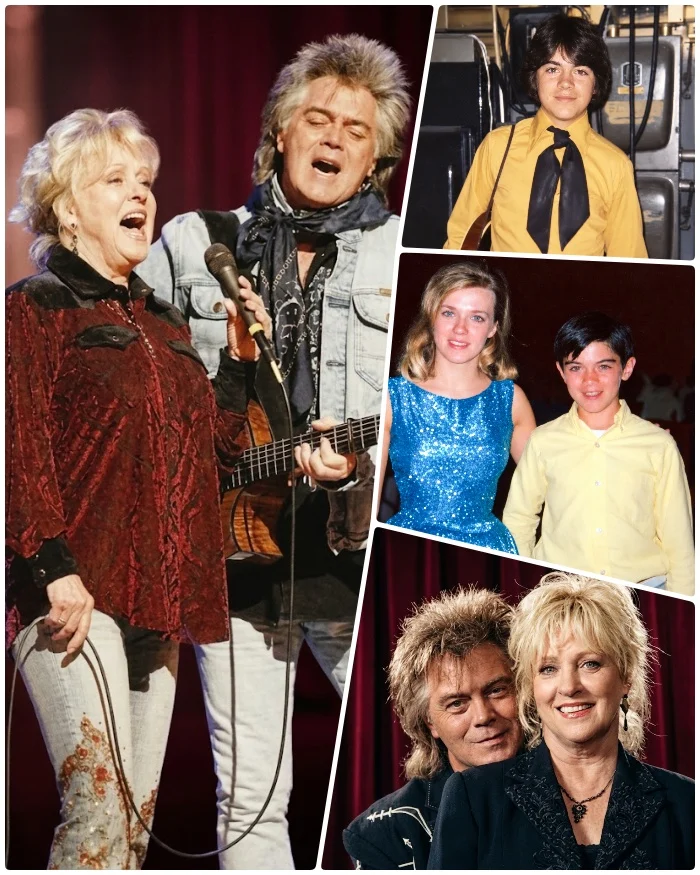
On July 8, 1997, a framed photograph from a Mississippi fairground stood beside Marty Stuart and Connie Smith as they married on the Pine Ridge Indian Reservation in South Dakota, and that single image carried a promise a twelve-year-old boy had made twenty-seven years earlier.
The picture was taken in the summer of 1970 at the Neshoba County Fair in Philadelphia, Mississippi, where Stuart in a plaid shirt posed beside the Grand Ole Opry star while his mother, Hilda Stuart, pressed the shutter on the family camera.
On the drive home that night, the boy spoke with complete certainty about the twenty-nine-year-old singer standing next to him in that snapshot.
I am going to marry the woman in that photograph when I grow up
Hilda protected the original camera negative at home for decades so the moment could never be lost, while her son carried copies in his wallet and in keepsake boxes through years of life on tour buses across America.
Stuart left home at thirteen to play mandolin for bluegrass pioneer Lester Flatt, and he later spent years touring with Johnny Cash and his band while building his own career far from Mississippi.
His early marriage to Cindy Cash ended in 1988, and Smith had lived through her own hard chapters after three ended marriages led her to step back from steady touring and the spotlight to raise her five children in Tennessee and focus on her faith.
Their paths finally crossed again in 1996, when Smith signed with Warner Bros. Records for a comeback and returned to a Nashville studio after nearly twenty years away from mainstream album releases.
Her first sessions did not capture the traditional country sound she wanted, and after running into Stuart at a Grand Ole Opry celebrity softball game, she asked him to help write and produce the album that would become “Connie Smith”.
For their first writing appointment, Stuart arrived with Hall of Fame songwriter Harlan Howard, and the three of them wrote “How Long”, a brisk honky-tonk song that later opened the finished record.
Working with acoustic guitars at Smith’s house and inside Nashville’s Sound Emporium Studios, they found an easy creative rhythm almost at once, although Smith had rarely written her own material before that summer.
Together they co-wrote nine of the ten tracks on the album, including the ballad “Hearts Like Ours” and the closing acoustic piece “A Tale from Tahrarrie”, while engineer Justin Niebank helped shape the sessions in the studio.
During long afternoons spent shaping melodies and arrangements, Stuart asked Smith out, and she hesitated because she was seventeen years older and cautious after three divorces, and she told him she had planned to remain single for the rest of her life.
He never rushed her, and through months of writing and recording, his quiet patience and steady respect for her music and her faith slowly won the trust she had guarded for so long.
They chose to marry away from Nashville on the Pine Ridge Indian Reservation, where Stuart had built close ties with the Oglala Lakota community, and they were wed there on July 8, 1997, in a traditional Lakota ceremony.
Hilda placed that treasured 1970 photograph in a frame beside the newlyweds nearly three decades after she first took it, and after the ceremony, the couple drove into the South Dakota badlands and danced on a bluff while the car radio played Buck Owens singing “Your Tender Loving Care”.
Fourteen months later, in October 1998, Warner Bros. released “Connie Smith” to widespread critical praise, and although country radio declined to play its traditional tracks, the record began a musical partnership that carried into their daily life at home in Tennessee.
From 2008 to 2014, Smith was a regular guest alongside Stuart and his band, the Fabulous Superlatives, on the RFD-TV series “The Marty Stuart Show”, and in 2010, the couple earned a Grammy nomination together for their duet “Run to You”.
Stuart returned as producer for Smith’s album “Long Line of Heartaches” in 2011, and the husband and wife co-wrote five more songs for that project.
Ten years later, in August 2021, they released “The Cry of the Heart”, and the album gave the eighty-year-old Country Music Hall of Fame member her first Billboard-charting album since 1976.
More than half a century after that fairground meeting, the framed 1970 snapshot still sits in the Tennessee home Stuart and Smith have shared for nearly thirty years, as a quiet reminder that a boyhood promise carried with patience and respect can last a lifetime.