
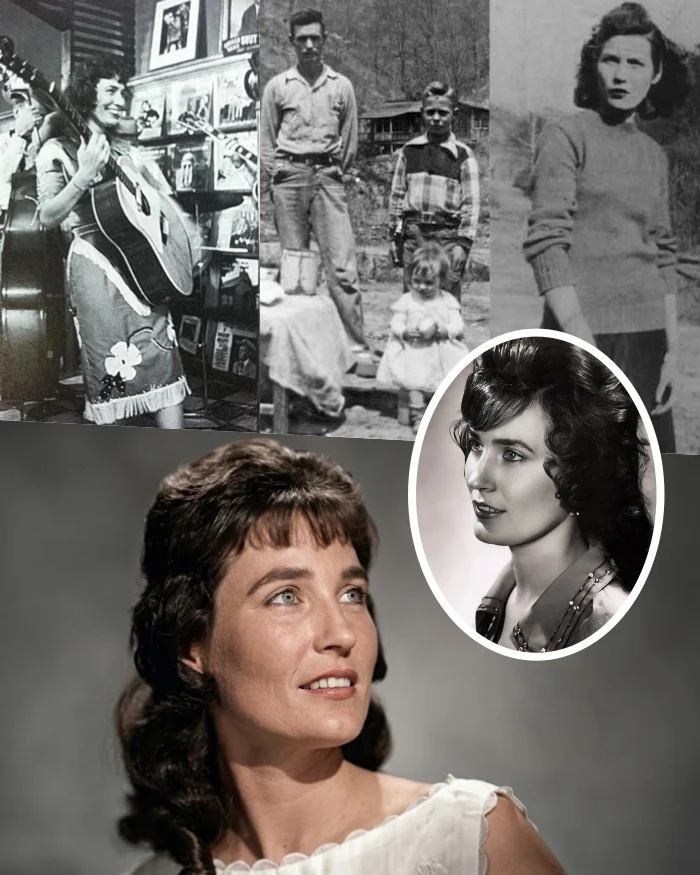

Before the custom boots and rhinestone gowns, there was a little girl racing across the rocks of Butcher Hollow with feet so tough she could ignore the sting. That girl was Loretta Lynn, and the harsh Kentucky ground she walked on became the first stage of her remarkable life.
She grew up in Johnson County, Kentucky, in a rough cabin on a hillside in Butcher Hollow. Her father, Ted Webb, worked the Van Lear coal mines through the 1930s and 1940s to feed his wife Clara and their eight children. The family home had no electricity, no running water, and little protection from the cold. In that house, shoes were not everyday clothing. They were winter survival gear.
For nine months of each year, Loretta and her siblings went barefoot through the holler. When snow and ice arrived, thick leather boots came down from the attic to guard against frostbite. Once spring melted the ice, the boots were cleaned and stored away for another year.
The first weeks of spring always hurt. Winter-soft feet met jagged gravel, sharp stones, and rough dirt paths. But Loretta’s body adapted to the land. Calluses grew so thick that she could run over the sharpest rocks without feeling them.
Those calluses were more than a mark of poverty. They were the first signs of a resilience that would carry her from a coal camp to the Grand Ole Opry.
That toughness stayed with her when she left Kentucky as a young wife and mother and moved to Washington state. She learned to play a seventeen-dollar Harmony guitar and began writing songs shaped by the rural struggle she knew firsthand.
By the 1960s, her plainspoken stories reached listeners across America. She moved from rural obscurity to the Grand Ole Opry, earned major recording contracts, and stepped onto stages in footwear she could never have imagined as a child. Yet her rising fame carried a painful timing. In 1959, as her career was taking its first steps, her father died of black lung disease. Clara was left a widow in the coal camps.
When Lynn’s records climbed the charts and her first substantial royalty checks arrived, she made a choice that revealed her heart. She did not spend that early money on lavish gifts for herself. She used it to change her mother’s life. Lynn bought Clara a modern home with indoor plumbing, central heating, and solid walls. She made sure her mother would never again face a bitter Kentucky winter in a drafty cabin or walk on rough wooden floors.
Loretta Lynn spent decades commanding the biggest stages in the world and collecting the country music industry’s highest honors. Through it all, she sang about the hardships of a coal miner’s family and wore her rural roots like a badge of honor.
The Queen of Country Music left a towering catalog of songs that changed American music. But the foundation of that legacy was built by a barefoot girl with callused feet, a girl who learned to survive the sharpest stones so she could someday pave a smoother road for her family.