
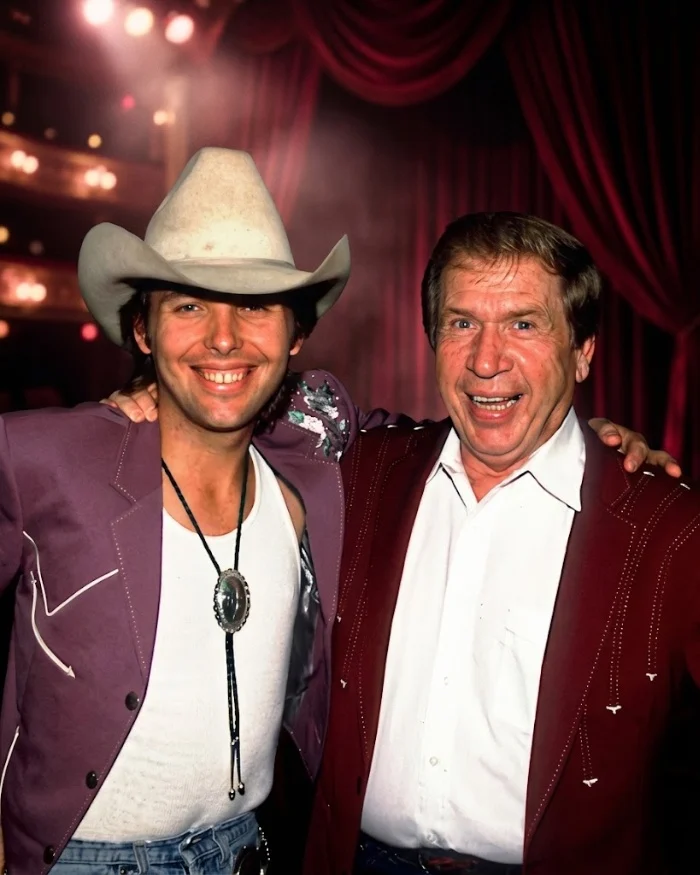
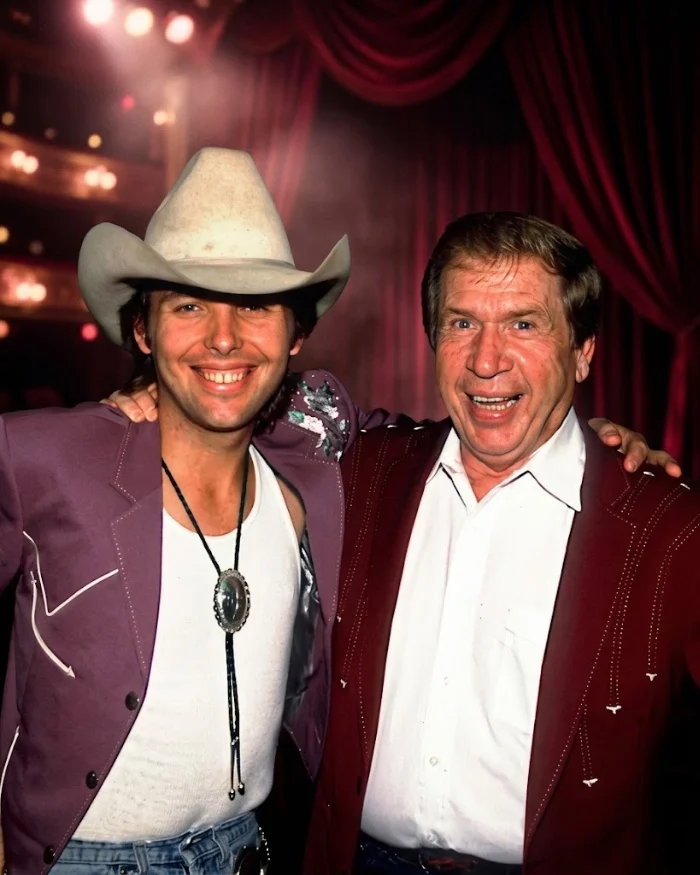
Long before he commanded a multi-million-dollar empire of recording studios and radio stations, a teenage Alvis Edgar Buck Owens Jr. held a brand-new electric steel guitar in the dusty desert of Mesa, Arizona, with no way to make it sing. Born on a struggling Texas sharecropper farm in 1929 and forced west by the devastating Dust Bowl, his family had been left completely stranded when their old Ford broke down.
Seeing his son holding a silent instrument, Alvis Sr., a worn-out manual laborer with zero formal electronics background, made an extraordinary choice. After working exhausting shifts under the blistering Arizona sun, the father took apart their only prized possession and link to the outside world—the household wooden radio.
For a struggling migrant household in the 1940s, that wooden radio was their lifeline, yet my father rewired the vacuum tubes and copper leads by hand so I could plug in my guitar.
The makeshift amplifier buzzed and distorted whenever the volume rose, but it gave the fifteen-year-old musician just enough power to leave school, pick cotton by day, and play noisy Mesa honky-tonks by night. Wrestling to cut through loud tavern crowds on a raw, low-wattage speaker permanently shaped his sharp, aggressive, and trebly playing style.
When he finally arrived in Bakersfield, California, in 1951, that hard-edged sound became the cornerstone of the legendary Bakersfield Sound. Teaming up with Don Rich and the Buckaroos, Owens defied Nashville norms by pushing the high-end treble and sharp snare cracks straight to the front of the mix, dominating the Billboard charts with twenty-one number-one hits.
Decades later, after owning state-of-the-art multi-track studios and massive broadcasting properties, Buck Owens never forgot where his iconic sound truly began. Amidst all the modern equipment and wealth, he consistently maintained that the greatest piece of audio gear he ever owned was the gutted family radio his father lovingly rewired on a table in the desert.