
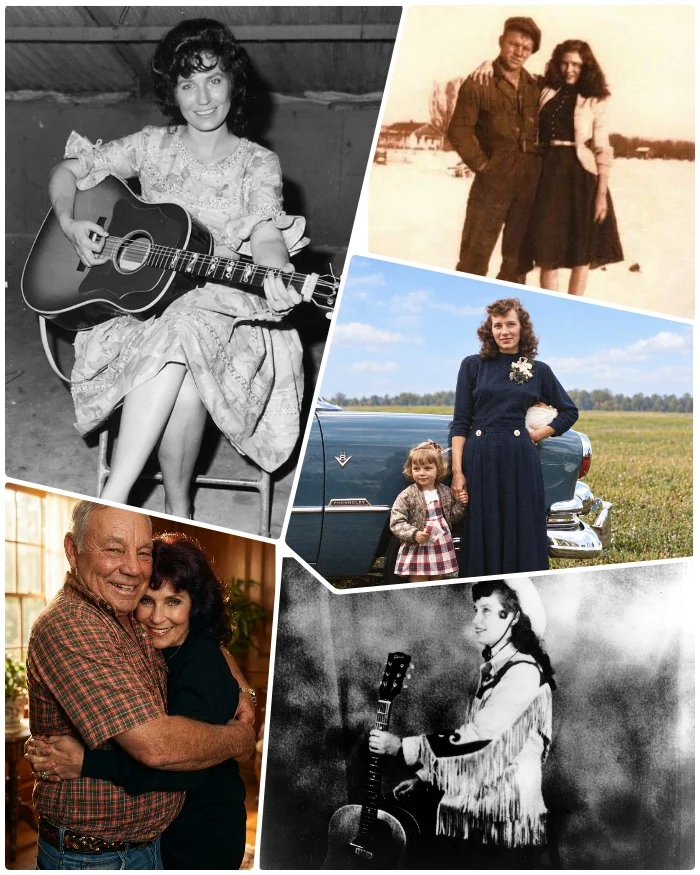
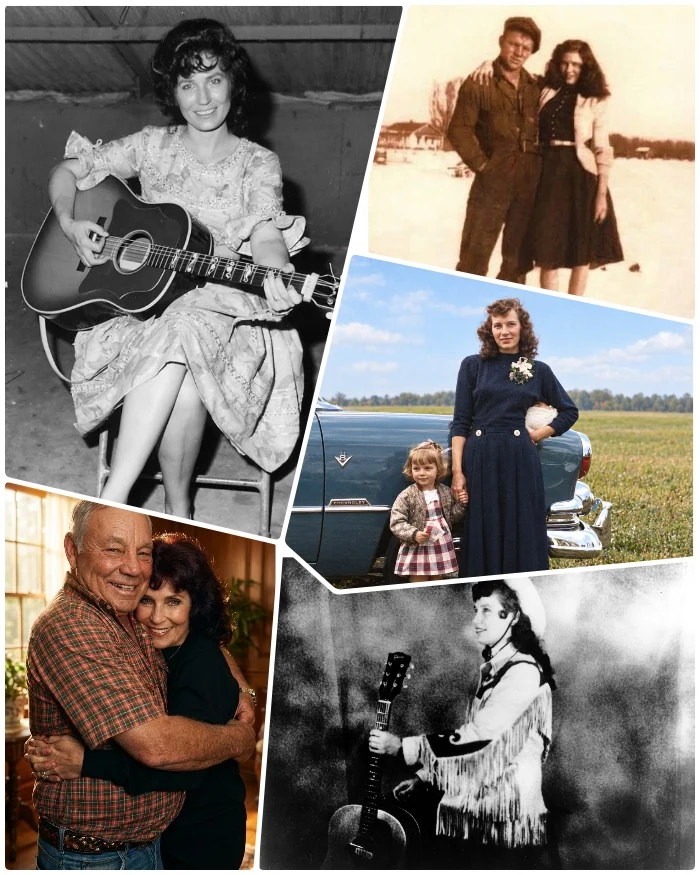
Long before she conquered the grand stages of Nashville, a fifteen-year-old bride named Loretta Lynn boarded a train in 1948, leaving behind the only life she knew in Butcher Hollow, Kentucky. Traveling two thousand five hundred miles west to a rugged logging settlement in Custer, Washington, she faced an unforgiving Pacific Northwest winter without even a telephone to reach her mother.
Her early married life brought unimaginable heartbreak when her husband, Doolittle, abandoned her just months before she was due to give birth. Alone and seven months pregnant, she welcomed her first daughter, Betty Sue, in November 1948.
That isolated struggle birthed an unbreakable bond, turning mother and daughter into lifelong confidantes until Betty Sue’s passing in 2013.
To survive, Loretta worked tirelessly, picking strawberries, scrubbing floors, and cooking for logging crews. When Doolittle eventually returned, the family continued to struggle through financial hardship until a pivotal moment in 1953. He bought her a seventeen-dollar Harmony guitar at a local pawnshop, placing an instrument in her hands that would alter her destiny forever.
Balancing intense domestic chores and four young children, she sat at her kitchen table teaching herself chords and writing original melodies.
Terrified of crowds and staring straight down at her shoes, she eventually took her first five-dollar-a-night singing job in a smoky border-town tavern.
Inspired by the real heartbreak she witnessed around her, she penned her debut single, “I’m a Honky Tonk Girl,” in just twenty minutes. That raw determination caught the attention of independent record executives, leading to her first recording contract in 1960 and a triumphant rise to country music royalty.