
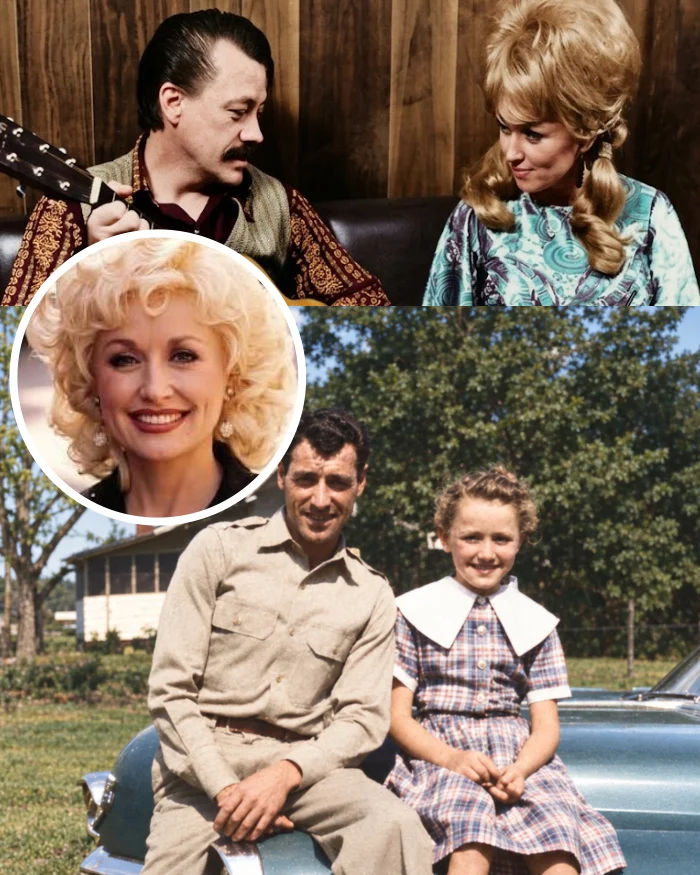
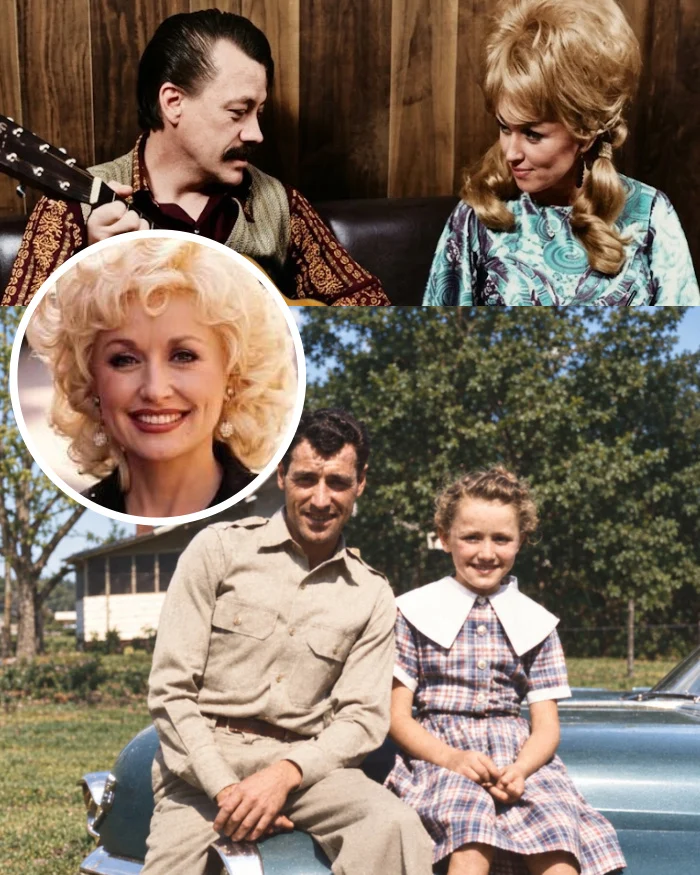
The most treasured relic in Dolly Parton’s life is not a trophy or a stage costume. It is a small-bodied Martin acoustic guitar, a humble gift from her maternal uncle Bill Owens that replaced a homemade instrument and helped carry a mountain girl toward Nashville.
Long before arenas and Hall of Fame honors, Dolly grew up in a rural cabin in Sevier County, Tennessee. She shaped first melodies on makeshift instruments built from old lard cans, scrap wood, and discarded fishing wire. Her voice stood out, but the family lacked the means to buy a real instrument for serious practice.
Owens saw the determination in his young niece. He worked long hours at physically demanding jobs and set aside modest wages to buy eight-year-old Dolly a small-bodied Martin acoustic guitar. The gift gave her genuine strings and true frets and turned front-porch songs into disciplined practice.
He did more than place an instrument in her hands. When Dolly turned ten, Owens drove her to Knoxville for an audition with local grocer and radio entrepreneur Cas Walker. He stood close by inside the WIVK studio as she stepped before a professional broadcast microphone for the first time on The Cas Walker Farm and Home Hour, opening a weekly outlet that introduced her voice across East Tennessee.
By the time Dolly graduated from Sevier County High School in May 1964, Owens was ready for the next step. The morning after commencement, he met her at the local bus station with a cardboard suitcase filled with notebooks of handwritten lyrics and a sack of clothes. Together they boarded a bus bound for Nashville.
Along Music Row, Owens became her guide, guardian, and chief advocate. They walked hot summer pavements between publishing offices and record labels and faced repeated rejections from executives who doubted a young girl with an unconventional voice. Owens helped shoulder the disappointment and kept her spirits steady while insisting their songs deserved professional attention.
Their shared perseverance soon found a home in the writing room. Pitching material to established publishing houses, Dolly and Owens landed contracts at Tree Publishing and later Combine Music. They wrote dozens of early demos together, including Put It Off Until Tomorrow, which became a top-ten country breakthrough for Bill Phillips in 1966 and earned BMI Song of the Year honors. The success firmly established their songwriting credentials on Music Row.
He believed in her before the world knew her name.
Archival materials and early publishing work tapes from that era show how deeply their creative partnership was forged. Raw vocal demos and unreleased drafts capture Owens’s rhythm guitar and harmonies anchoring his niece’s emerging style. Those early studio reels document a relentless creative routine and the foundational songwriting habits that defined her before Porter Wagoner offered her a permanent slot on national television in 1967.
Even after Dolly’s solo career ascended to superstardom, Owens remained an active and quietly generous presence across her ventures. He later helped develop Dollywood and its conservation initiatives until his passing in April 2021 at the age of 85.
Decades of honors, world tours, and Hall of Fame inductions have followed, but that small-bodied Martin acoustic guitar remains among the most cherished possessions of her life. The world eventually rewarded Dolly Parton’s talent, but an uncle’s humble belief carried her from a mountain cabin to the doorsteps of country music history.