
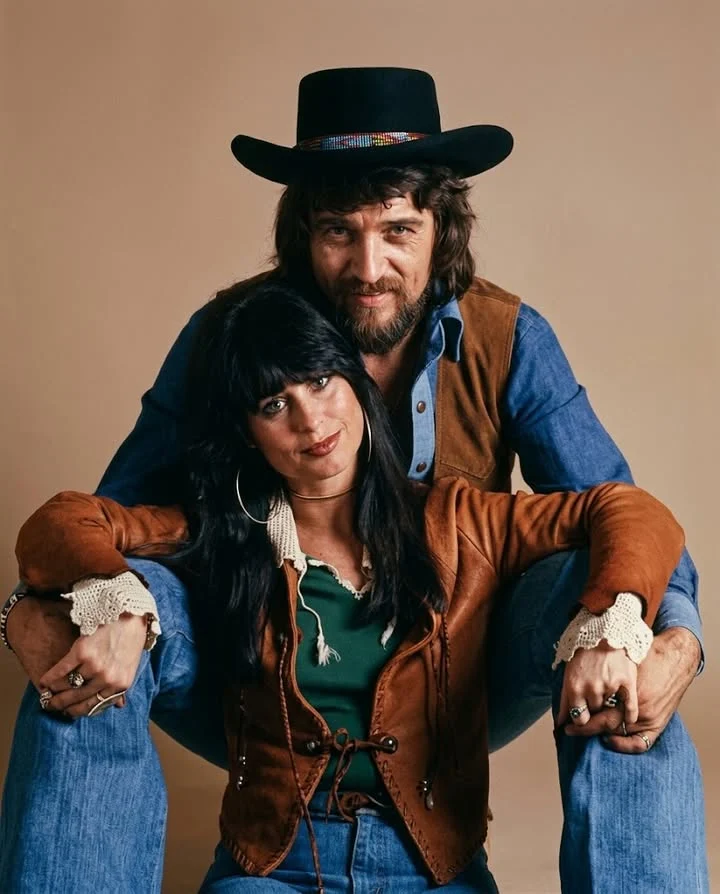
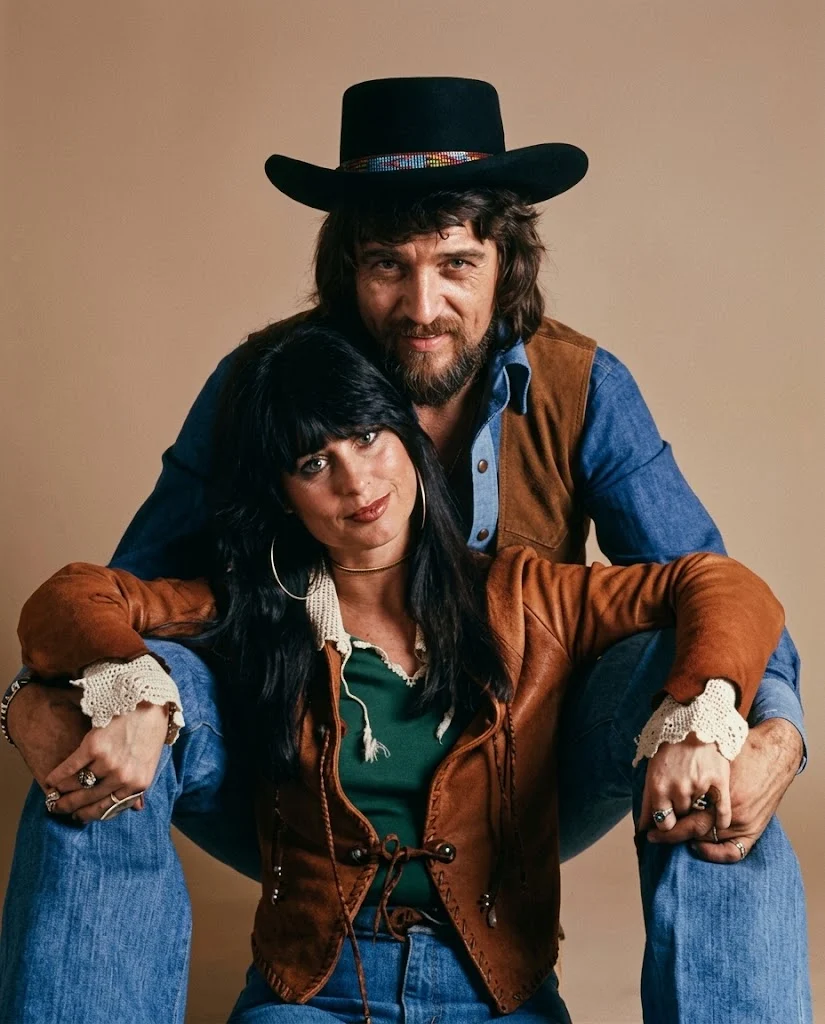
Deep in the Arizona desert, far from Nashville’s bright lights and the roar of sold-out arenas, Waylon Jennings took the hardest step of his life. In the early 1980s, the outlaw legend locked himself away in an isolated house with no medical assistance and no enablers. He went cold turkey to break a crushing amphetamine addiction that had reduced his frame to a mere 137 pounds. For days, the withdrawal ravaged his body. And through every agonizing hour, one person stood by his side: his wife, Jessi Colter.
Colter and Jennings had married in 1969, a time when the pressures of the music industry had not yet fully consumed him. But soon after, the amphetamines and cocaine took hold. While his records climbed the charts and his concerts sold out across America, the man behind the outlaw persona was quietly disappearing. The daily battle to maintain his habit cost thousands of dollars and slowly destroyed his health.
By 1977, the situation had reached a breaking point. The DEA raided his recording studio in Nashville. Although he avoided federal charges, the collapse of his carefully crafted image seemed inevitable. Jessi Colter had every reason to walk away from the storm. Instead, she chose to remain in its center.
She offered no harsh judgment and made no demands for him to fit a conventional mold. She simply provided a quiet and steady presence during the days when his pride and physical strength were being stripped away by dependency.
The real turning point came when Jennings realized he was running out of time. He rented that house in Arizona and faced his addiction head-on. Colter became his only lifeline during those grueling days of withdrawal. The man who had built his legacy on fierce independence now depended entirely on his wife to survive the night.
That brutal experience in the desert fundamentally shifted the music Jennings would make afterward. With his mind cleared and his voice regaining its full depth, the destructive bravado of the 1970s gave way to a grounded and reflective honesty. When Jennings and Colter shared the stage after Arizona, their performances carried a profound gratitude that audiences could feel.
Jennings later reflected on those dark years with a rare vulnerability.
He called her the best thing that ever happened to him.
The country outlaw, the untouchable rebel, ultimately showed that his greatest act of strength was not defiance but trust. He trusted someone enough to let her save his life.