
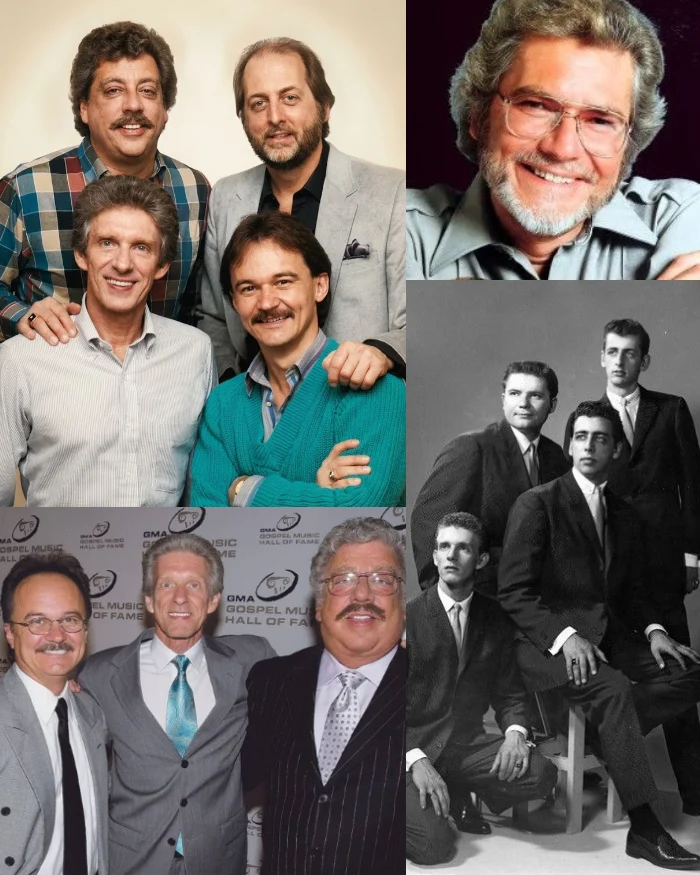

A legendary country quartet almost lost its defining voice in 1982. The Statler Brothers needed a tenor who could step into a space already claimed by millions of hearts.
Lew DeWitt had carried the signature high notes and written the beloved song “Flowers on the Wall”. Years of battling Crohn’s disease had made the punishing touring schedule impossible to survive. He had to leave the stage he helped build.
The group needed a replacement to keep its intricate four part country harmonies alive. The answer did not come from a Nashville record executive. It did not come from a line of famous auditions.
It began at a Virginia ski resort around Thanksgiving of 1981. Jimmy Fortune worked in the service department of a car dealership by day. On his only night off he sat in with a cover band and sang a few songs. He did not know who was listening.
Lew DeWitt was in the audience that night. He heard a young voice that soared. He remembered the moment. When his health forced him away and the group needed someone to fill his shoes, Fortune was the first and only name he recommended.
After a Nashville audition Fortune played his first show with the Statler Brothers in Savannah, Georgia, in early 1982. By August of that year DeWitt could not return to the road. Fortune became the permanent replacement.
Fortune did not just need to hit the right notes. He had to stand in the exact place where audiences expected to see someone else. Under bright stage lights he learned to breathe, blend, and hold the demanding vocal arrangements alongside Don Reid, Harold Reid, and Phil Balsley.
He matched their phrasing as if he had belonged to the group for years. He was carrying a beloved legacy while quietly preparing to build his own.
Fortune helped open a second golden era for the quartet. He stepped into his own as a songwriter and wrote number one hits including “Elizabeth,” “My Only Love,” and “Too Much on My Heart.” With him in the lineup the group continued to collect CMA Awards for Vocal Group of the Year.
He spent 21 years performing before massive audiences. Yet he never tried to imitate DeWitt when singing the old classics. He delivered them with quiet reverence and treated each performance as an act of respect.
From across the stage Don, Harold, and Phil often looked toward Fortune during a song. They found comfort in seeing that the musical foundation DeWitt built was still moving forward.
He filled the silence without erasing the man who came before him.
A chance performance on a rare night off became one of country music’s most remarkable behind the scenes transitions. The Statler Brothers did not simply find a new tenor. They found a man who understood how to carry the weight of the song.