
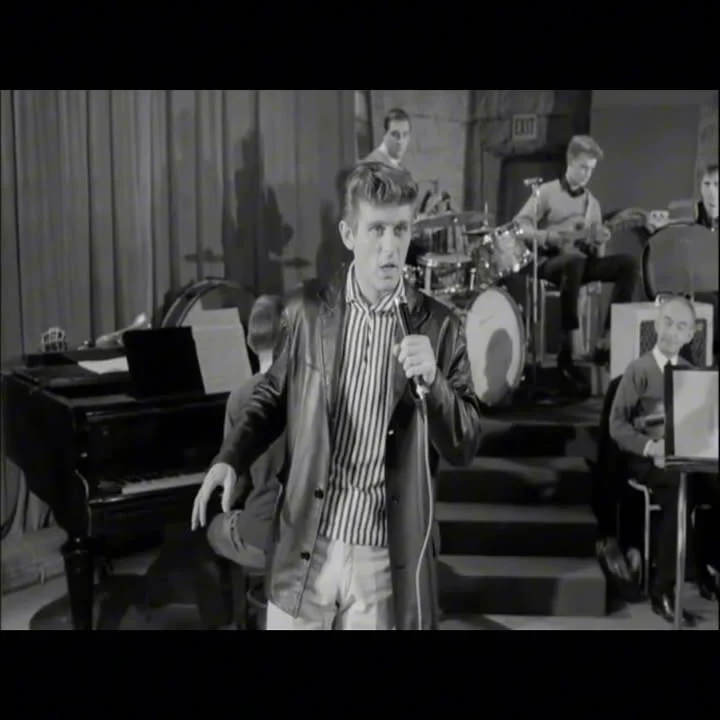
Inside a cramped flat above a shop at 304 Holloway Road in North London, a sonic revolution was taking shape. The year was 1961 and the man at the controls was Joe Meek, a producer who treated the studio like an instrument rather than a recording device. The result was a three minute masterpiece that still sends shivers down the spine of anyone who hears it. That track is Wild Wind by John Leyton, a song that arrived at a pivotal moment in British popular culture and changed how people thought about what a pop record could be.
John Leyton was an actor who had already tasted success with his chart topping single Johnny Remember Me. That song established a blueprint for doomed ghostly romance set to a frantic beat, all wrapped in the spatially exaggerated sound that had become Meek trademark. Wild Wind was the crucial follow up, released later in 1961 on the Top Rank label before being absorbed by EMI HMV. The song was written by Geoff Goddard, a regular collaborator of Meek, and it was meant to solidify Leyton career as the era premier purveyor of melodramatic pop. It succeeded spectacularly, peaking at number two on the UK charts, unable to dislodge Helen Shapiro juggernaut Walkin Back to Happiness. Leyton chart run was brief but brilliant, powered almost entirely by the visionary studio work happening in that tiny London flat.
The song is a perfectly preserved cultural artifact, a three minute vortex of adolescent terror and experimental recording.
Joe Meek was an engineer who saw the studio not as a mere capture device but as an instrument in its own right. He treated sound as a physical malleable substance, pioneering the use of effects that would become standard decades later. He close miked the instruments, overdubbed relentlessly, and applied vast unsettling amounts of reverb and compression. The result was a sound that felt simultaneously claustrophobic and infinite, a sonic space where the listener could get lost. Wild Wind bursts in with a percussive attack, a thunderous almost martial drum pattern that sounds aggressively close miked, giving it a dry immediate impact often absent from pop records of the era.
Beneath this, the pulse of the rhythm section is an anxious relentless surge. The guitar work, provided by session stalwarts including future members of The Tornados, is a masterclass in mood setting. It avoids the clean surf rock twang of American contemporaries and instead provides a skittish slightly distorted energy, a nervous metallic sheen that glints like moonlight on wet pavement. The acoustic textures are swallowed whole by the overwhelming sense of space. The arrangement, often credited to Charles Blackwell, lies in its controlled chaos. A spectral choral backing made up of ghostly high pitched female voices floats in the periphery, chanting wordless oohs and aahs. They are not backing singers. They are the actual ghosts in the machine, the sonic representation of the tormented soul the narrator is chasing.
The piano, when it finally surfaces for short dramatic flourishes, is often treated with a subtle but disorienting variable speed effect, wobbling slightly out of tune. This small detail prevents the listener from settling into any predictable groove. The whole arrangement is a masterclass in dynamic tension, where simplicity and orchestral sweep are constantly contrasted. Then there is Leyton vocal approach. He was not a technically gifted singer, and Meek knew it, leveraging this weakness into a strength. Leyton delivers the lyric, a narrative about a lover tormented by the titular wind which carries the voice of his lost girl, with a breathy almost terrified monotone. The voice is soaked in reverb, placed in an impossible echoing distance that sells the lyric macabre setting. It sounds like he is singing from the bottom of an abandoned well, or perhaps from the other side of an astral curtain.
Wild Wind is often grouped with Leyton other work on a number of compilations and retrospective releases, though it was not initially included on his only full length period album The Two Sides of John Leyton, released towards the end of 1961. This track, however, arguably captures the Meek side of Leyton more perfectly than any other. The production here is a crucial link between the raw energy of rock and roll and the complex manipulative possibilities of the studio, foreshadowing everything from Phil Spector Wall of Sound to the darker edges of psychedelic rock. It stands as an early example of how a producer signature, their sound, could become as defining as the artist performance or the songwriter composition.
For those who invest in quality premium audio equipment, the layers and textures of this three minute masterpiece reveal new unsettling details with every listen. It is a recording that demands respect for the process. Imagine listening to this track today while driving through an empty nighttime highway. The clattering percussion becomes the pulse of the road, and the swirling treated sounds in the high frequencies, the wind sound effects Meek generated, feel like the air rushing past the windows. The melodrama of the lyric, which might seem quaint in daylight, becomes genuinely unsettling in the dark. This is a song about obsession loss and the refusal to let the dead remain silent. This is music that, unlike the polished pop of the coming Beatle era, embraces the grit and the uncanny, forcing the listener into a world where grief is a tangible audible force.
Ultimately Wild Wind is not merely a historical footnote marking Leyton acting detour into pop stardom. It is a profound sonic experience, a bridge between the teen tragedy songs of the 1950s and the experimental audio artistry that would define the cutting edge of the mid 60s. The song is a perfectly preserved cultural artifact, a three minute vortex of adolescent terror and experimental recording. Its enduring quality reminds us that innovation in music production can happen anywhere, even above a shop in North London, if the person at the controls is bold enough to break the rules.
Listening Recommendations (Adjacent Mood Era Arrangement)
Screaming Lord Sutch – Jack the Ripper (1963) Another theatrical early 60s track produced by Joe Meek, sharing the macabre atmosphere and dramatic sound effects.
The Tornados – Telstar (1962) Produced by Meek and featuring Leyton backing band, this instrumental showcases the same innovative space age echo and manipulation of sound.
Santo and Johnny – Sleep Walk (1959) For the use of cavernous reverb and tremolo heavy guitar to create a deeply moody almost mournful cinematic soundscape.
Ray Peterson – Tell Laura I Love Her (1960) A quintessential early teen tragedy song, sharing the lyrical focus on doomed romance and high melodrama that fed into Wild Wind.
Billy Fury – Wondrous Place (1960) A track that uses deep enveloping reverb and restrained vocal phrasing to achieve a similar sense of haunted romantic longing.
The Shangri Las – Leader of the Pack (1964) Later American girl group drama that carries a similar level of theatricality and narrative storytelling, complete with integrated sound effects.