
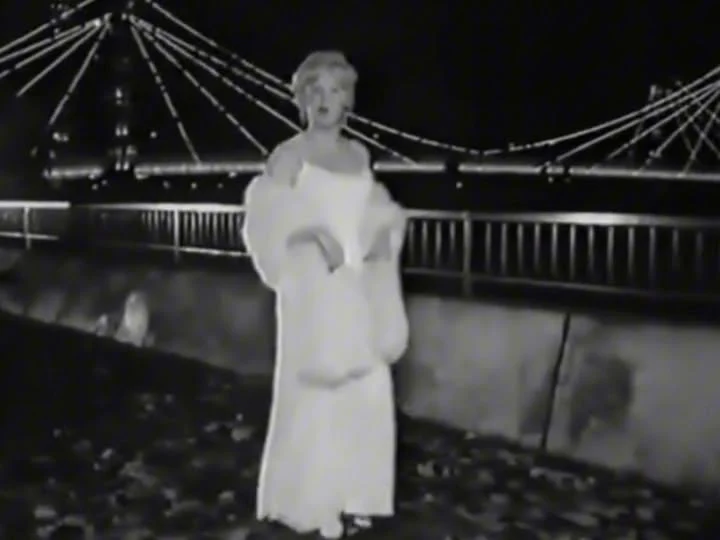
The song hits you before you can breathe. A voice rings out from the first instant, declaring a secret already set free. “Now I shout it from the highest hill” arrives not as a conclusion but as an opening gambit. The listener has no time to prepare. The catharsis is already in motion. This audacious choice defined Kathy Kirby’s most famous recording and announced a new kind of pop confidence to the world.
The year was 1963. The United Kingdom stood at a cultural crossroads. The Big Band era had not yet disappeared but its shadows were growing faint. Youth culture blazed with neon intensity. The charts became a battlefield where polished post-war professionals fought against the raw surge of Merseybeat. Into this moment stepped Kathy Kirby. She was a striking blonde with a voice trained for opera and an image carefully built to evoke old Hollywood glamour. Her manager controlled every detail of her presentation. Yet the music needed to reach teenagers. Her breakthrough arrived in October 1963 with a single that reinvented an American classic. The song was “Secret Love.”
The original version belonged to Doris Day. She had sung it as a dreamy waltz in the 1953 film Calamity Jane. That recording won an Academy Award. Day performed it as a private confession unfolding slowly across a gentle cinematic landscape. Kirby and her producers approached this beloved standard with fearless determination. Producer Peter Sullivan and musical director Charles Blackwell dismantled the delicate framework completely. They rebuilt it as a three minute pop rocket moving at breakneck speed. The gamble was enormous. Kirby herself reportedly felt uneasy about the choice. She believed the Day version could not be topped. But the production team understood their goal was not superiority. It was transformation.
The sound of this record captures early 1960s British pop at its most inventive. The arrangement blends the polish of old school big bands with the driving energy of the emerging beat groups. The rhythm section plays with taut urgency. The drums snap with close mic clarity. The bass thrums with insistent momentum. Orchestral strings spread a shimmering layer of glamour across the entire production. A young guitarist named Jimmy Page contributed to the session. This was years before Led Zeppelin would define rock music. His playing adds bright cheeky counter melodies that weave around Kirby’s powerful vocal lines. The guitar work is clean and syncopated. It nods to the beat sound without abandoning the grand spectacle Kirby represented.
Kirby’s voice was her greatest instrument. She had trained for opera and the power of that training is evident throughout the recording. She deploys her strength with sophisticated restraint despite the furious tempo. Her tone remains clear and commanding. She cuts through the dense orchestration without any strain. The high notes arrive with open throated certainty. The emotional weight of the lyric lands with full conviction. She balances the poise of a cabaret star with the force of a pop diva. The arrangement supports her with masterful dynamic control. The full ensemble swells during the chorus sections pushing emotion to its peak. They pull back smartly during the verses. Quick descending flourishes from the piano connect the vocal phrases and prevent the relentless speed from becoming monotonous. This push and pull creates a fully realized sonic landscape where every layer serves the whole.
It is a sound that perfectly encapsulates the moment of a confident woman deciding her own fate, throwing open the door to her heart with the sheer force of her voice.
The single climbed to number 4 on the UK charts. It became Kirby’s biggest hit and established her as the leading female voice in British pop for a brief incandescent period. The New Musical Express awarded her the Top British Female Singer title that same year. The song followed her earlier success with “Dance On.” Her first album, Sixteen Hits from Stars and Garters, benefited from her rising popularity. This compilation drew from the television show where she performed regularly. The record sold millions and dominated the airwaves even as the Beatles simultaneously conquered the world. Kirby came from the big band tradition but she refused to be left behind by the rock era. She turned up the tempo and the volume. She found a way not just to survive but to thrive within the new landscape.
The lasting appeal of this track lies in its joyous velocity. It captures the feeling of release, of secrets finally spoken aloud, of emotions set free in the open air. The song works as pure exhilaration. It represents a gamble that paid off completely. A traditional standard was translated into the modern language of pop without losing its emotional core. Glamour and grit collided on a Decca 45 RPM single. The result remains a timeless and energetic record that still demands a turn on the dance floor.
Dusty Springfield “I Just Don’t Know What to Do with Myself” (1964) This song shares Kirby’s blend of big emotional vocals with sophisticated beat era orchestral arrangements.
Cilla Black “You’re My World (Il Mio Mondo)” (1964) The track features a similarly dramatic sweeping orchestral arrangement built around a powerfully delivered vocal performance.
Sandie Shaw “Puppet on a String” (1967) A bright up tempo single that marries a traditional pop vocal style with a punchy driving contemporary beat.
Shirley Bassey “Goldfinger” (1964) A comparable demonstration of a classically trained powerful female vocalist dominating a massive orchestral soundscape.
Nancy Sinatra “These Boots Are Made for Walkin'” (1966) The track exhibits the same kind of confident almost swaggering vocal attitude backed by a tight groove focused arrangement.
This video from 1963 presents the audio of Kathy Kirby’s career defining hit single. Kathy Kirby “Secret Love” (1963 7 inch Single) captures a moment when tradition met transformation on the turntable.