
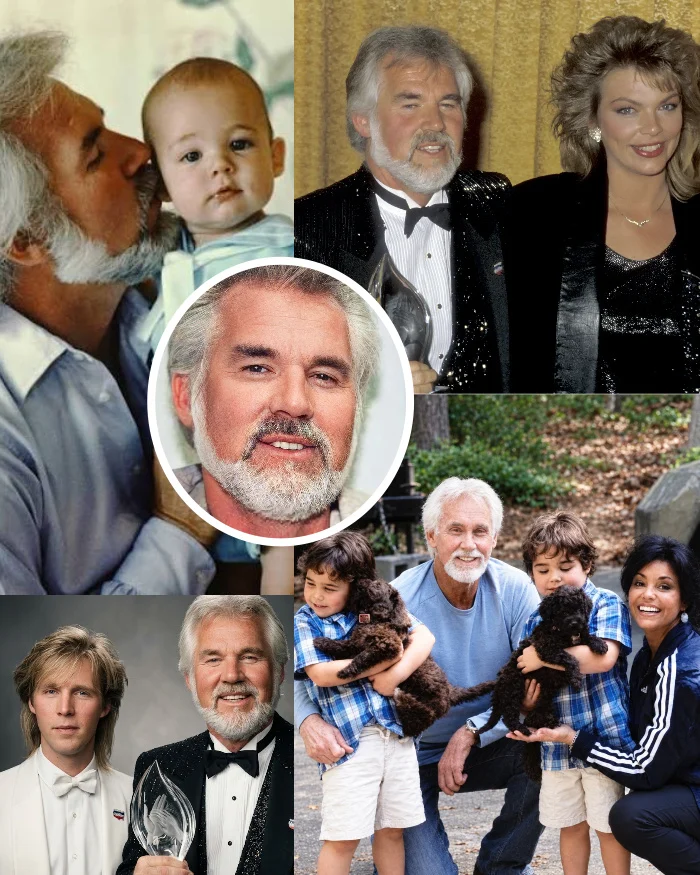
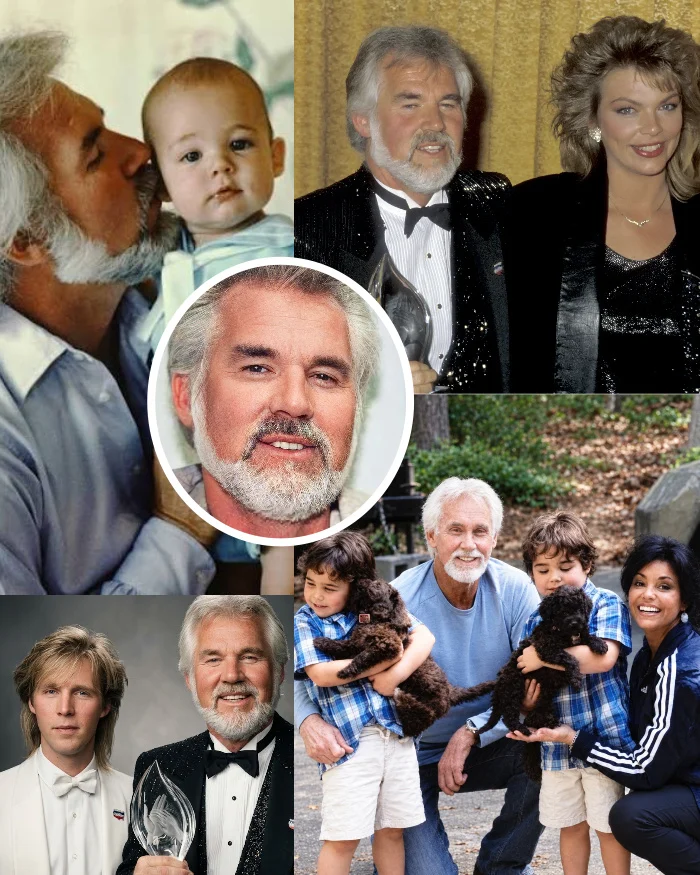
Kenny Rogers learned the true cost of fame in a silent house where the bedrooms had already emptied. The man who spent decades comforting millions from a customized bus finally came home to find that childhood had passed him by. That was the moment the legendary singer understood that no golden record could ever fill the space where his children should have been.
For most of the 1970s and 1980s, Rogers operated as an unstoppable force in the entertainment industry. He maintained a grueling touring schedule, lived primarily on a customized bus, produced multi-platinum albums, and starred in television films. The world saw a steady icon with a gentle baritone who connected effortlessly with massive crowds. But behind that constant output lay a severe personal sacrifice that stayed hidden from the spotlight.
The direct cost of his towering fame was his prolonged physical absence from the daily lives of his older children Carole, Kenny Jr., and Christopher. Rogers later admitted he fell into the standard trap of the music business. He believed that massive financial security would eventually make up for his time on the road. He kept telling himself he only needed to finish one more tour or record one more album.
Time is a currency that record sales can never buy back
As his display cases filled with Grammy Awards and Hall of Fame honors, the irreplaceable window to attend afternoon school meetings and share quiet weekend mornings permanently closed. The heavy reality settled in when he came off the road and stepped into a quiet house where his children had already grown up and moved out. Rogers was forced to confront the harsh truth that he could not rewind the clock.
Rather than hiding that deeply personal failure behind a polished narrative, he used his own history to warn younger country artists about the addictive and isolating nature of ambition. He initiated difficult conversations with his older children as they navigated adulthood. He did not use his celebrity status or his work ethic as an excuse. He sat down with them and offered a raw apology, asking for their forgiveness for consistently prioritizing the stage over their childhoods.
It was a profound reckoning. He approached them not as a revered music legend but simply as a flawed father asking for grace. That lingering regret fundamentally changed his psychological approach to the final chapter of his life. When his youngest twin sons Justin and Jordan were born, Rogers refused to let history repeat itself. The lessons he learned from his older children became the exact catalyst that pushed him to permanently alter his boundaries with the Nashville establishment.
In 2015, the man who had spent half a century commanding international arenas made the definitive decision to walk away from touring entirely. He cleared his calendar and abandoned millions in guaranteed revenue just so he could spend whatever physical time he had left raising his youngest boys. Kenny Rogers left behind an unmatched catalog of traditional standards that defined a golden era of country radio. But his greatest enduring legacy was the humility it took to recognize his biggest mistake, ask for forgiveness, and ultimately put the microphone down to ensure he never missed his family again.