
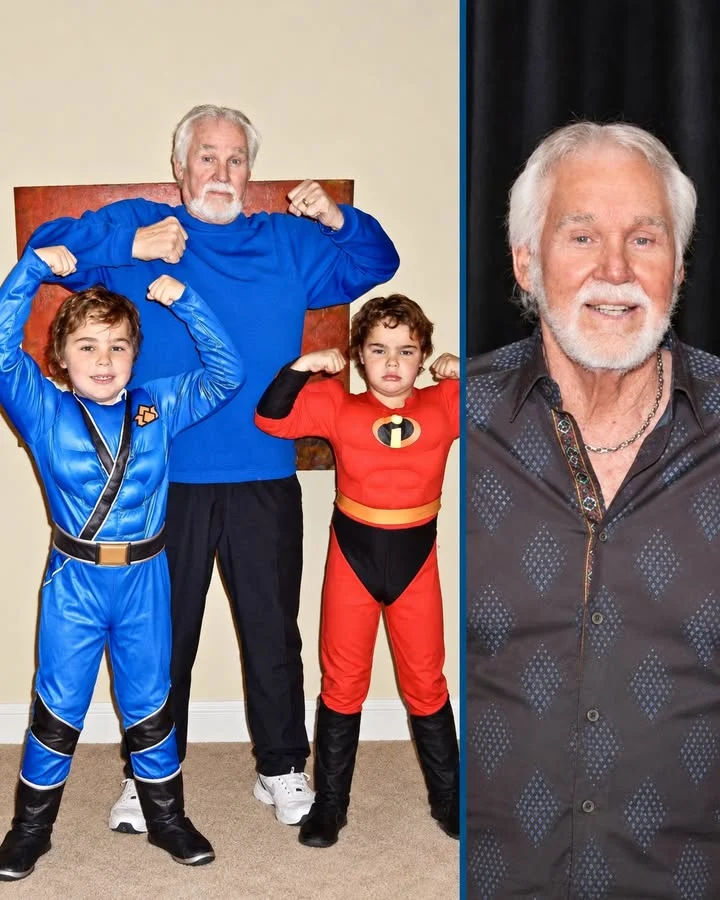
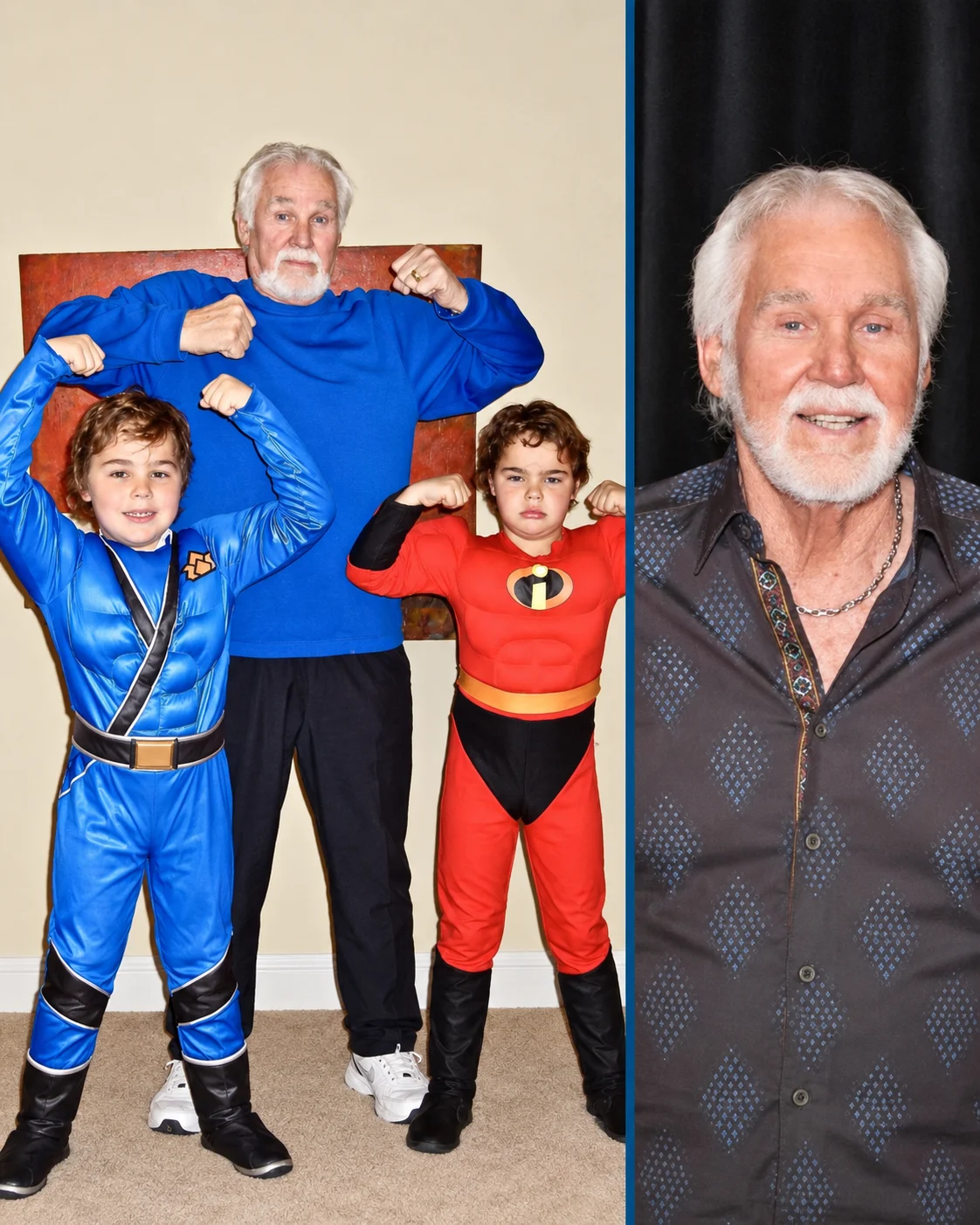
Kenny Rogers heard his son Jordan crying through the front door, and the man who had filled stadiums for decades dropped everything to hold him.
That simple afternoon mattered more than any encore.
For more than half a century, Rogers worked as a relentless force in country music, building a Hall of Fame career through hundreds of shows and becoming one of the best-selling artists ever.
Yet when he reached his late seventies, he made a deliberate choice to dismantle the touring machine he had spent a lifetime creating.
He did not stop because demand faded or because his voice failed. He stepped away so he could raise his twin boys Justin and Jordan with his own hands.
He had already felt the regret of missing parts of his older children’s lives. He knew his age meant his daily presence with the twins was limited, and he refused to let that loss happen again.
To make his home a constant, Rogers restructured his entire business. He launched a strictly scheduled farewell tour with a hard stop in 2017. He gave up months on the road and willingly traded guaranteed millions for quiet afternoons at the kitchen table.
That choice became real when Jordan came home from school in tears after being targeted by a bully.
The boy did not need a legend. He needed his dad.
Rogers did not respond with anger. He did not tell Jordan to fight back. He did not use his fame to pressure the school.
Instead, he pulled his son close and offered a calm instruction.
Just be yourself.
He reminded Jordan that his naturally funny personality and quick wit could protect him better than retaliation. He taught his son that kindness and humor were strong defenses when the world felt cruel.
Rogers understood he could not physically shield his children forever. He used his remaining years to build their inner resilience and make sure they felt loved, capable, and seen.
When Rogers died peacefully at home with hospice care in March 2020 at age 81, he was surrounded by the family he had protected by choosing them over the road.
Jordan carried that living room lesson into adulthood, long after his father’s voice had left the world.
The greatest moment of Kenny Rogers’ later life was not a chart hit or a standing ovation. It was a father calming a crying child with steady arms and a gentle truth.