
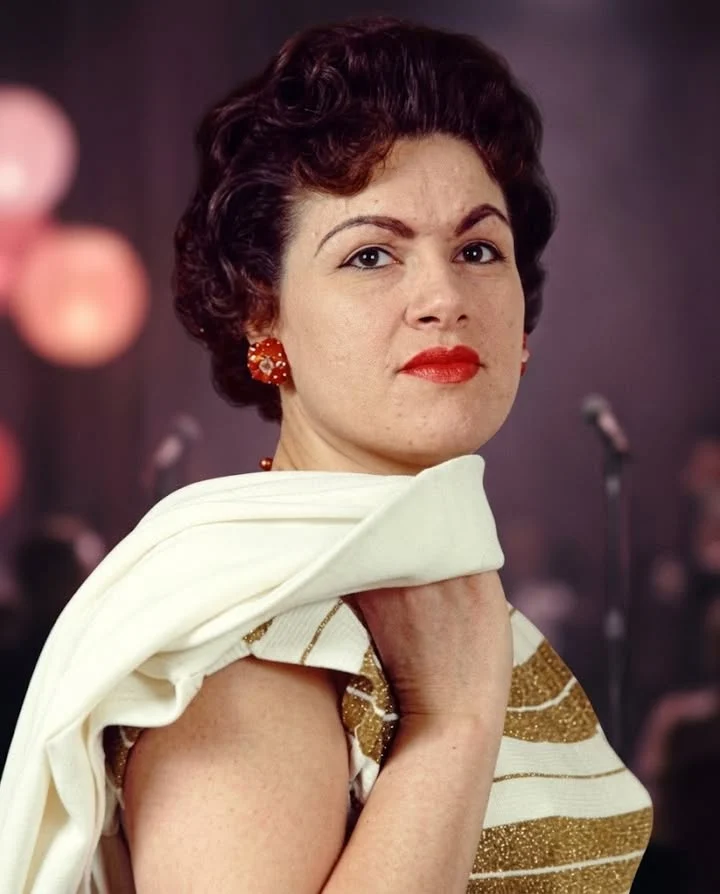
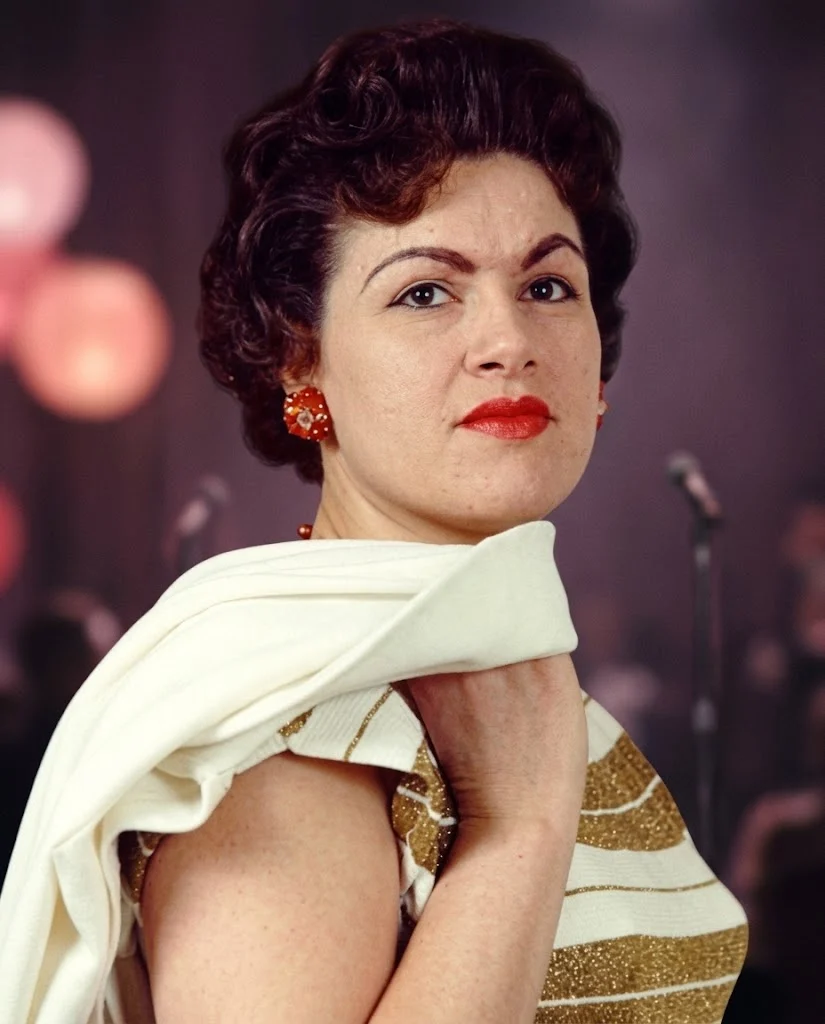
The heavy lived-in ache that redefined country music was not born on a bright Nashville stage. It was forged in the quiet isolation of cheap motels and the grinding weight of 1958.
That year, Patsy Cline was a young mother separated from her husband and newborn daughter. She was trapped by a restrictive contract with Four Star Records and its executive Bill McCall. The deal dictated she could only record songs published by McCall, stripping her of creative control and significant income.
To pay the bills while her husband Charlie Dick served in the Army, she drove herself across state lines. She performed in hand-sewn cowgirl outfits made by her mother Hilda, who stayed behind to care for baby Julie. The applause paid for rent and formula. The nights ended in cheap roadside motels where her only connection to a complete family came through handwritten letters to Charlie.
The public saw a confident woman commanding a microphone. The reality was a woman navigating a male-dominated industry just to keep her family afloat.
She did not quit. Instead, the exhaustion, the distance, and the quiet rooms worked their way into her vocal cords. That brutal year of survival forged the heavy lived-in emotion that would soon redefine American country music.
Unable to afford a massive legal buyout, Patsy made a quieter, more resilient choice. She simply outlasted the deal. When the Four Star contract expired in the fall of 1960, she walked away without looking back.
Free from that grip, she signed with Decca Records and producer Owen Bradley. She traded her mother’s handmade cowgirl suits for elegant evening gowns. Under Bradley’s direction, her voice was backed by sweeping strings, subtle piano, and the legendary Nashville A-Team session musicians. The result was a string of timeless, emotionally complex masterpieces.
The grueling miles of 1958 were never just a detour. They were the fire that tempered her talent.
She built a legendary career out of the very loneliness she fought to overcome.
Patsy Cline built a permanent legacy not because the industry handed her a crown but because she possessed the sheer grit to survive the lonely miles until she could finally claim it for herself.