
At sixteen, Loretta Lynn stood on a cold Kentucky platform with a growing belly, a worn cloth bag, and a train ticket that might never lead back home. She was seven months pregnant in early 1948 when she left Butcher Hollow, the dirt road hollow that had shaped every morning of her life. Her husband, Oliver Doolittle Lynn, believed the timber country near the Canadian border offered their only chance to outrun poverty. The train carried her far from the coal dust, the family porch, and the father who had walked straight from the Van Lear mines to watch her go.
Her father, Melvin Ted Webb, held her close on the depot platform. Tears cut clean lines through the soot on his cheeks. As the locomotive lurched forward, Loretta pressed her hand against the passenger window and watched him shrink into the gray mountains. She had no guarantee of return, no money beyond what the family had scraped together, and no comfort except the quiet resolve of a young wife preparing for her first child in an unfamiliar world.
Custer, Washington, greeted them with evergreen forests, wet timber, and long rain. Doolittle worked brutal logging camps and mechanic garages. Loretta washed clothes outside, picked berries, and raised four children before she reached her early twenties. They lived in drafty quarters and stretched each meal. The isolation was vast, thousands of miles from her mother and the porches of Johnson County.
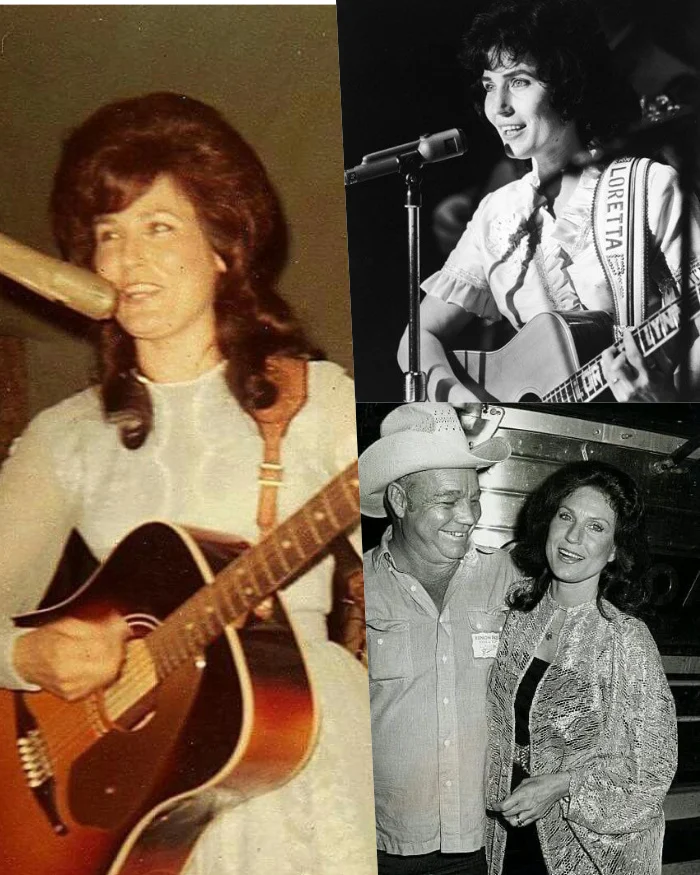
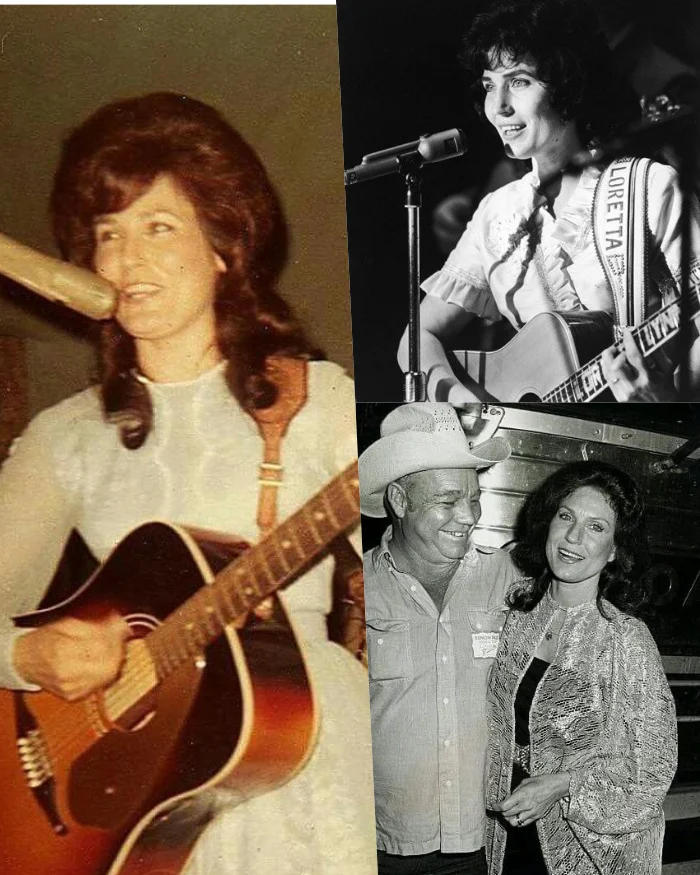
The turning point came in 1953. Doolittle heard Loretta singing while she worked and tended the children. For her twenty-first birthday, he spent seventeen dollars on an acoustic Harmony guitar from a local shop. He insisted she learn the chords herself. Loretta practiced after the children were asleep, shaping simple melodies from domestic exhaustion and stubborn hope. She began writing original lyrics from the life she was living.
By the late 1950s, she led a local band called Loretta and the Trailblazers. She played grange halls and taverns across Whatcom County. Her plain, honest delivery caught Don Grashey of Zero Records during a talent contest in Tacoma. In February 1960, she traveled to Western Recorders in Hollywood and recorded her debut single, I’m a Honky Tonk Girl. The studio backing stayed simple so her mountain voice could cut through with truth.
She carried the hollow with her, and the hollow carried her into Nashville.
Determined to turn that record into real momentum, Loretta and Doolittle packed their family and boxes of vinyl 45s into a 1956 sedan. They drove down two-lane highways toward Tennessee. They mailed records ahead, walked into small-town radio stations, and asked disc jockeys across the heartland to play the song. By the summer of 1960, the grassroots push lifted the independent release into the national country top twenty. That September, the Grand Ole Opry opened its historic doors to the girl who had once looked out a frosted train window.
When Loretta Lynn stepped onto country music’s biggest stages, she carried every timber winter, every lonely laundry line, and the enduring memory of a father’s love. The train had taken her away from home, but the voice she found in the woods brought home back to the world.