
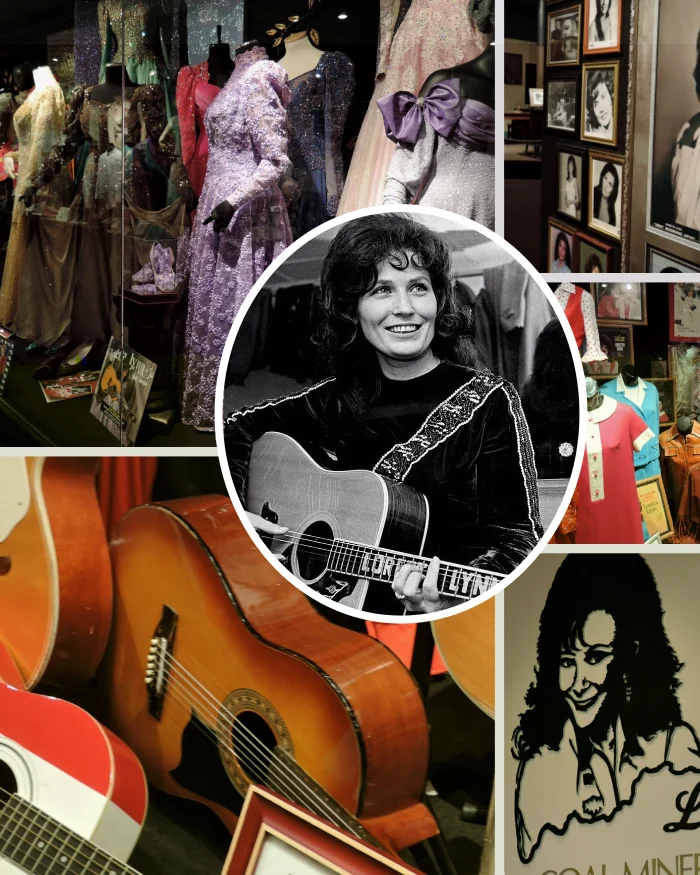
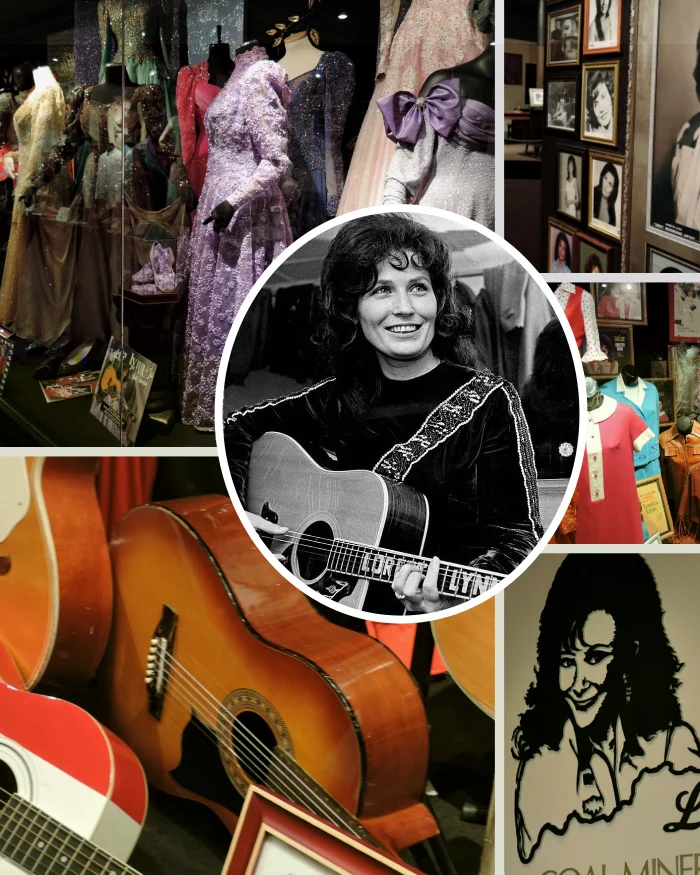
At night, after the visitors left Hurricane Mills, Loretta Lynn could walk alone through the aisles of a museum she built to guard her own truth. The gold awards, faded dresses, and torn lyric pages stayed close to her home, and her grief for Patsy Cline lived in a quiet corner beside them.
Most country legends sent their guitars and stage dresses to climate-controlled archives in downtown Nashville. Loretta chose a different path. She bought a rural town, restored its history, and made a place where her life could be shown without a polished filter.
In the late 1960s, Lynn and her husband Mooney discovered a sprawling property in Humphreys County, Tennessee. It was more than a farm. The estate at Hurricane Mills held an 1880s plantation home, a working grist mill powered by a nearby creek, a post office, and a general store.
They purchased the land and effectively took ownership of the old settlement itself. For five decades, Hurricane Mills became the center of her world. She spent years restoring the mill and the surrounding structures so the nineteenth-century history of the area would survive.
The estate later drew country music fans and became known for a world-famous amateur motocross championship, but it remained a sanctuary for her personal memory.
That preservation work culminated in the Coal Miner’s Daughter Museum. Rather than surrendering her story to outside curators, she built an 18,000-square-foot facility on her own land and arranged the exhibits herself.
She acted as her own archivist and laid out the unvarnished reality of her journey from the deep poverty of Butcher Holler in eastern Kentucky to the highest stages of country music.
The contrast inside the rooms is physical and emotional. Heavy gold trophies and shimmering stage wear sit near worn, tattered items from her earliest years. Yellowed and torn scraps of paper show the private thoughts she wrote down at night.
Her handwritten lyrics kept the struggle visible, and the awards kept the triumph visible, side by side.
One part of the museum carries a quieter weight. After the 1963 plane crash that killed Patsy Cline, Lynn took on the lifelong role of protecting her closest friend’s memory. She designed a dedicated space for Cline’s beaded stage dresses and personal belongings.
Through decades of changing eras in country music, those artifacts remained anchored on the property where Lynn lived and remembered.
Her preservation work did not stop at the museum walls. She built a precise replica of her childhood Butcher Holler cabin on the grounds so visitors could understand the exact scale of the poverty she came from.
By keeping her hardship, her victories, and her grief on her own estate, she made sure the people and the past she loved were always right outside her door.