
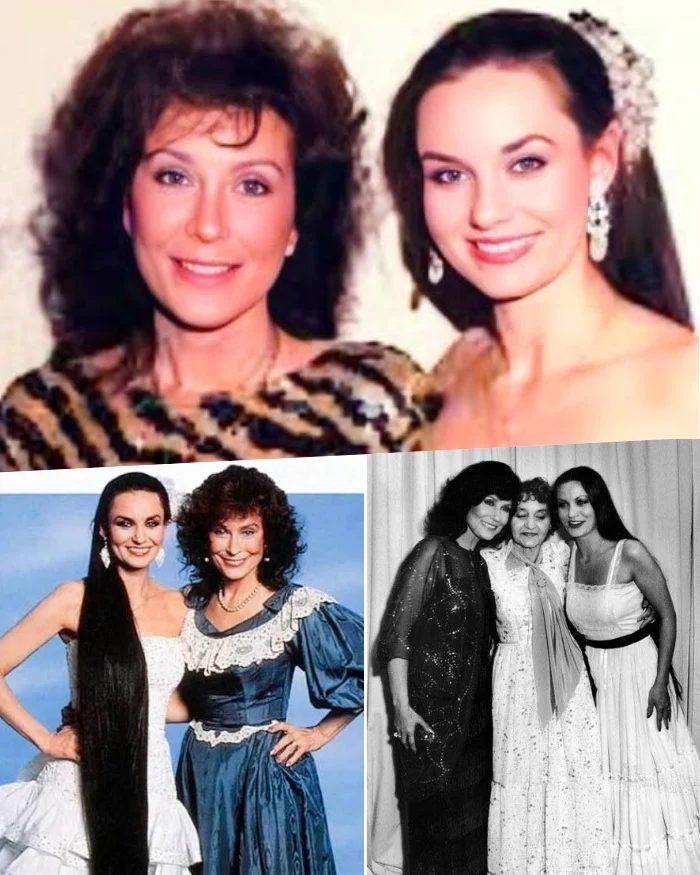
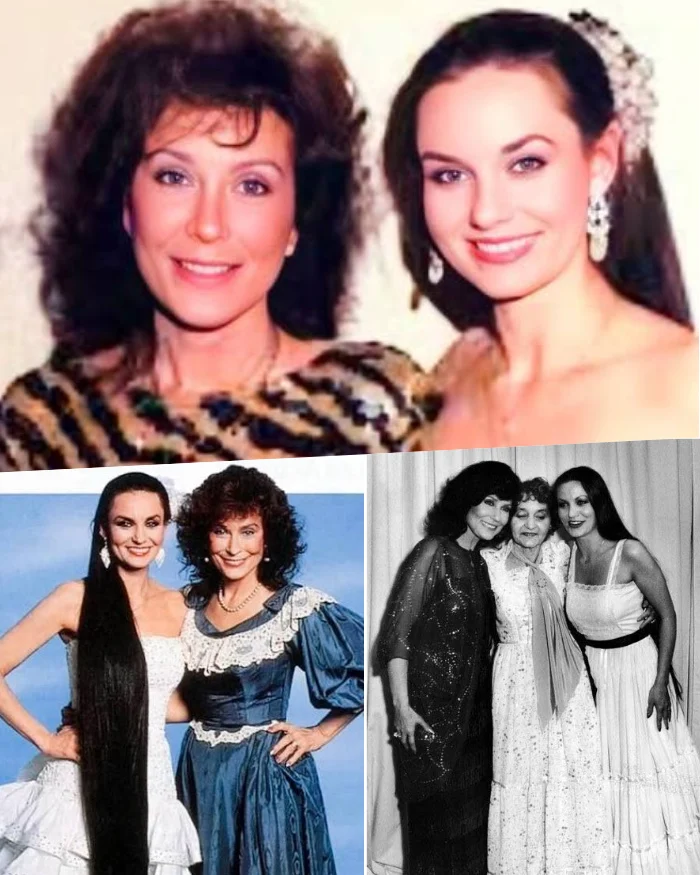
Long before Crystal Gayle became a platinum voice on her own terms, she was a teenager riding a crowded tour bus and hearing a warning that would shape everything.
That warning was simple and fierce. Loretta Lynn told her youngest sister never to sound like her.
It came after years of care that felt more like motherhood than sisterhood. Brenda Gail Webb was born in 1951 in the coal country hamlet of Butcher Hollow in Kentucky. Loretta was already married and raising children and nineteen years older. The gap made protection feel natural.
By the late 1960s, Loretta had become one of the defining forces in Nashville, yet she refused to leave her family behind. When Brenda finished high school in Wabash, Indiana, Loretta brought her onto the bus. She bought her first stage dress and smoothed the folds by hand before curtain call. She also helped arrange an audition at Decca Records.
A label concern arrived fast. Executives worried that Brenda Webb would invite confusion with pop and country star Brenda Lee. While riding through Tennessee, Loretta noticed a neon sign for the Krystal burger chain and handed her sister a fresh identity. Brenda stepped onto her first contracts as Crystal Gayle.
Her earliest recordings leaned on honky-tonk arrangements and earned modest attention, but they also threatened to trap her as a secondary version of her famous sibling. Loretta saw that danger before the industry did. During late highway stretches, she sat down with Crystal and delivered blunt guidance.
Stop singing mountain anthems and stop chasing traditional twang.
She also told Crystal to quit recording songs Loretta herself could perform. That advice was not cold. It was love with a clear road map.
To help Crystal break free, Loretta encouraged outside collaborators who understood pop sensibilities. Crystal soon partnered with producer and songwriter Allen Reynolds. Reynolds helped strip away Appalachian phrasing in favor of velvet tones, jazz tinted arrangements, and sophisticated adult contemporary textures.
That deliberate shift led to United Artists Records and the breakthrough classic about brown eyes turning blue. It became a global crossover hit in 1977. Rather than competing with the hard driving blue collar narratives of Loretta, Crystal carved out a modern elegant lane defined by delicate phrasing, floor length dark hair, and crossover pop radio presence.
She became the first female country artist to achieve platinum album sales. That achievement proved that stepping away from the family template was an act of artistic discipline, not rebellion.
Through it all, the relationship never fractured into professional jealousy. Years later, Loretta sat in award audiences with quiet tears, watching her little sister claim music history as her own artist.
The sisterly devotion gave country music one of its greatest voices, but the quiet conversations on that tour bus remain the real foundation of how Brenda Webb became Crystal Gayle.