
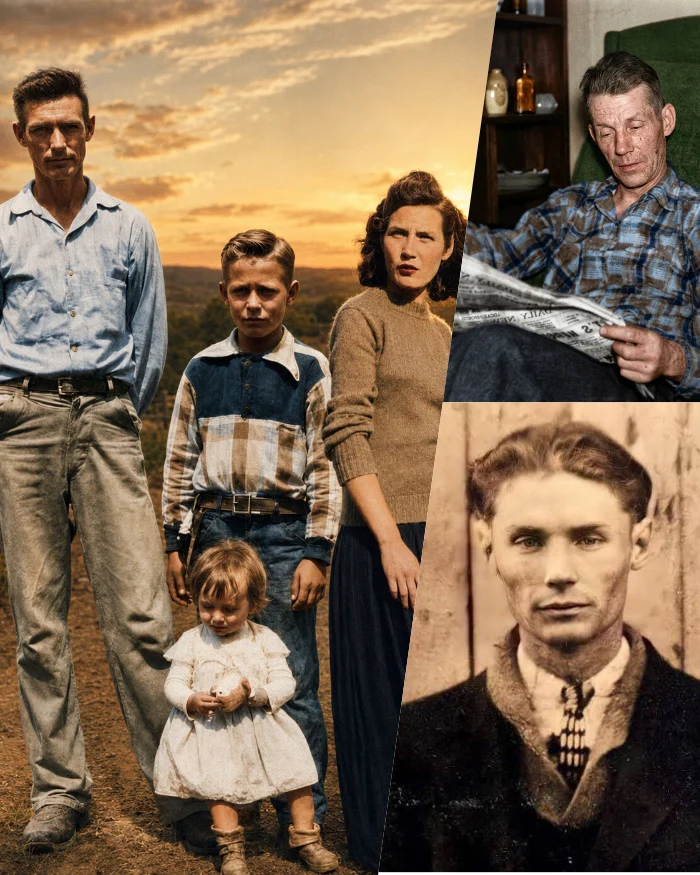
Long before the applause followed her, Loretta Lynn stood over a wooden cradle in a small Kentucky cabin and sang to tired crying children. That tiny circle of cloth and wood became her first stage. That lonely mountain night became the beginning of a voice that would later open doors for women in country music.
She was born Loretta Webb in Butcher Holler and was the second of eight children in a poor coal mining family. Her father Ted Webb worked in the Van Lear mines. Survival depended on many hands, so Loretta learned to change diapers, feed babies, and comfort frightened siblings before she could call herself a child.
One of those siblings was Brenda Gail Webb, who later became country star Crystal Gayle. For Loretta, music was not a dream of fame. It was a practical gift she used to calm a crowded home during freezing nights.
Her first stage was a wooden cradle and her first audience was a room full of crying children.
She married Doolittle Lynn while still a teenager and soon had her first child Betty Sue. The pressure of motherhood did not surprise her because she had already spent years caring for younger children. The family later moved to Custer in Washington to seek work and a calmer life. Even there she raised four children by age twenty while scrubbing floors and taking in laundry.
Doolittle heard the strength in her untrained voice when she sang to their children. He believed in her before she believed in herself and bought her a seventeen dollar Harmony guitar. That simple instrument turned a kitchen song into a public path.
Loretta taught herself to play and began writing songs from her own life. She did not write the quiet and polished verses expected of women in the early 1960s. She wrote about exhaustion, pride, poverty, and the fierce defense of a home. Her words carried the truth of a coal miner daughter who had worked hard enough to earn respect.
When she reached Nashville the industry did not know how to place her. Female artists were often expected to sing material written by men and portray women who suffered quietly. Loretta kept her Kentucky twang and refused to hide the calluses on her hands. She spoke to women listening on AM kitchen radios who lived the same unseen struggle.
Her honesty changed country music. She proved that a woman could name the burdens of marriage, motherhood, and rural poverty without apology. The fame and gold records and Kennedy Center Honors came later. The courage that made them possible began in a dark cabin where a young girl gave up her own childhood to rock babies to sleep.