
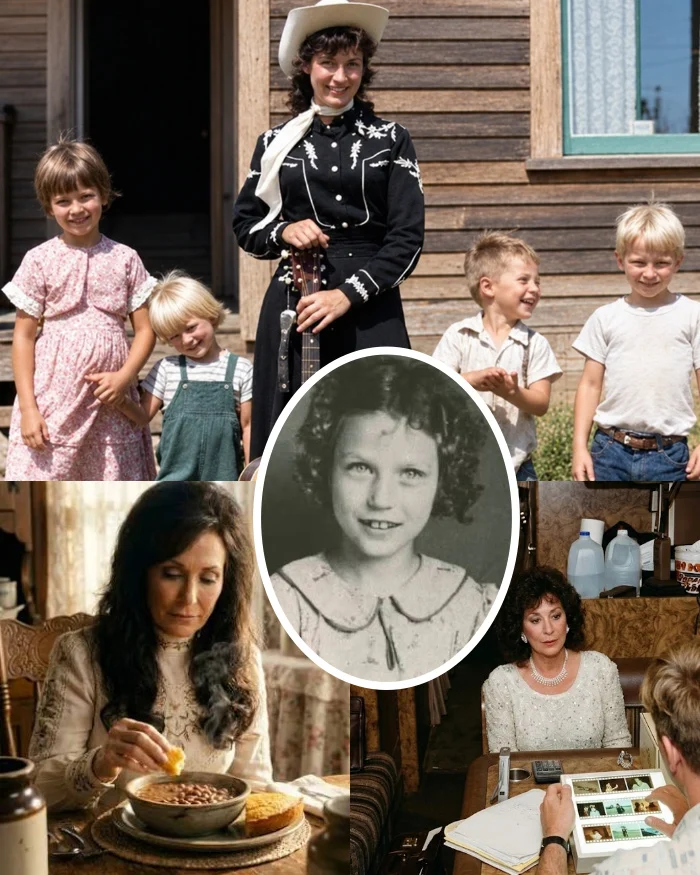
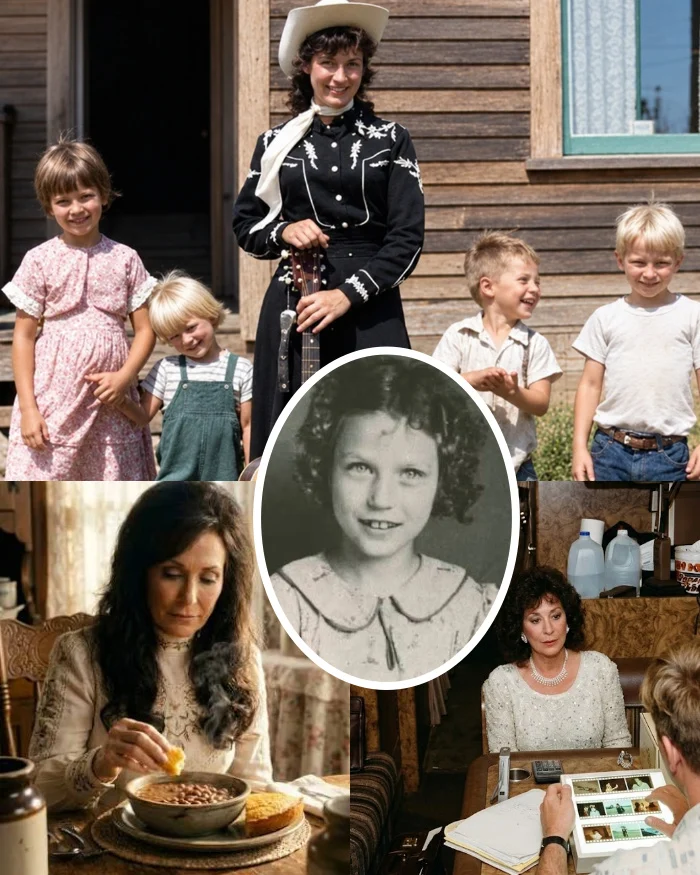
Long before Loretta Lynn wore glittering gowns and stood under bright stage lights, she knew the sharp ache of a dry cornbread crust scraping her throat.
That memory never faded. It lived inside the girl from Butcher Hollow in Kentucky and later shaped one of the most honest voices country music ever heard.
Her father, Ted Webb, labored deep inside the Van Lear coal mines. The work broke his body and left little behind except the barest essentials.
The family often relied on the company store, and his wages mostly vanished into flour, sugar, and salt.
Her mother, Clara, stretched those staples into meals for ten people, including eight children. A boiling pot of pinto beans became a lifeline. She flavored it with scraps of salted pork fat and baked rough cornbread from corn grown on the rocky hillside.
The small cabin crowded around an iron coal stove held the Webb children close. Love and hunger shared the same space. Comfort was rare, while survival demanded relentless care.
Years later, after millions of records and a country music empire, Lynn still felt uneasy around soft white sandwich bread. For a child who dreamed of fresh meat and gentle food, that simple loaf carried the sting of a world she had been denied.
She did not hide that pain. She used it.
When Nashville often gave women polished songs written by executives, Lynn chose a different path. She wrote the truth of rural life and let her own history speak.
By the time she released Coal Miner’s Daughter in 1970, she had turned freezing winters, heavy washboards, mail-order catalogs, and worn floors into music that felt real.
She sang about dirt and exhaustion without shame. She sang about working people with dignity.
She took hunger and turned it into a voice for rural America.
Millions of women recognized their own lives in her words. The queen of country music had walked the same hard floors they had.
Lynn bought grand homes and performed on enormous stages. Yet the heart of her legacy remained rooted in a rough wooden cabin and a boiling pot of beans.
Her story proves that a painful childhood can become a permanent record of strength when it is told without fear.