
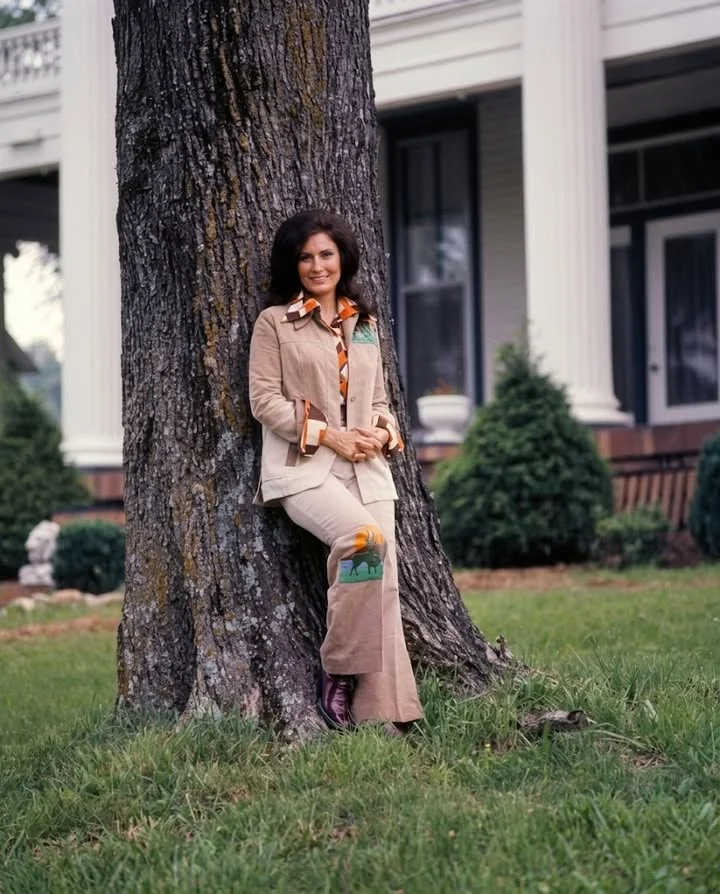
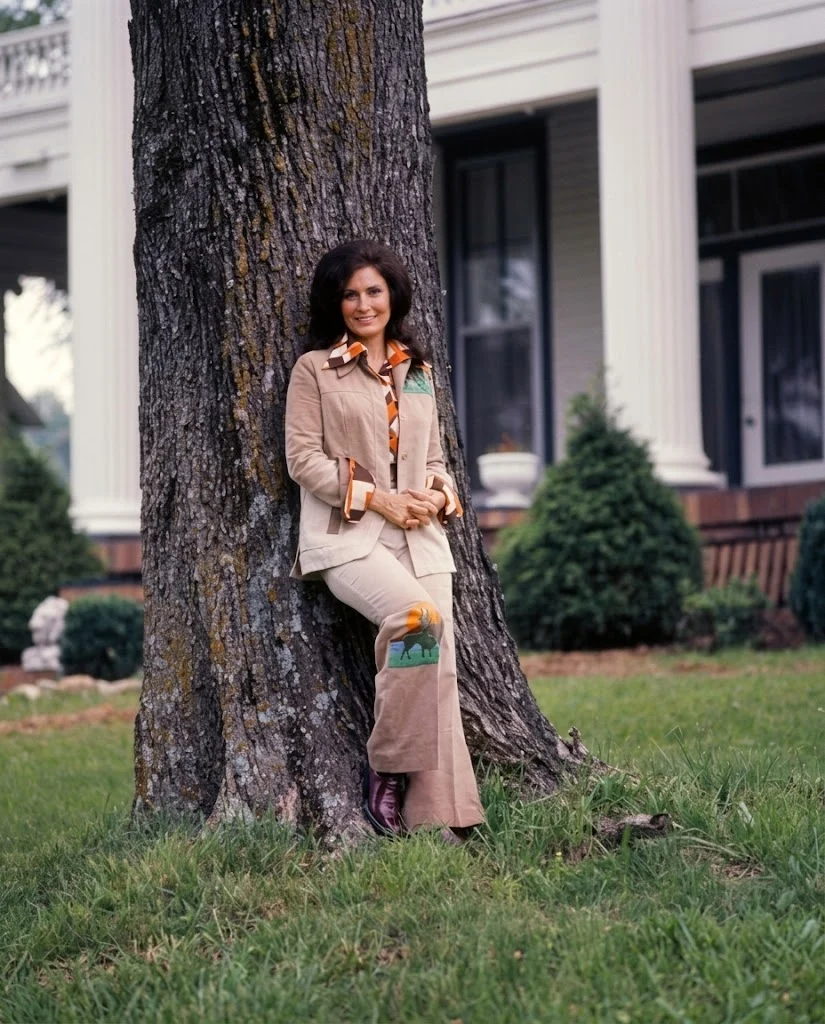
While her children slept in a small Washington home, Loretta Lynn pressed her face against the strings of a $17 Sears Harmony guitar and turned homesickness into country music history.
Far from Butcher Holler, Kentucky, in 1957, she was a young mother missing the Appalachian hills, the family songs, and the sound of her childhood. Her husband, Oliver ‘Mooney’ Lynn, saw the quiet ache in her eyes and ordered a cheap acoustic guitar from a mail-order catalog.
She had no lessons, no band, no Nashville plan. She taught herself chords late at night and began writing about the women around her, the hard work, the loneliness, and the stubborn hope of a poor family. That plain guitar became the place where her voice learned to breathe.
Her first song, I’m a Honky Tonk Girl, came from real life rather than industry trends. It carried the ache of a friend she knew in Washington and the truth of a woman trying to survive far from home.
That purchase was never a business move. Mooney simply wanted to give his wife a piece of the comfort she had left behind. Yet the $17 guitar unlocked a six-decade career built on unapologetic songs about marriage, motherhood, poverty, pride, and working-class survival.
Turning a living room dream into a national sound required relentless hustle. After recording for Zero Records in 1960, Loretta and Mooney packed into a 1955 Ford and spent three months driving across the American West. They ate bologna and cheese sandwiches, stopped at country radio stations, and asked DJs to play her record.
Loretta walked in wearing dresses she made herself, introduced her song with raw confidence, and pressed the record into the hands of local radio workers. That grassroots campaign pushed I’m a Honky Tonk Girl to No. 14 on the country charts.
Her story did not begin with a major label deal or a polished Nashville moment. It began with a family belief that refused to wait for permission.
A cheap catalog guitar gave a homesick coal miner’s daughter the tools to speak for women who had never heard their own lives on the radio
Mooney bought the instrument, pushed her onto tavern stages when she was too shy to look at the audience, and drove the old Ford through miles of doubt. The guitar was only wood and wire, but it carried a humble Kentucky woman into the American imagination.
Today the $17 Sears Harmony is more than a relic. It stands as one of the most valuable gifts country music ever received, because it turned private longing into a public voice and helped shape the sound of a nation.