

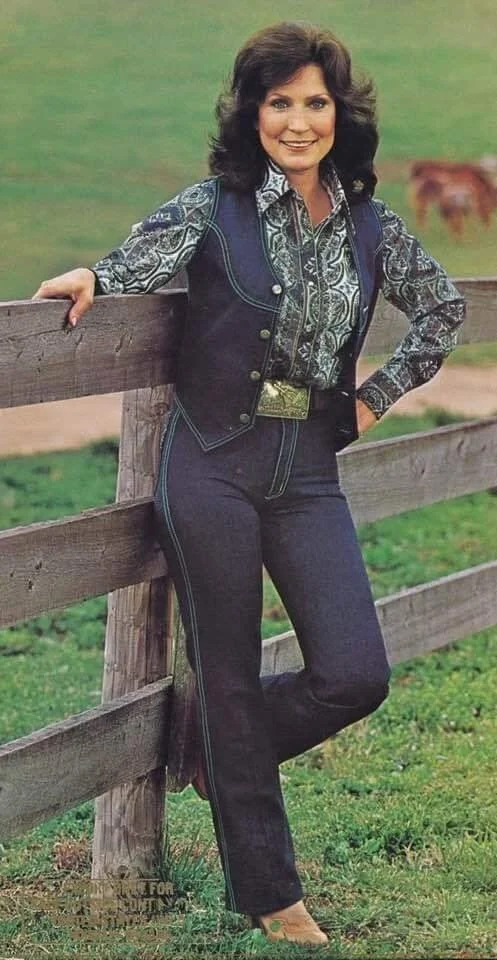
There are songs that entertain, and then there are songs that define a life. For Loretta Lynn, “Coal Miner’s Daughter” achieved the latter, transforming a personal story of grinding hardship into a timeless anthem that still echoes through the hills of country music. Released in 1970, this track wasn’t just a chart-topper—it became a mirror reflecting the American Dream through the eyes of a girl from Butcher Holler, Kentucky.
“We were poor but we were happy, had love that money couldn’t buy.”
Those lyrics, penned by Lynn herself, capture the unvarnished truth of a childhood spent in the shadow of coal mines. Her father, a miner with calloused hands and a hopeful heart, taught her two things: an unyielding work ethic and the art of storytelling. That gift for narrative turned the dust of poverty into gold, weaving a song that would soon resonate with millions far beyond Appalachia.
What makes “Coal Miner’s Daughter” so extraordinary is its refusal to romanticize struggle. Instead, it paints a vivid portrait of resilience— a family that had little but clung to each other. Lynn’s words give voice to the unsung heroes of rural America, where pride was measured not in dollars but in the strength to keep going. The song’s authenticity proved a powerful antidote to the polished pop of the era.
But its impact went deeper than nostalgia. In a Nashville still dominated by men, Lynn’s success as a songwriter and performer was a quiet revolution. “Coal Miner’s Daughter” became a rallying cry for women daring to write their own stories. It challenged the industry’s status quo long before the modern wave of female empowerment, offering a blueprint for self-belief that inspired generations of artists.
Lynn’s story didn’t stop with the song. In 1976, she released her autobiography, also titled Coal Miner’s Daughter. Four years later, Hollywood immortalized her journey with an Academy Award-winning film starring Sissy Spacek— a portrayal so poignant it won the actress an Oscar. The movie brought Lynn’s world to the big screen, cementing the song as a cultural touchstone.
Today, “Coal Miner’s Daughter” remains a living testament to the power of humble beginnings. Its melody is passed down through new generations of musicians, its lyrics sampled in films and television shows. It stands as a reminder that the human spirit, when fueled by grit and love, can overcome any obstacle. So when you hear that opening guitar riff, remember: this is more than a song. It is the heartbeat of a remarkable life and a legacy that refuses to fade.