
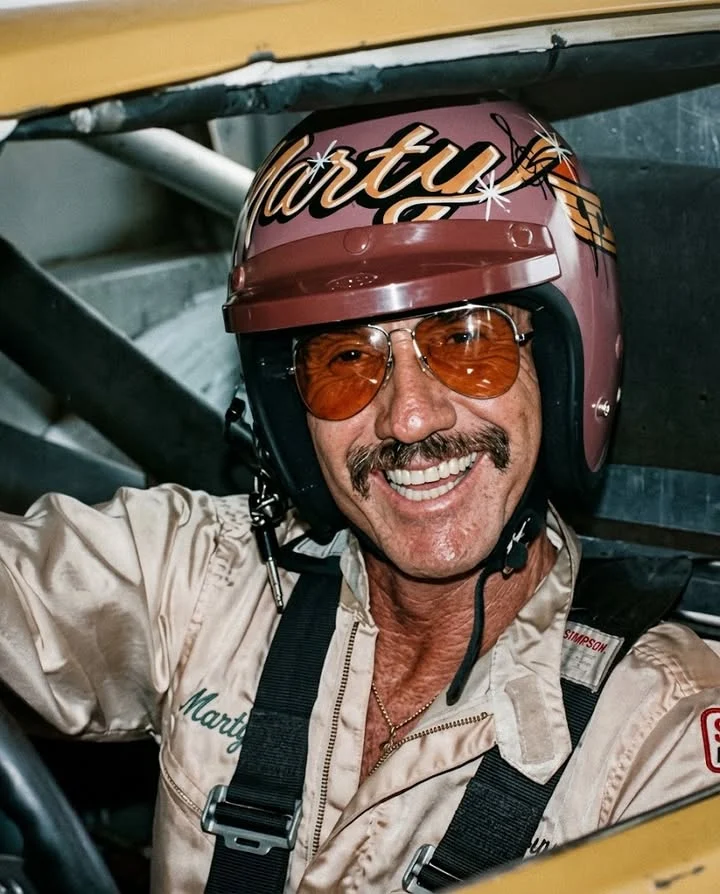
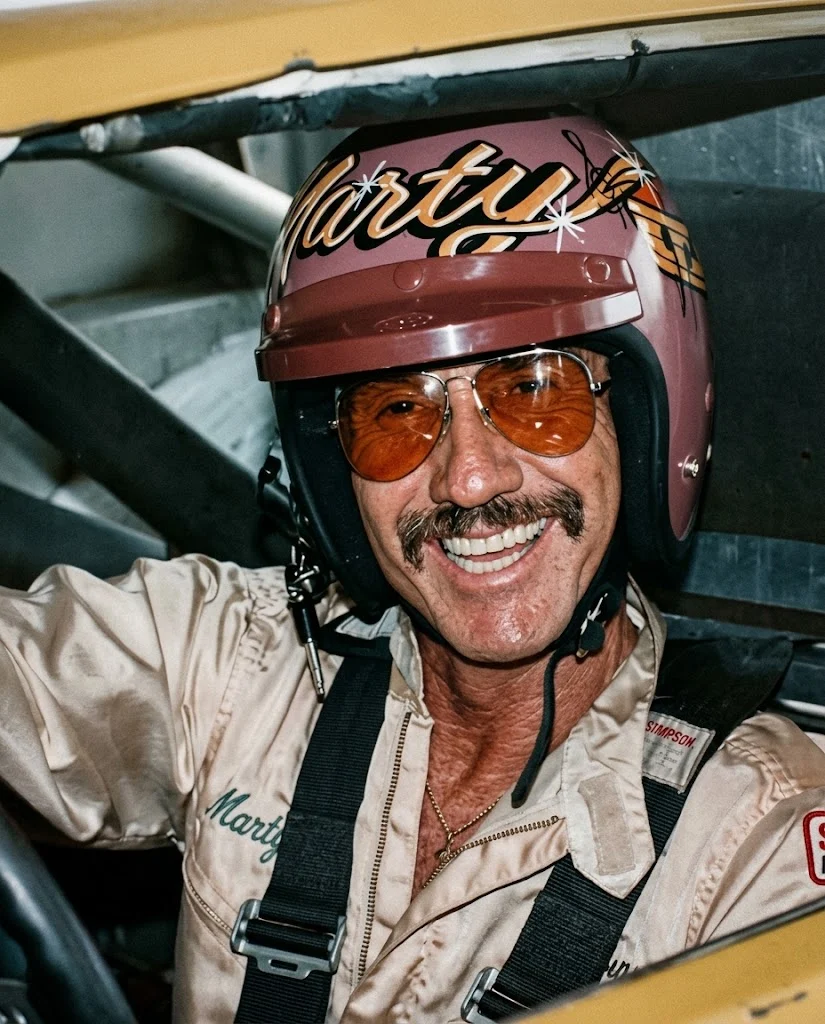
One country music star chose a concrete wall over another human life.
At Charlotte Motor Speedway on October 6, 1974, Marty Robbins was racing at roughly 160 miles per hour during the National 500. He was not a casual celebrity guest. He was a respected part time stock car driver and the voice behind El Paso. In his magenta and yellow No. 42 Dodge, he saw smoke and wreckage ahead. A stalled car sat sideways across the track. The driver door filled his windshield. He had almost no time to identify the driver or the paint scheme. He only saw a trapped person and a full speed side impact if he tried to pass.
Robbins did not hesitate in the way that leaves a person alive and proud. He turned hard into the retaining wall. His own car took the impact. The Dodge was destroyed. He broke ribs and his tailbone and suffered facial cuts that needed about thirty seven stitches. He risked the face and breath that carried his singing career.
The stranger he saved was Richard Childress. Childress was then an independent driver trying to keep a racing dream alive. He went to the hospital and found Robbins battered but calm. Childress thanked him for the wall that took the crash instead of him. Robbins dismissed hero talk. He said he saw the door, knew a direct hit would be deadly, and chose the only path that spared another man.
I did not want to hurt a fellow man.
That blind choice later reshaped American motorsports. Childress survived, stepped into team ownership, and built Richard Childress Racing into a powerful organization. His black No. 3 car became linked to Dale Earnhardt and six Cup Series championships. The empire that still exists today rests on a moment when Robbins absorbed pain for a stranger.
Robbins returned to the stage and sang again. He rarely spoke about the crash and never used his injuries for attention. Childress never forgot the debt. As a Hall of Fame racing owner, he has said his life and legacy exist because of the man in the No. 42 car.
Marty Robbins spent years singing about courage in the dust of a Western ballad. On a Carolina race track, he proved that courage was not fiction.