
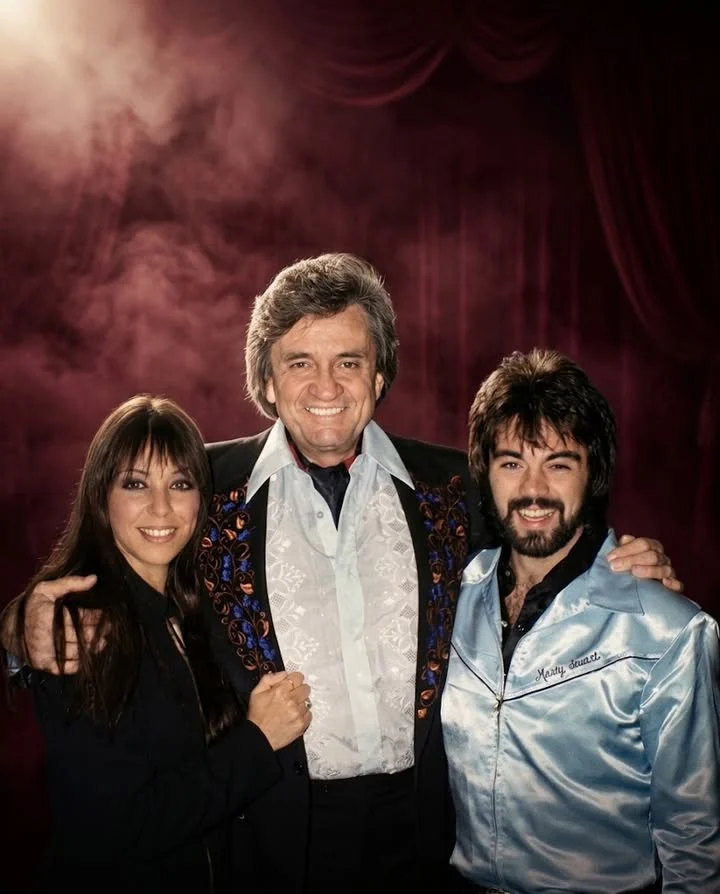

By 1988 Marty Stuart stood at the edge of a life he could not recognize. The marriage to Cindy Cash had ended, Johnny Cash was no longer the safe umbrella over his career, and Nashville had turned away from him with cold efficiency.
He had once been the young guitar player who married into country music royalty and felt the fairy tale was real. Then the road, the pressure, and the quiet grind of youth tore the dream apart. The divorce did not just take his wife. It took the sense that he belonged inside the Cash world.
Then Columbia Records dropped him. His solo debut had failed to sell, and the follow up project vanished before it could rescue him. Suddenly he was broke, alone, and stripped of every professional shield.
Stuart left Nashville and returned to Mississippi. He stepped back into the music that first shaped him and joined The Sullivans, a gospel and bluegrass touring group from his teenage years. The stages were smaller, the audience was local, and the music felt honest again.
The road that once brought him to Cindy Cash also carried him into a season of doubt, silence, and rebuilding
That retreat became the turning point. Away from the legend of Johnny Cash and the wreckage of his solo launch, Stuart remembered who he was before fame. He played guitar, he followed the roots, and he gathered the nerve to return to Tennessee.
The comeback arrived with force. In 1989 he signed with MCA Records, and the label backed his sharp blend of traditional country, bluegrass, and rockabilly. His album Hillbilly Rock became a massive breakthrough, and the title track climbed into the Top Ten on the country charts.
By 1992 he earned induction into the Grand Ole Opry. The man who had once seemed trapped inside a royal family name became a star in his own right.
His private life healed more slowly. The heartbreak taught him to guard what mattered most and to choose quiet authenticity over industry noise. Nearly a decade after the collapse of his first marriage, he reconnected with country legend Connie Smith, the woman he had first met and boldly vowed to marry as an eleven year old boy.
Marty Stuart did not escape the Cash dynasty untouched. He left it broken, rebuilt himself in Mississippi, and returned with a sound, a career, and a love story that finally gave him a permanent home.