
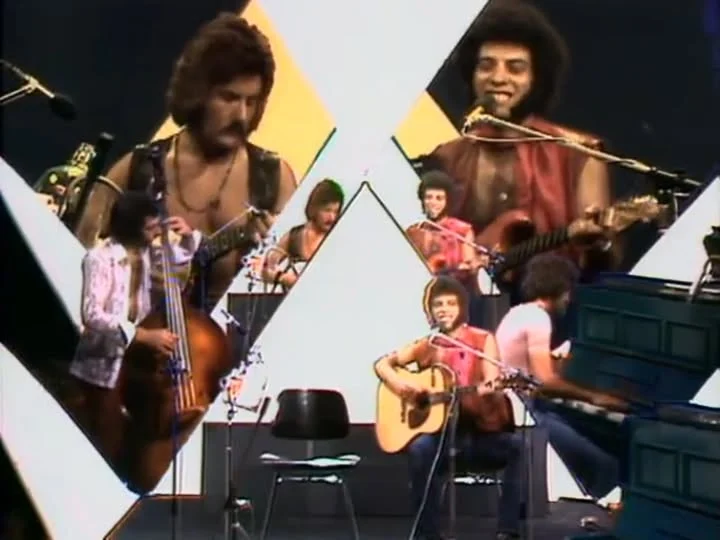
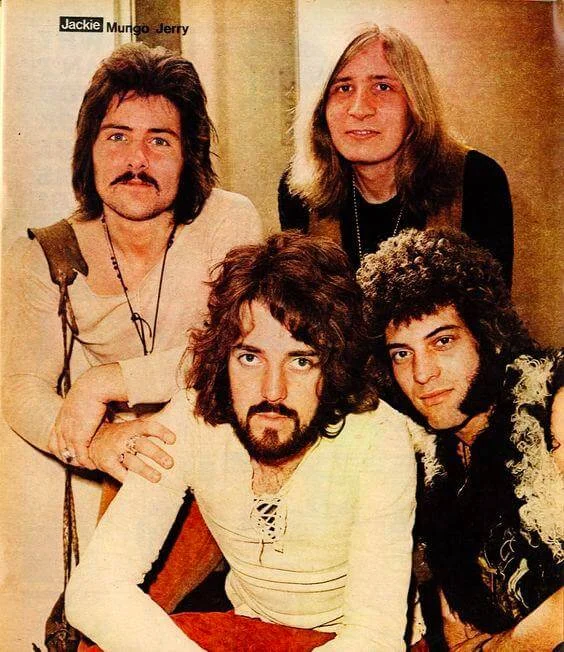
It all began during a break at a Timex laboratory, with a second-hand Fender Stratocaster and a flash of inspiration that lasted just ten minutes. That is how Ray Dorset, the lead vocalist of a band that would soon become a household name, gave the world a song that would define summers for generations to come. That song is In the Summertime, and its story is as vibrant and unexpected as the tune itself.
Released in 1970 as the debut single for the British rock group Mungo Jerry, the track did not just climb the charts — it conquered them. Topping the UK Singles Chart for seven consecutive weeks, it also spent two weeks at number one on a Canadian chart and reached third place on the Billboard Hot 100 in the United States. With eventual sales reaching 30 million copies, it earned its place among the highest-selling singles of all time. The song later appeared on the band’s second album, Electronically Tested, released in March 1971.
The recording session took place at Pye Studio 1 under producer Barry Murray. Originally clocking in at just two minutes, the track needed more length. Murray cleverly played the recording twice, slightly remixing the second segment, and introduced a memorable sound effect—a motorcycle. But as Dorset later recalled in an interview with Gary James, the team struggled to find a real motorcycle. Instead, engineer Howard Barrow drove his old Triumph sports car past the studio while Murray held the microphone, capturing the stereo effect.
He drove past the studio while Barry Marrit held the microphone. So he captured the stereo effects from left to right or right to left, whatever. And that was it.
The song’s initial UK release on the newly formed Dawn Records broke conventions. It was a maxi single playing at 33⅓ rpm instead of the standard 45 rpm. The A-side included an extra track, Mighty Man, also written by Dorset, while the B-side featured the longer Woody Guthrie’s Dust Pneumonia Blues. Packaged in a picture sleeve—a rarity at the time—and priced only slightly above a standard single, it became an instant bargain. A limited run of 45 rpm discs without the picture sleeve, with Mighty Man on the B-side, was produced for jukeboxes; those have since become highly sought-after collector’s items.
Decades later, the song’s legacy was shadowed by a legal battle. In 2012, Dorset filed a lawsuit against his former management company, Associated Music International, led by his once-close friend and business manager Eliot Cohen. The claim sought over £2 million in royalties that Dorset believed had been withheld from him for the use of the song.
But the enduring power of the tune lies in its carefree spirit, captured in lyrics that paint summer freedom:
In the summertime, when the weather is high
You can stretch right up and touch the sky
When the weather’s fine
You got women, you got women on your mind
That philosophy—life is for living, and we are happy—has kept the song alive across decades, from beach parties to movie soundtracks. It remains a sun-drenched anthem, born in a lab, driven by a sports car, and forever etched into the soundtrack of summer.