

By 1986, millions of listeners were hearing a deep baritone pull country music back to its roots, yet almost none of them knew that the voice on Storms of Life had once stood just one courtroom decision away from disappearing behind prison walls.
Nearly a decade earlier, in 1977, a teenage Randy Traywick faced a judge in Charlotte, North Carolina, with a five-year sentence hanging over a long trail of reckless offenses that included auto theft, burglary, and public intoxication.
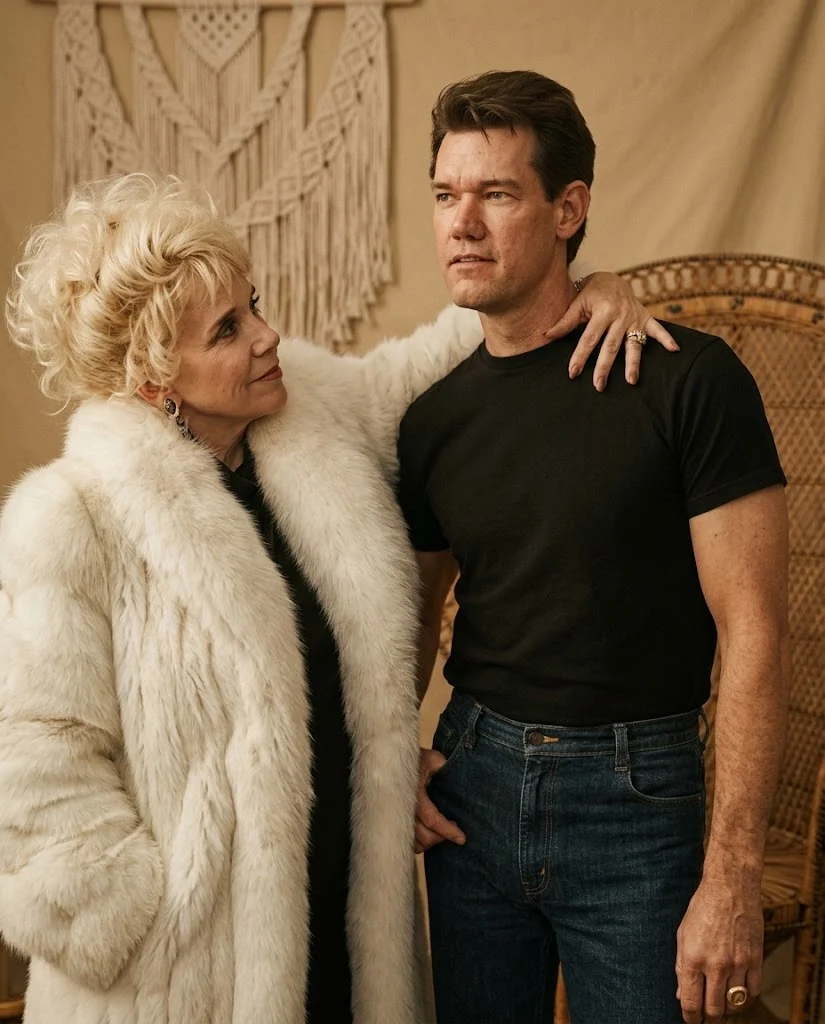
The legal system was ready to lock him away, but Elizabeth “Lib” Hatcher refused to watch his future end there. As co-owner of the local venue Country City USA, she stepped forward with a proposal no one expected and asked the presiding judge for full legal guardianship of the troubled young man.
She promised the court she would take personal responsibility for him and guide him toward a disciplined life.
The judge agreed, and one of the most unlikely rescue missions in American music history quietly began far from any spotlight.
To honor that promise and keep him away from the streets, Hatcher put him to work in the back of her club. His days became a grueling lesson in humility as he scrubbed dirty dishes and fried catfish in a sweltering kitchen, far from trouble and far from applause.
When night fell, she let him wipe his hands, walk out of the kitchen, and step onto the club’s small stage. She had seen past his destructive exterior and heard something rare, a raw baritone carrying the heavy spirit of traditional icons like Lefty Frizzell and George Jones.
Knowing exactly what was at stake, Hatcher made a massive personal gamble to protect that voice. She walked away from the security of her own marriage, sold her financial share of the Charlotte nightclub, and drove him to Nashville.
By the early 1980s, the young singer was finding his way along Music Row under a new name, eventually settling on Randy Travis. The industry, however, showed little interest in his traditional delivery and repeatedly dismissed his heavy country sound as too old-fashioned for a pop-leaning era.
Label after label turned them down. To pay their bills, Hatcher took a demanding job managing The Nashville Palace, while Travis returned to the kitchen, washing dishes and cooking for patrons before taking the stage to sing.
She never stopped carrying his demonstration tapes to every executive she could find, refusing to let the industry silence the young man she had fought for. Her stubborn persistence finally forced a door open when Warner Bros. Records decided to take a chance on his traditional voice.
In 1986, the release of his debut album, Storms of Life, did far more than sell millions of copies. It fundamentally shifted the entire direction of country music, pulling the genre back to its roots and proving the early critics wrong.
Long before Randy Travis was credited with rescuing traditional country music, a much quieter rescue had already taken place. He would go on to become one of the defining voices of the twentieth century, celebrated by millions of fans around the world.
Yet none of those legendary records would exist if a woman had not walked into a courtroom, stood before a judge, and put her own reputation on the line to give a troubled teenager a second chance.