
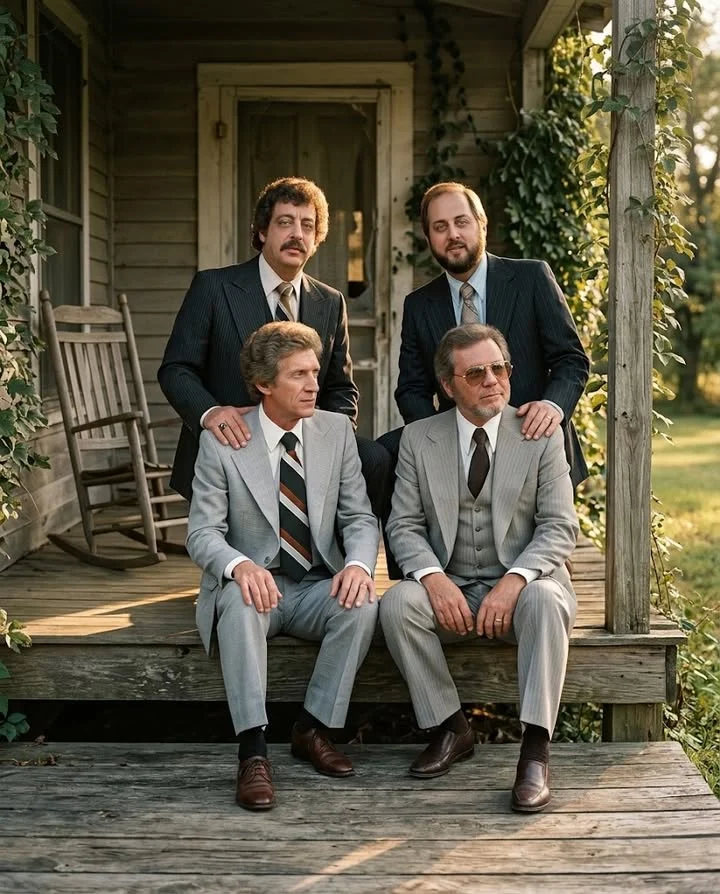

A quiet microphone once stood empty in Staunton, Virginia and one younger brother stepped forward without knowing he would change country music forever.
In the early 1960s the local singing group known later as The Statler Brothers faced a sudden break in its heart. Joe McDorman had left the lineup after the group had been sharing songs at churches and community gatherings. The missing voice needed to carry the lead and the answer came from inside the family. Harold Reid asked his younger brother Don Reid to step in.
That one practical choice locked four voices into a harmony that would outlast trends and generations.
They were still searching for their name when the tissue box on a hotel counter inspired The Statler Brothers. Once Don joined the fold the blend became clear. Harold gave the group a warm rumbling bass and sharp comedic timing. Phil Balsley held the steady baritone line. Lew DeWitt soared above them with a piercing tenor. Don stood in the middle with a natural lead voice and soon wrote the stories that carried the group into history.
The real proof came in spring 1965 inside Columbia Recording Studios in Nashville. The group had recently joined Johnny Cash’s roadshow and this session gave them a chance to put their sound on vinyl. They brought a quirky rhythmic song written by Lew DeWitt. When the four voices gathered around the microphones for Flowers on the Wall the harmony crystallized.
One studio take became the blueprint for a career built on brotherhood and belief.
Flowers on the Wall became a massive crossover hit and earned a Grammy Award. It proved Don was the exact right fit and showed the quartet was built to endure. On stage they blended gospel traditional country and pop with the reverence of a church choir and the honesty of a front porch gathering. Harold’s humor softened the quietest ballads while the brothers moved through songs with a connection that felt almost telepathic.
The bond was not only technical. It came from blood and childhood friendship. It allowed Phil to give up his own spotlight so Lew’s tenor could shine. It gave young Don the courage to lead men older than himself with quiet confidence.
Even after traveling the globe and opening for Johnny Cash for eight and a half years they stayed rooted in the Shenandoah Valley. They refused to move permanently to Music Row. Their homes and their headquarters remained in the same Virginia town that raised them.
For decades their voices filled American living rooms. Their music and long running Saturday night television show offered stability in an industry that kept changing. When they stepped away from touring in the early 2000s they did it on their own terms. There was no bitter breakup and no slow fade. They closed a monumental chapter and went home.
The stage lights went down and the tour bus miles ended. Yet the harmony born when a younger brother stepped to the microphone still remains in the air exactly where they left it.