
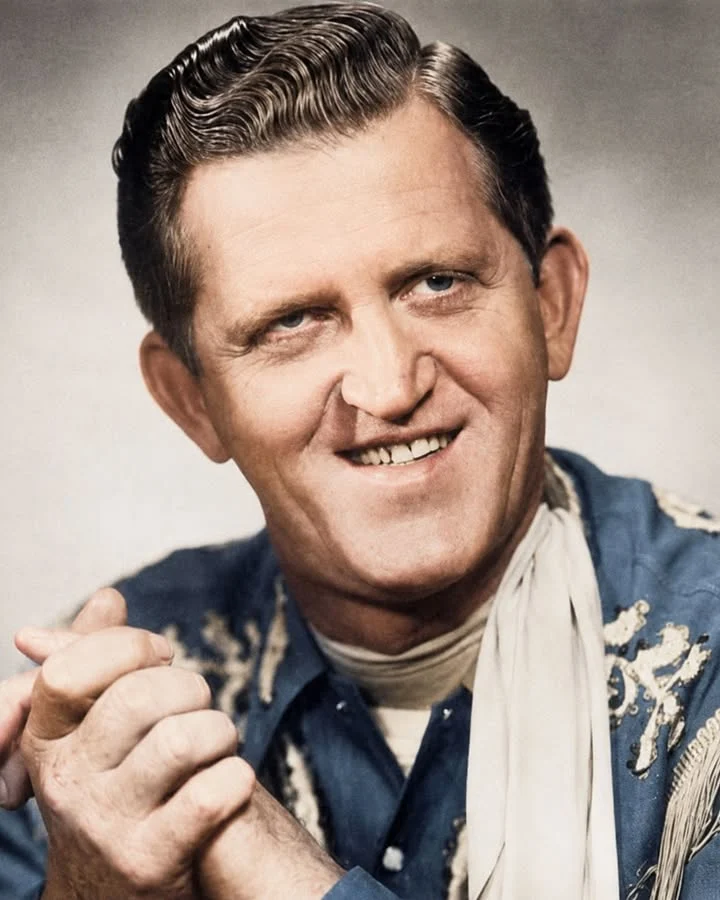
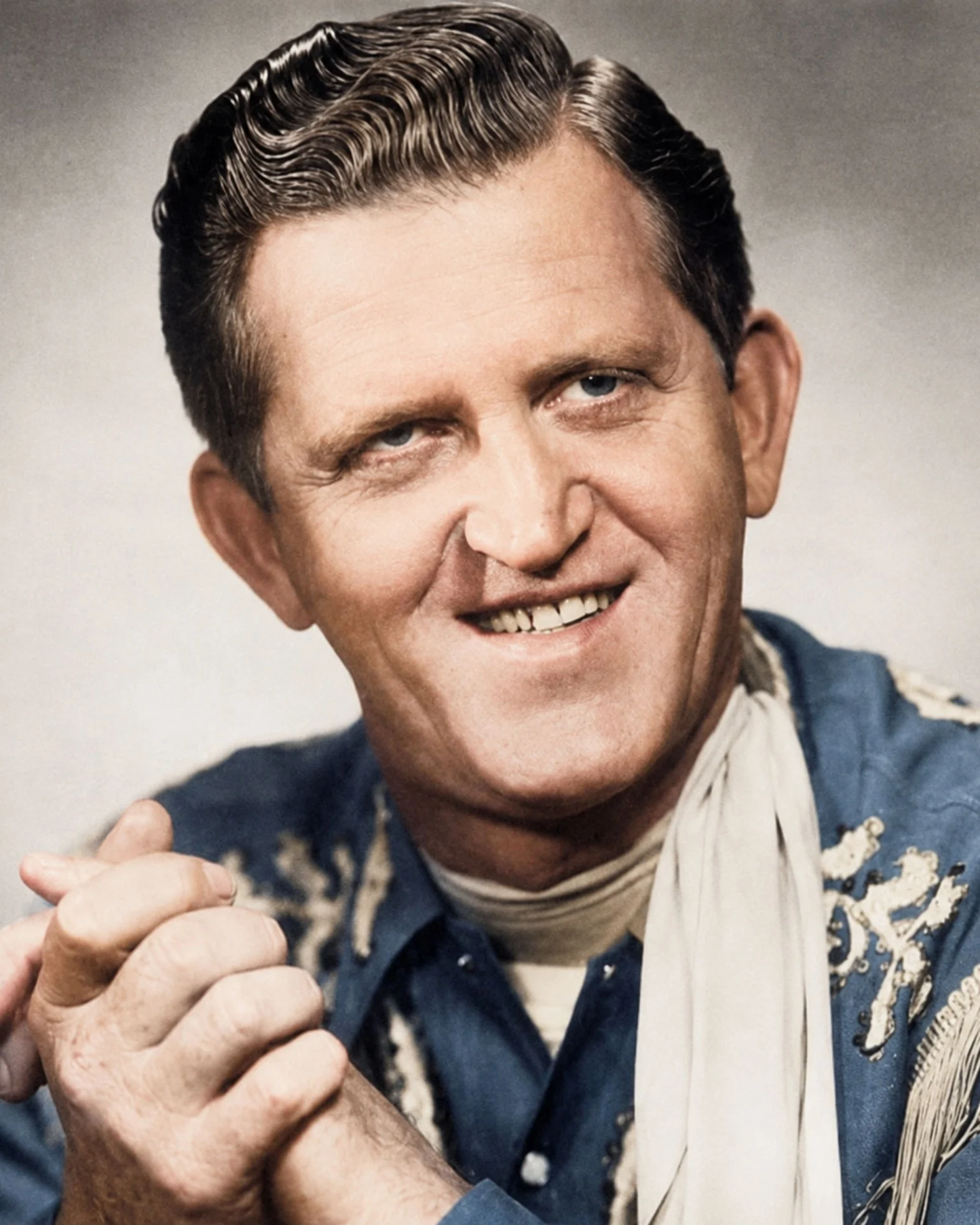
The boy is still out there in the static. He calls into the night with a CB radio and a father who will never answer again. Truckers roll through the darkness, and one by one they turn toward a voice that sounds like loss. That is where Red Sovine’s greatest record lives.
Red Sovine did not need a beautiful country voice to break people’s hearts. He needed a story, a truck radio, and a boy called Teddy Bear.
For a little while, a highway full of strangers becomes a family.
Born Woodrow Wilson Sovine in West Virginia in 1917, he built his career on radio work, hard road miles, and small country rooms where a performer had to earn attention fast. He moved through the same world as Hank Williams and later reached the Grand Ole Opry. But the lane that made him last was the spoken recitation song.
Sovine understood that a plain story could breathe if he gave it room. He could turn a stranger in a diner, a driver on the highway, or a child at home into a moment that felt real. His records did not ask for admiration. They asked listeners to stop and listen until a story reached the place where it hurt.
In 1976 he found the song that would define his legacy. “Teddy Bear” told the story of a disabled boy whose truck-driver father had died in a wreck. The boy used his father’s CB radio to reach passing truckers because that radio was the closest thing he had left to the road his father knew.
Another singer might have pushed the emotion too hard. Sovine told it gently, almost afraid to speak too loud. He let the feeling come through the static, through the boy’s loneliness, through the ache of a child reaching out because the man who should have answered was gone.
The record reached No. 1 on the country chart and became one of the defining recitation records in country music history.
“Teddy Bear” was sentimental, but it knew where the feeling lived. One trucker hears the boy. Then another. Then more. The highway becomes a family for a little while.
That was Red Sovine’s country. It was grief moving through diners, truck stops, dispatch calls, and late-night roads. It was built on the idea that lonely people might still find each other through a voice coming over the air.
His catalog held the same power again and again. “Giddy-Up-Go” carried the ache of fathers and sons. “Phantom 309,” written by Tommy Faile, turned a late-night ride into a ghost story with diesel smoke around the edges. He kept finding the soft place inside hard roads.
The road looked tough from the outside, but inside those stories were fathers, children, widows, and strangers offering small mercies in the dark. Sovine knew that the road could be lonely without being empty. There were voices out there, stories moving from one town to the next, and people listening when nobody else seemed to be.
His final road came in Nashville in 1980. He suffered a heart attack while driving. A man whose most lasting songs lived on highways and truck radios was still behind the wheel when his own turn came.
Country music moved away from the recitation song, and critics grew quicker to mock sentiment. But Sovine’s best work never lost its strength because it was never only about trucks.
It was about contact. The human voice reaching through distance. A stranger answering.
The deepest part of this story is not only that Red Sovine took “Teddy Bear” to No. 1. It is that he proved a country record did not need a soaring chorus to break a heart.
West Virginia. Radio work. Road miles. The Grand Ole Opry. Then a spoken song about a fatherless boy, a CB radio, and truckers who heard loneliness clearly enough to turn around.
Red Sovine’s voice was not built to dazzle. It was built to carry a story without getting in its way. Somewhere in the static, that boy is still calling into the night. One truck hears him. Then another. Then another.
The highway is dark. The father is gone. But for the length of the song, the world answers back, one headlight at a time.