
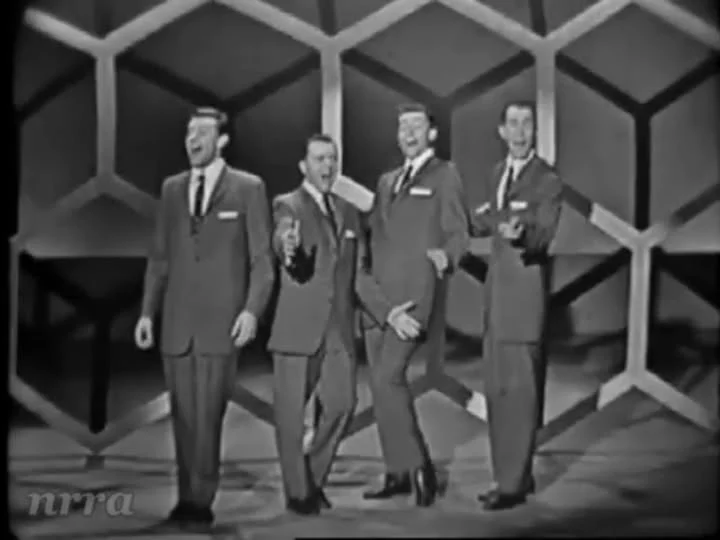
Eye… yi-yi-yi, yi-yi-yi…
That theatrical, almost comical opening is the first clue that Little Darlin’ by The Diamonds is no ordinary doo-wop song. It is a piece of music that wears its heart on its sleeve, exaggerated vibrato and all. For Canadian quartet that rose to fame in the golden age of early rock and roll, this 1957 single became their crowning achievement, a monumental hit that peaked at No. 2 on the Billboard charts and lodged itself in the collective memory of an entire generation. More than a song, it is a time capsule filled with youthful swagger and melodic charm that still feels fresh after all these decades.
The emotional resonance of Little Darlin’ lies in its refusal to take itself too seriously while still delivering an authentic ache. The spoken word bridge, which shifts from high drama to tender pleading, creates a theatrical arc that keeps listeners on edge. This isn’t just a vocal performance; it is a miniature play where the tenor’s desperate pleas are punctuated by the quartet’s buoyant doo-wop backing. The result is a sound that feels both playful and vulnerable, a combination that explains why it has been covered, sampled, and parodied for over sixty years.
Behind the drama lies a masterclass in vocal arrangement. The lead tenor’s expressive lines soar over a foundation of tight harmonies provided by the rest of the group. The call-and-response structure gives the song its infectious energy, while the exaggerated vibrato and emotional crescendos add a layer of theatricality that was unusual for its time. This vocal interplay is the song’s signature, a hallmark of the doo-wop tradition that The Diamonds helped bring to mainstream audiences.
Instrumentally, the track relies on a classic rock and roll ensemble. The guitar provides a steady rhythmic pulse that anchors the arrangement, while the piano punctuates the beat with sharp chords and quick flourishes. The saxophone solo, though brief, adds a burst of sophistication and excitement. The upright bass walks a steady groove, and the drum kit maintains a driving tempo that keeps the whole thing moving. It is in the interplay between guitar and piano that the true energy lies, giving Little Darlin’ a buoyant quality that makes it irresistible to both casual listeners and serious music historians.
Though originally recorded by The Gladiolas (led by Maurice Williams), it was The Diamonds’ version that eclipsed the original in popularity. Their polished production and theatrical delivery turned the song into a hit, eventually landing on multiple compilation albums, most notably The Best of The Diamonds. This album offers a snapshot of the group’s contribution to early rock and roll, a collection of catchy harmonies and upbeat tempos that defined an era. While the quartet did not write the song, their interpretation became definitive, transforming a good track into a timeless classic.
The cultural impact of Little Darlin’ extends far beyond its chart run. It became a staple of 1950s pop culture, frequently appearing in movies, television shows, and nostalgic compilations. Its over-the-top style was often parodied, yet that same element contributed to its staying power. The song walks a fine line between parody and sincerity, delivering a rendition that is both entertaining and musically impressive. For many, it is the sound of a generation discovering rock and roll for the first time, a moment of pure, unguarded joy.
Why does Little Darlin’ still resonate after all these years? In an age of complex production and layered sounds, this track proves that simplicity and emotional authenticity can have just as much impact. Its structure is accessible yet rich, allowing for reinterpretation without losing its soul. The song has been covered by artists ranging from The Beach Boys to British rock bands, each bringing their own flavor while respecting the original’s core essence. Its adaptability keeps it alive in new contexts, proving that great music transcends fashion.
If Little Darlin’ captures your heart, you owe it to yourself to explore the soundscape of the 1950s doo-wop and early rock scene. Songs like In the Still of the Night by The Five Satins pair heartfelt lyrics with lush harmonies. Come Go with Me by The Del-Vikings offers a catchy beat and compelling vocal interplay. Earth Angel by The Penguins is a slow, romantic ballad that has become synonymous with teen culture. Why Do Fools Fall in Love by Frankie Lymon and The Teenagers showcases high-energy vocal excellence. And Only You (And You Alone) by The Platters delivers a smooth, romantic number with impeccable vocal delivery. Each of these tracks, like Little Darlin’, uses vocal harmony, guitar, and piano to create enduring musical moments.
In the end, Little Darlin’ by The Diamonds is more than a nostalgic throwback. It is a masterfully crafted song that captures the spirit of an era, blending theatrical vocals, dynamic instrumentation, and heartfelt emotion into a unique listening experience that transcends generations. Whether you are a collector of vintage vinyl, a student of music history, or simply someone who loves a good tune, this track deserves a special place on your playlist. It stands as a beacon of 1950s musical innovation and a valuable case study for understanding the evolution of pop and rock music. If you haven’t listened to it yet, now is the perfect time to discover or rediscover this gem in The Diamonds’ illustrious catalog.