
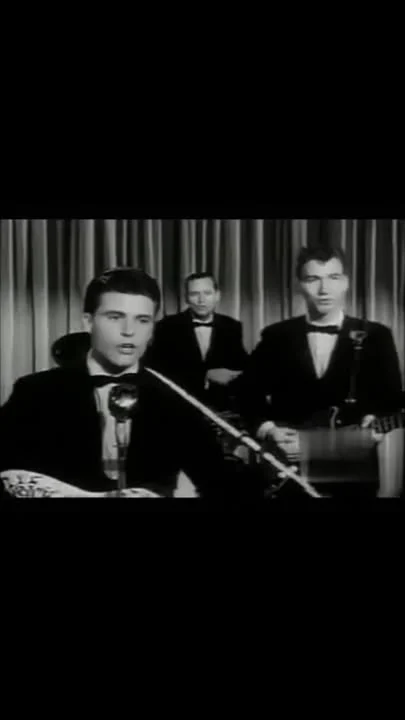
In 1958, a young man with a gentle voice and a boyish grin quietly made history. Ricky Nelson’s “Poor Little Fool” didn’t just climb the charts—it became the very first song ever to top the newly minted Billboard Hot 100. That moment, now etched in music lore, marked a shift in pop culture. Today, this tender track still carries a quiet power, a testament to heartbreak delivered with a soft touch.
“Poor little fool, oh yeah, I was a fool, uh huh.”
What makes this milestone even more remarkable is the story behind the man. Nelson wasn’t just a singer; he was a phenomenon born from living rooms across America. His family sitcom The Adventures of Ozzie and Harriet gave him a unique stage, letting him blend music and television in a way that felt natural and new. This song emerged from his third album, Ricky Nelson, a collection that wove rockabilly, country, and pop into a seamless whole. Alongside tracks like “Lonesome Town” and “Don’t Leave Me This Way,” the album showed an artist who could speak to teens and adults alike, without ever straining for effect.
Yet it is“Poor Little Fool” that remains the crown jewel. At first listen, its simplicity might be mistaken for naivety. But a closer look reveals layers of thoughtful arrangement. The opening guitar riff is deceptively simple—a gentle twang that nods to rockabilly while staying warm and accessible. Beneath it, a piano adds quiet depth, its chords weaving through the melody like a soft breeze. The bass keeps a steady pulse, and the drums, played with brushes, shuffle along without urgency. Every instrument serves the song, never overpowering Nelson’s voice.
And what a voice it is. Nelson’s delivery is a masterclass in restraint. Where other singers might shout their sorrow, he whispers it. That vulnerability is the song’s secret weapon. When he sings about playing a game of love and losing, you feel the ache not because he demands it, but because he invites you in. The lyrics speak to a universal truth—the sting of being fooled by someone you trusted—and Nelson makes that ache feel personal.
More than sixty years later, “Poor Little Fool” endures because it captures a specific emotional spectrum: innocence, love, and the quiet realization that sometimes we are our own worst deceivers. Its historical weight is undeniable, but it is the song’s gentle sincerity that keeps it alive. It is a reminder that the most profound music often comes from a place of understatement.
For those who are moved by this track, a few kindred songs await. Nelson’s own “Hello Mary Lou” offers a brighter, more energetic take on his rockabilly roots. “Lonesome Town”, a haunting ballad from the same album, deepens the emotional resonance. Fans might also find solace in “All I Have to Do Is Dream” by The Everly Brothers or the raw vulnerability of “I Fall to Pieces” by Patsy Cline. Each shares that delicate balance of heartache and beauty.
In the end, “Poor Little Fool” is more than a footnote in chart history. It is a snapshot of an era, a young man’s voice, and a song that dares to be soft in a world that so often demands noise. It invites us to listen closely, to feel deeply, and to remember that sometimes the quietest songs leave the loudest echoes.