
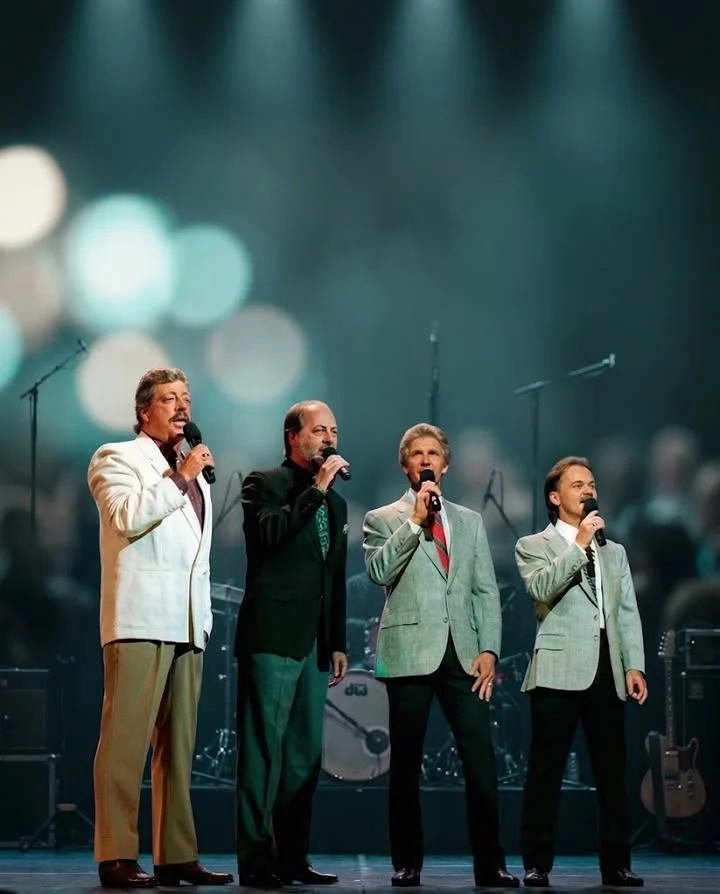
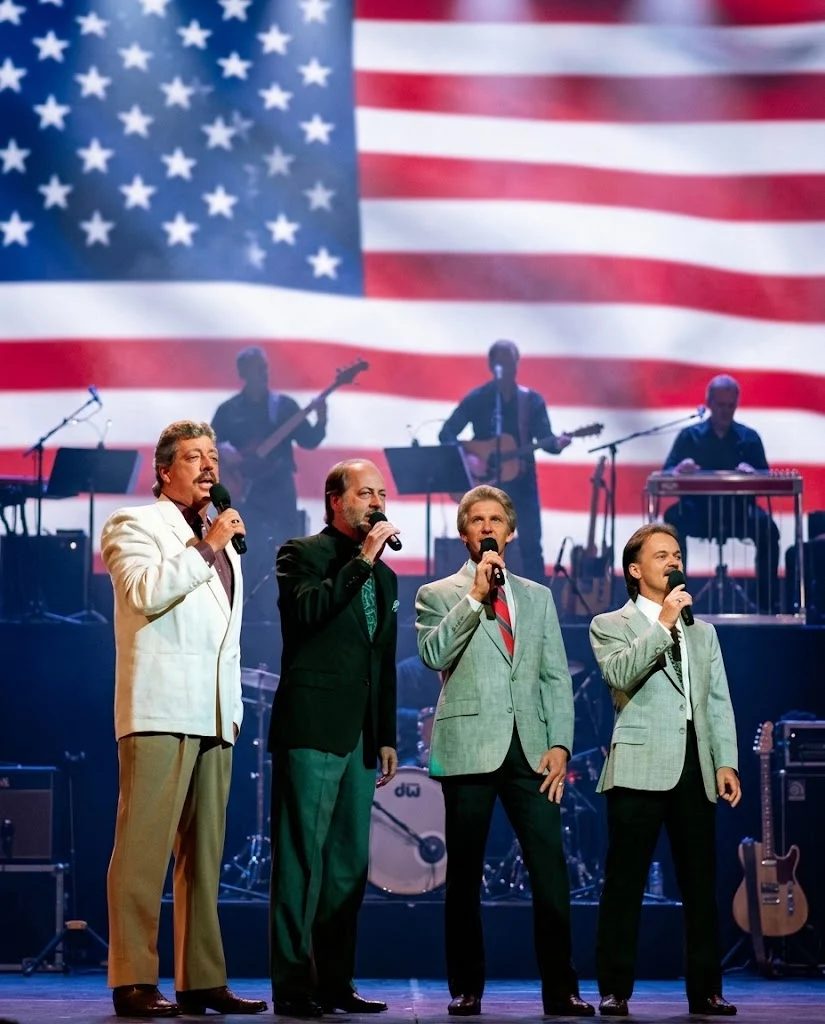
For a quarter of a century, a small Virginia town was the epicenter of country music’s most spectacular summer tradition—and no one ever paid a cent to get in.
In 1970, The Statler Brothers, already country superstars with hits like “Flowers on the Wall,” decided to throw a Fourth of July party for the community that raised them. Instead of chasing Nashville fame, Harold Reid, Don Reid, Phil Balsley, and Lew DeWitt—later joined by Jimmy Fortune—stayed in Staunton, Virginia, and turned Gypsy Hill Park into a musical wonderland.
From the start, the rule was ironclad: the concert was free. The band personally covered the stage, production, and security costs. But the real magic? Every dollar from parking and concessions went straight to local charities, schools, and park restoration.
What began as a hometown gathering exploded into a national phenomenon. By the 1980s, up to 100,000 fans flooded a town of just 20,000 people. Traffic backed up for miles along Interstate 81, and the entire community—police, volunteers, and civic clubs—worked together to pull off a logistical miracle.
The biggest names in country music came not for money, but for loyalty. Conway Twitty, Charley Pride, Barbara Mandrell, and Mel Tillis all performed out of respect. When Johnny Cash was needed, he didn’t hesitate—he had spent eight and a half years touring with The Statlers as his opening act, and he gladly returned the favor.
Families arrived days early, parking trucks on the grass and setting up lawn chairs for the fireworks. It wasn’t a promotional stunt; it was a heartfelt thank-you to the neighbors who had watched them grow up. For thousands, this festival was the heartbeat of their childhood.
On July 4, 1994, The Statler Brothers gave their final performance. They chose to end the tradition at its peak, rather than let it fade. The music may have left Gypsy Hill, but the legacy of four men who bought their hometown a 25-year concert remains untouchable in country music history.