
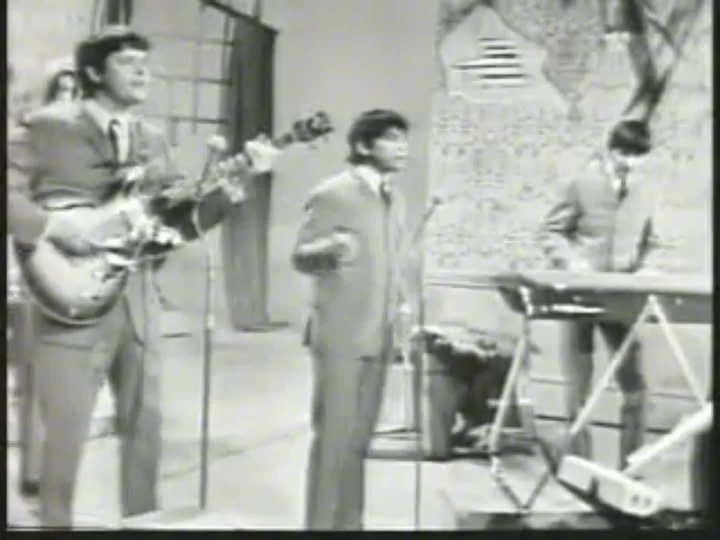
Eric Burdon’s voice doesn’t just sing the opening lines of “We Gotta Get Out of This Place” — it aches with a desperation so palpable that six decades later, listeners still feel it in their bones. The year was 1965, and The Animals had just unleashed what would become an enduring anthem for anyone who has ever felt trapped, beaten down, or desperately hungry for change. But this was never just a hit single. It was a lifeline thrown to a generation suffocating under the weight of expectation, war, and dead-end streets where the sun refused to shine.
What makes this song extraordinary is how its raw, working-class grit continues to speak to people who have never known the 1960s. A teenager in a crumbling town, a soldier far from home, a single parent clocking double shifts — they all hear the same defiant cry: there is a way out. And that, perhaps, is the truest measure of a classic. It refuses to grow old.
The song was crafted not by The Animals themselves but by the brilliant songwriting duo Barry Mann and Cynthia Weil, titans of the Brill Building era. They originally wrote it with another artist in mind. But when producer Mickie Most heard the demo, he knew instantly that this aching, blues-soaked plea belonged to Burdon and his band. The Animals had built their reputation on a sound that was anything but polished — raw, emotional, and unapologetically rooted in the blues. Their version of the song dripped with urgency, every guitar riff and drumbeat pulling the listener forward like a train racing toward the horizon. It was the sound of people who had nothing left to lose.
The 1960s were a time when the world seemed to crack open. The civil rights movement surged forward. The Vietnam War swallowed young lives by the thousands. Authority was questioned, tradition was challenged, and a generation decided they wanted something more than the script handed to them by their parents, who had survived depression and world war only to build a world that felt suffocating to their children. “We Gotta Get Out of This Place” captured that frustration better than any speech or protest sign. It became especially beloved by American soldiers in Vietnam, who heard in its chorus a mirror of their own longing — to escape the mud, the fear, the uncertainty, and find something resembling hope.
The lyrics paint a stark picture from the very first verse. A dirty part of the city where even the sun gives up. People who have stopped trying. A father whose hair has turned gray from a lifetime of labor that has brought him nothing but exhaustion. Burdon’s delivery is part confession, part rallying cry. When he sings
We gotta get out of this place, if it’s the last thing we ever do
he isn’t just humming a hook. He is making a promise. The repetition of that line is deliberate — it hammers home the idea that escape isn’t a fantasy. It is a mission.
The musical arrangement itself seems to breathe with purpose. That legendary bassline, often hailed as one of the most unforgettable in rock history, pulses beneath the song like a heartbeat. The drums keep steady time. The guitars sting with restraint. Everything about the instrumentation feels like movement — like a car engine idling, ready to tear away from a place that offers nothing. It is no accident that the song propels you forward. It was designed to.
Over the years, Bruce Springsteen, Bon Jovi, and countless others have covered it. It has appeared in films, television shows, and documentaries. Each new generation discovers it and finds their own meaning in its plea. For some, it is a song about escaping poverty. For others, it is about leaving a toxic relationship or breaking free from a suffocating small town. Its flexibility is its genius — it fits every cage because the desire for freedom is universal.
In an era marked by economic uncertainty, political division, and environmental anxiety, “We Gotta Get Out of This Place” has found fresh relevance. People still feel trapped. They still dream of something better. And the song still tells them, with the same raw conviction it carried in 1965, that hope is not foolish — it is necessary. It reminds us that even in the darkest alleyways of life, there is always a path forward. You just have to be brave enough to take it.
This is not merely a song. It is a testament to the stubborn, beautiful human refusal to accept a life without promise. It is a reminder that sometimes the bravest thing you can do is leave. And that, as Burdon’s weary but unwavering voice assures us, a better life is waiting somewhere. You just have to believe it enough to go find it.