
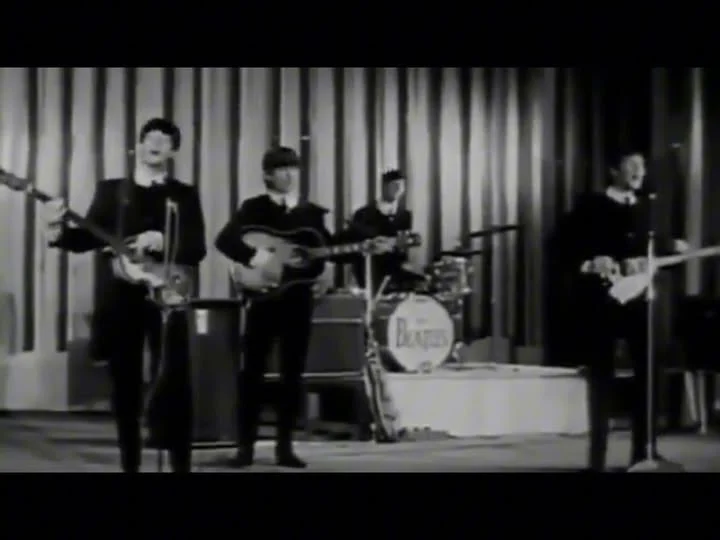
In the autumn of 1962, four young men from Liverpool walked into EMI’s Abbey Road studios with a two-minute song that would change everything — but no one knew it yet. The tape rolled, capturing a sound so stripped back it almost felt unvarnished, a rhythmic heartbeat of bass and harmonica that owed more to American blues than polished pop. That song was “Love Me Do,” and it remains the essential starting point of the Beatles legend, a raw declaration of intent from a band that had just barely convinced the world to listen.
The session itself was fraught with tension. Producer George Martin, a classically trained musician who had worked with comedy records and easy listening, was skeptical of the band’s raw Merseybeat energy. He demanded a take that felt clean and commercial, but the version that made it onto the original UK single — released on Parlophone in October 1962 — featured Ringo Starr on drums, a performance defined by its driving, slightly loose feel. A second take, used for the album Please Please Me and the later US release, replaced Ringo with session player Andy White, pushing the drummer to the tambourine. The earlier, scrappier version is the one that historians point to as the truest artifact of the band’s hungry ambition.
Listen closely, and the architecture of the song reveals itself as a masterclass in simplicity. Paul McCartney’s bass line is insistent and unadorned, a melodic pulse that hooks the listener from the first bar. John Lennon’s harmonica — borrowed from the blues tradition and played with a rough, streetwise edge — provides the track’s signature texture, a blast of gritty air against the clean vocal blend. George Harrison’s guitar stays subordinate, offering rhythmic strumming and harmonic support that never overpowers. There is no piano, no orchestral flourish, no studio trickery — just three chords and a twelve-bar blues foundation, delivered with the intimacy of close-mic’d vocals that sound almost conspiratorial.
The vocal interplay is where the song truly lives. McCartney’s lead is earnest and focused, while Lennon’s harmonies hover slightly behind the beat, adding warmth and emotional depth. The famous hook — “Love, love me do / You know I love you” — is less a composed melody and more a discovered phrase, adolescent in its directness and utterly irresistible. It feels like a statement of purpose, not a finished product.
“It is the sound of the future collapsing in on the past, of grit demanding an equal footing with glamour.”
Released in the UK, the single peaked at number seventeen — a modest success that nonetheless gave George Martin and Parlophone the confidence to invest in the band’s future. It would take another year for “Love Me Do” to top the charts in America, in 1964, confirming the transcontinental reach of Beatlemania. But the victory was already sealed in that small, smoky, contained sound of 1962: a debut that declared the band’s ambition not just to perform, but to write their own stories.
Today, playing the original single on a high-end audio system reveals the subtle engineering choices — tight compression on the drums, the dry room acoustics, the vocal blend that feels like a physical embrace. It sounds less like a studio production and more like a live broadcast from a sweaty Hamburg club, a document of a hungry band ready to conquer the world one simple, blues-tinged plea at a time. It remains a starting gun, a historical marker, and above all, an infectious invitation to the dance floor.
Further Listening
- The Isley Brothers – “Twist and Shout” (1962): Shares the same raw R&B energy and simple rhythmic drive, later famously covered by the Beatles.
- Buddy Holly – “Peggy Sue” (1957): Clean early rock-and-roll architecture, simple chord changes, and close vocal delivery.
- Little Richard – “Long Tall Sally” (1956): Ferocious vocal delivery and tight rhythm section that heavily influenced the Beatles’ live shows.
- Gerry and the Pacemakers – “How Do You Do It?” (1963): Prime example of George Martin’s Merseybeat sound from a contemporary.
- The Crickets – “That’ll Be the Day” (1957): Foundational early rock track with propulsive rhythm and an unforgettable vocal hook.
- The Everly Brothers – “Wake Up Little Susie” (1957): Essential for understanding the close two-part harmony singing that Lennon and McCartney mastered.