
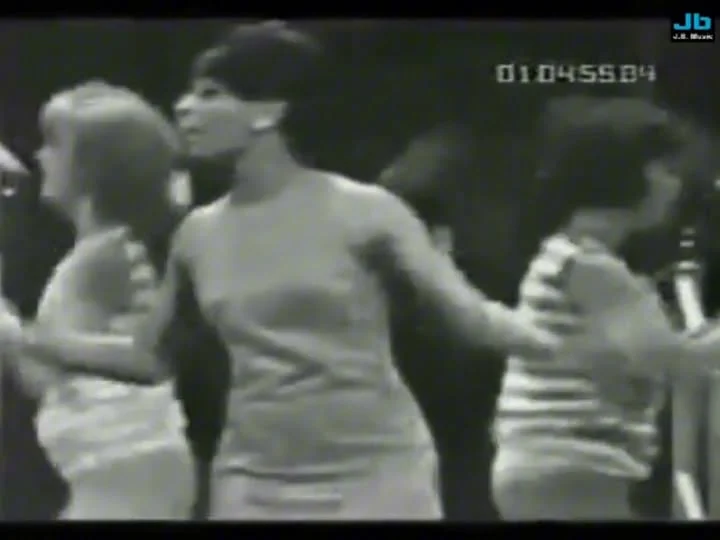
The first time you hear it something happens that defies explanation. Your hands twitch. Your foot taps. A grin spreads across your face before you even know what is happening. It is the sound of a 1965 pop-soul anomaly called The Clapping Song and it bypasses every filter your brain has built for polite behavior. Shirley Ellis did not just record a novelty hit. She weaponized pure rhythm into three minutes of irresistible chaos.
This was not the polite pop of the early sixties nor the psychedelic haze of the late decade. This was something else entirely. A syncopated snare drum crack sharp as a rifle shot. A four-on-the-floor beat that felt less like music and more like a command. The silence of a late Saturday morning in a sleepy café was obliterated when the needle dropped on that vintage console. The room jolted. The stillness that had felt heavy and expectant suddenly became irrelevant.
It is a song that bypasses the intellect entirely and speaks directly to the limbic system the part of the brain that simply wants to move and grin
Shirley Ellis was born Shirley Elliston and she possessed a rare gift for taking the vernacular snatching it from schoolyards and street corners and transforming it into chart-topping gold. She had already done it with The Name Game in 1964 and The Clapping Song released on the Congress label was designed as a deliberate follow-up in that same spirit of infectious audience participation. The track was co-written and originally recorded by Lincoln Chase but Ellis and her production team reshaped the raw material into something far more potent.
The arrangement credited to the remarkably versatile Charles Calello is where the true brilliance lies. Calello who would go on to shape hits for Laura Nyro and Frank Sinatra brought a sophistication that elevates the track far beyond mere novelty. The core of the song rests on a simple repetitive riff driven by a tight compact rhythm section. A soulful electric guitar plays a crisp staccato counter-rhythm perfectly locking with a bubbling bass line that provides all the underlying funk. The percussion is layered with hand-claps recorded close to the microphone creating a sound that is both intimate and explosive. These claps are not ornamental. They are the entire reason the track exists the percussive pulse that pulls the listener physically into the song rhythm game.
Ellis vocal performance is a marvel of controlled exuberance. She shifts seamlessly between singing the traditional rhyme Three six nine the goose drank wine and barking out precise clear instructions for physical actions Clap pat clap pat clap your hand cross it Right hand clap pat clap pat clap slap. Her voice carries a gritty joyful timbre pitched perfectly between a commanding teacher and a fellow mischievous student. It cuts through the densest arrangements. Here where the arrangement is relatively sparse and pointed her phrasing is everything rapid-fire almost breathless demanding immediate physical response.
The middle section reveals Calello genius for controlled chaos. A bright brassy horn section appears adding a splash of orchestral color. The brass lines are short punchy and utterly dynamic providing a call-and-response element to Ellis vocal commands. Fleeting glimpses of a bright piano tinkling an octave line reinforce the playful almost carnival-like atmosphere. The mix is surprisingly detailed especially when heard on high-fidelity premium audio equipment. The snare rim-shots are distinct. The brass retains its punchy metallic sheen. Ellis voice sits front and center remarkably present and clear.
This track operated in the singles-driven marketplace of the era. It was not tied to a dedicated studio album. It was made for the radio for the dance floor for the sheer instantaneous rush of a three-minute explosion. The context matters. The Clapping Song takes a piece of innocent folk poetry something generations of children had whispered and chanted and frames it with the muscular assertive sound of 1960s R&B. The simplicity of the lyric is juxtaposed with the complexity of the synchronized hand motions it describes and the tight-knit sophistication of the studio arrangement. It is restraint in the service of catharsis.
We talk today about interactive music about streaming and personalized playlists. But Shirley Ellis was building a form of interactive call-and-response music that crossed racial and generational lines in 1965. Whether you knew the playground origins of the rhyme or not the command was universal. When played at parties it instantly clears the self-consciousness from a room. People may not know the song name but their hands invariably begin to move attempting to find the beat to follow the instructions. It taps into a collective primal memory.
The Clapping Song remains essential because of its sheer uncompromising directness. It does not aim for profundity. It aims for participation. It is an aural command to move. This song is not just a relic of the mid-sixties. It is a continuously relevant document on the power of groove and the human voice. It reminds us that the most sophisticated musical architecture can sometimes be built upon the most basic repeated actions the rhythm of a foot a heartbeat a clap.
Listening Recommendations
Shirley Ellis – The Name Game 1964 The direct predecessor another brilliant novelty hit centered on a linguistic game and a propulsive beat
Little Eva – The Locomotion 1962 Shares the joyful instructional dance theme backed by a full vibrant sixties pop-soul arrangement
Doris Troy – Just One Look 1963 A muscular bright-sounding R&B single from the same era with equally punchy brass accents
Rufus Thomas – Walking the Dog 1963 Captures the playful dance-oriented grit and simple irresistible hook of the best mid-sixties soul singles
The Belle Stars – The Clapping Song 1982 A must-hear new-wave cover that shows the timeless adaptability of the core melody and structure
Sam Cooke – Twistin the Night Away 1962 A quintessential early sixties dance track that shares the sheer high-energy exuberance and communal feel