
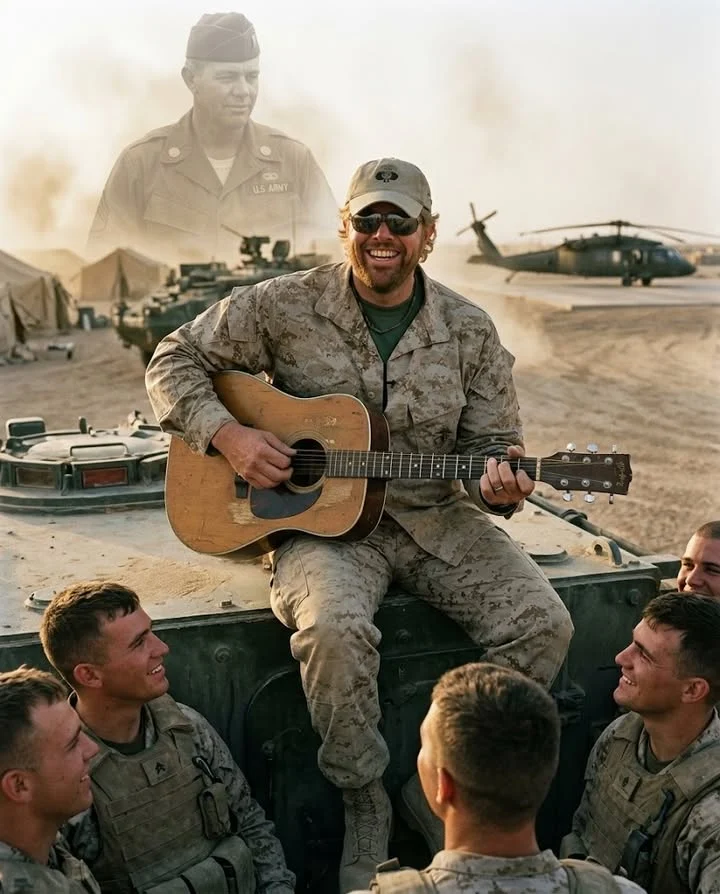
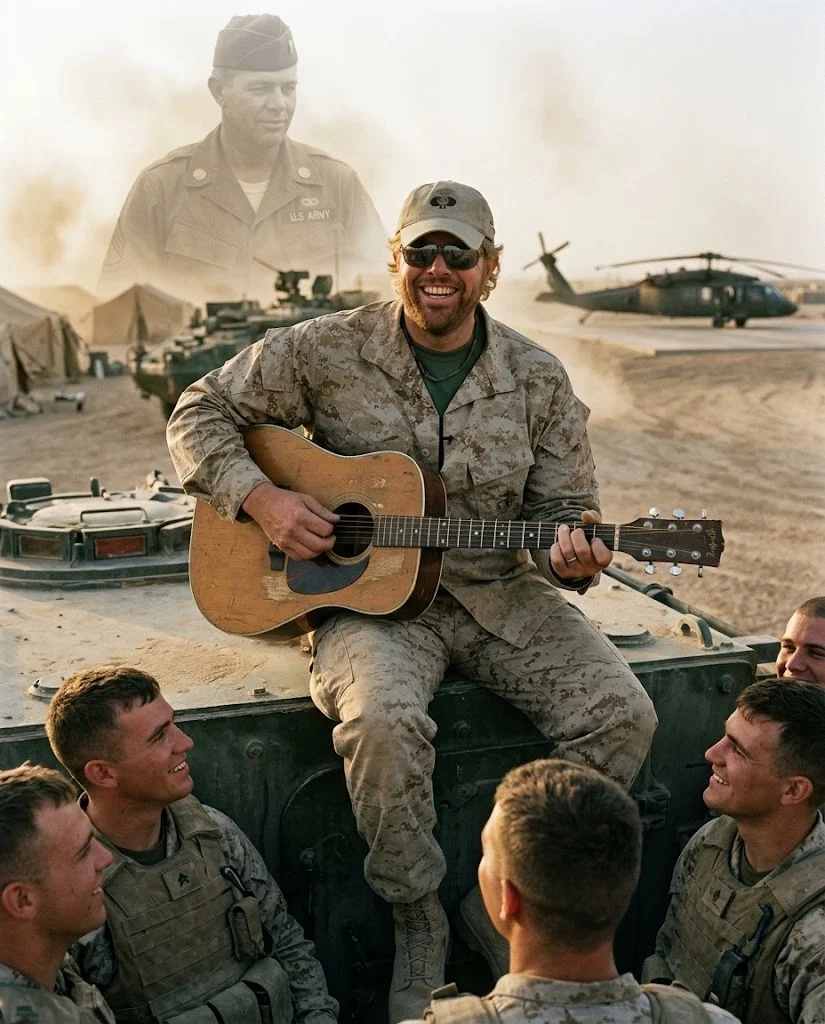
The roar of a sold out stadium was waiting for him, but Toby Keith wanted the smaller circle of sandbags and dust.
Across 11 USO tours, beginning in 2002, his journey carried him to Iraq, Afghanistan, Kosovo, and beyond, reaching more than 250,000 American service members across 17 countries.
“He traded luxury for danger, and he traded applause for presence.”
This was never a publicity mission. Keith was raised by an Army veteran father who had lost an eye in a combat training mission in the 1950s. That childhood lesson became a lifelong vow. When fame gave him a platform, he used it to stand beside the troops.
He refused the safest path. Instead of staying inside massive, heavily guarded central bases, he insisted on FOB hopping, taking helicopter flights to remote Forward Operating Bases at the very tip of the spear. He swapped tour buses for Kevlar helmets, body armor, and Black Hawk rides. He slept in unheated canvas tents, ate field rations with the soldiers, and performed on makeshift stages built from shipping pallets.
The danger was real. Mortar sirens could interrupt a night in a heartbeat. When attacks stopped a set, Keith did not pack up and flee. He waited out the assault in a bunker with the troops, then returned to his microphone as soon as the all clear sounded. The music brought brief relief, but his willingness to remain in the dust earned something deeper.
The most powerful moments often happened after the last note faded. Away from cameras, Keith sat in the dirt and listened. Soldiers handed him unit coins, showed worn photographs of their children, and spoke about spouses holding families together, long deployments, exhaustion, and the grief of friends lost along the way.
“The desert conversations changed the course of his music.”
Those unguarded talks inspired one of his most defining tracks, “American Soldier”. The song was not written as a political statement or a battle anthem. Keith wanted to portray service members as real people, ordinary parents and spouses carrying an extraordinary weight. The lyrics honored the quiet sacrifice of doing the job and bearing the burden.
He brought that song back to combat zones year after year. When he stood on a dusty stage in the middle of the Afghan desert and sang about the cost of sacrifice, the atmosphere shifted. He became a mirror, reflecting their own lives back to them and briefly closing the distance between the front lines and the front porches they had left behind.
“American Soldier” became part of the military community’s fabric, requested at deployment ceremonies, emotional homecomings, and military funerals. The industry may measure his legacy through platinum records, chart toppers, and massive crowds, but many veterans remember a different kind of stage.
When they were deployed to the hardest corners of the world, he put on a helmet, packed his guitar, and went to stand in the dust with them.