
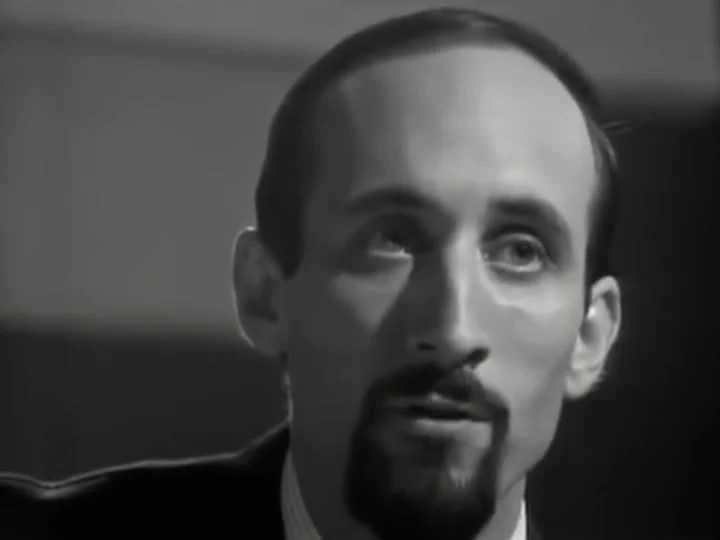
Peter, Paul & Mary conjure a storm of melancholy and beauty in their 1965 rendition of Gordon Lightfoot‘s “Early Morning Rain.” The trio’s version, nestled within their album See What Tomorrow Brings, doesn’t just cover a song; it transforms a folk standard into a delicate, three-part meditation on longing. This is not the sound of a bright dawn. It is the sound of a solitary soul watching a jet ascend while rain washes the asphalt, a feeling captured with such aching precision that it lingers like a morning fog.
The core of this interpretation lies in its reverence for simplicity. Peter Yarrow, Paul Stookey, and Mary Travers understood that the song’s power was best revealed by stripping away excess. The result is a masterclass in folk arrangement, where every note and every breath serves the narrative of a lonesome traveler. The album See What Tomorrow Brings itself is a vessel for this kind of emotional storytelling, weaving through hope and social commentary, but “Early Morning Rain” stands as its most poignant anchor.
“In the early mornin’ rain with a dollar in my hand / And an aching in my heart…”
The recording’s architecture is built on intimate, acoustic foundations. The guitar work provides a rhythmic heartbeat, a gentle but persistent pulse that mimics the fall of rain. It avoids any flashy fretwork, instead choosing a fluid, almost hypnotic strum that keeps the listener grounded in the song’s imagery of distant runways and solitary drinking. The piano enters not as a lead, but as a whisper of wind, adding a shimmer of melancholic resonance that deepens the sense of yearning. Together, these instruments create a world that feels both vast and intensely personal.
However, the true soul of this piece is the vocal interplay. Mary Travers‘s soaring alto weaves through the harmonies of Yarrow and Stookey, creating a tapestry of voices that rise and fall with the narrative’s emotional current. There is a careful balance—a sense of shared solitude. They sing not as a bright, unified trio, but as three echoes of the same lonely thought. This dynamic elevates the lyrics from simple description to a visceral experience of loss and a quiet, desperate hope for connection. It is this vocal vulnerability that transforms a story about a grounded traveler into a universal feeling of being stuck while the rest of the world takes flight.
The enduring power of “Early Morning Rain” is a testament to its timeless theme. We have all felt, at some point, the ache of watching something—a plane, a person, a moment—depart while we remain. The song’s refrain, “So I’d best be on my way in the early mornin’ rain,” becomes a quiet mantra of resilience. For those who are moved by this gentle storm of a song, the journey need not end here. Listeners seeking a similar spirit can explore Gordon Lightfoot‘s original poetic ache in “If You Could Read My Mind,” or the reflective power of Tom Paxton‘s “The Last Thing on My Mind.” Even Bob Dylan‘s “Blowin’ in the Wind,” another cornerstone of the folk revival that Peter, Paul & Mary helped define, shares this simple, profound longing for understanding.
Within the framework of See What Tomorrow Brings, “Early Morning Rain” is more than a track; it is a thesis on the beauty of restraint. It proves that the most resonant folk music does not need a grand gesture. It only needs a quiet voice, a simple melody, and the courage to sit with sorrow until it becomes something beautiful. This is Peter, Paul & Mary at their most pristine, offering a piece of music that remains a cold, gentle hand on a lonely shoulder.