
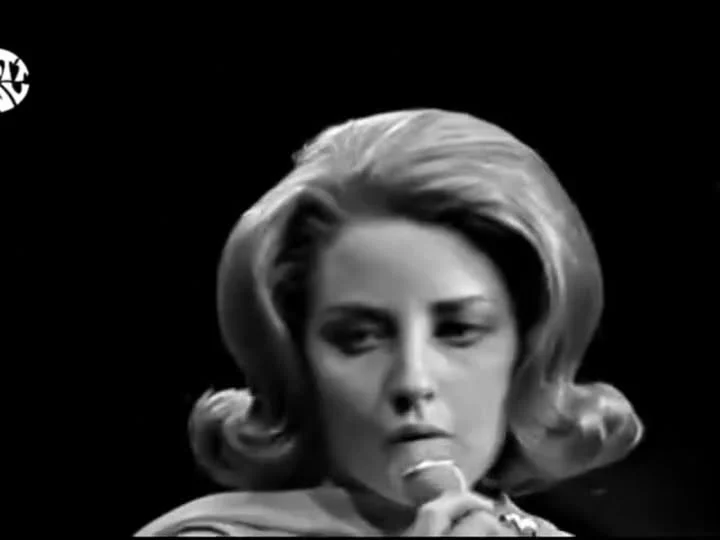
There is a moment in Lesley Gore’s “It’s My Party” when vulnerability becomes a superpower. A teenage voice, calm and steady, declares the right to fall apart in full view of a room. That declaration—unapologetic, precise—turned a two-minute pop single into a cultural landmark. The song, released in 1963 on Mercury Records, announced the arrival of an artist whose composure would define an era. Quincy Jones produced the track, working with arranger Claus Ogerman to craft a frame that let every syllable shine. The single shot to number one on the U.S. charts, and its influence has never faded.
The narrative unfurls like gossip overheard at a party. Judy and Johnny, a romantic triangle, a public heartbreak. But the lyrics refuse to moralize. Instead, they offer a simple claim: I will feel what I feel, in front of all of you. That stance, sung with what sounds like quiet authority, prefigured the autonomy anthems that would follow later in Gore’s career. The song’s power lies not in anger but in a steady refusal to perform happiness for others. It dignifies the flicker of hurt.
Elegance, not excess, is what makes the tears in ‘It’s My Party’ shine.
The production values restraint. Jones’s touch is clean, avoiding the heavy echo that marked many records of the time. The rhythm section sits close and dry, with drums that punch on the backbeat and a bass line that stays in the pocket. Handclaps double the snare in the chorus, creating the feel of a roomful of witnesses. Strings arrive like festive decorations, buoyant without smothering the voice. Ogerman’s charts give the singer a runway, not a cage. The mono mix was engineered for transistor radios and jukeboxes—midrange definition prioritized, low end taught, top end bright but not brittle. That specificity is why the record still sounds honest today on any system.
Listen closely to how Gore uses consonants. The “p” in party becomes an event; the “t” in won’t snaps like a small decisiveness. Her enunciation is almost percussive, shaping the groove. She doesn’t belt—there is no need. The microphone is a confidante, and the band behaves as if they are in on the secret, feeding tidy call-and-response backing lines. The performance feels both diaristic and public, a confession with ticketed seating.
The arrangement plays with cinematic focus. Verses are camera-tight: a voice, a heartbeat rhythm, a sense of space defined by short tails of room reverb. The pre-chorus lifts slightly, adding more air around the vocal, so that the chorus lands with bright, metallic clarity. Strings push the top end without screeching; horns dart in to underline key phrases. The session players read Ogerman’s charts with professional cool, striking each accent like a light cue.
Culturally, the timing was crucial. By 1963, rock and roll’s first wave had matured into girl-group polish and orchestral pop. “It’s My Party” fits that axis but refuses to blur into it. Its famous line—declaring the right to cry—snugs into the grammar of teen autonomy just before the British Invasion tilted pop’s center of gravity. Gore’s debut didn’t resist that change; it helped sketch the world that change would transform.
Songwriting credit belongs to John Gluck Jr., Wally Gold, and Herb Weiner. They turned gossip-grade drama into a tune that moves with the natural gait of a conversation. The melody sits in a range that flatters a youthful soprano. No gratuitous leaps, no cliff edges. Everything is shaped to keep the story front and center. That simplicity helped the single travel so far so fast. It is easy to sing along with, easier still to remember.
Spend a minute with the backing vocals. They do not stack for drama; they circle for solidarity. This is not an angry song, despite its premise. It describes a threshold. Cross it, and the world reorganizes in small ways. That is why the record endures at school dances, on retro playlists, and in soundtracks that want to evoke a precise mixture of innocence and consequence. The social physics are modern. Public spaces still tutor us in how to carry private disappointments. The chorus codifies a transferable right: your reaction belongs to you, even in front of others.
If you trace the history of female-voiced pop, “It’s My Party” is an early stop worth lingering at. From its composure, you can draw a line to later artists who balance polish with forthrightness. It is not flashy; it is level. And in pop, level can be radical. One more listen, and notice the outro. The performance doesn’t collapse or spike toward revenge. It keeps to its own time, holds its shape, and steps away. In that poise is the point.
For those who want to explore the sonic neighborhood, these companion tracks share the same era’s craft and attitude:
- The Crystals — “He’s Sure the Boy I Love” (Girl-group sheen with a tougher vocal edge)
- The Shirelles — “Will You Love Me Tomorrow” (A landmark ballad of teen contemplation, clean arrangement, lasting questions)
- Connie Francis — “Stupid Cupid” (Breezy pop that flips heartache into a wink)
- Dusty Springfield — “I Only Want to Be with You” (Brighter, brassier orchestral pop that still swings)
- Lesley Gore — “You Don’t Own Me” (A later declaration expanding the theme of agency with darker hue)
- The Ronettes — “Be My Baby” (Phil Spector-scale grandeur contrasting with Gore’s taut restraint)
The single, paired with the album I’ll Cry If I Want To, reads almost like a short story collection about public emotion. Breakups happen in rooms with witnesses, and that is part of the ache. In that light, “It’s My Party” becomes more than a debut hit—it is the keystone in a design about feeling out loud.