
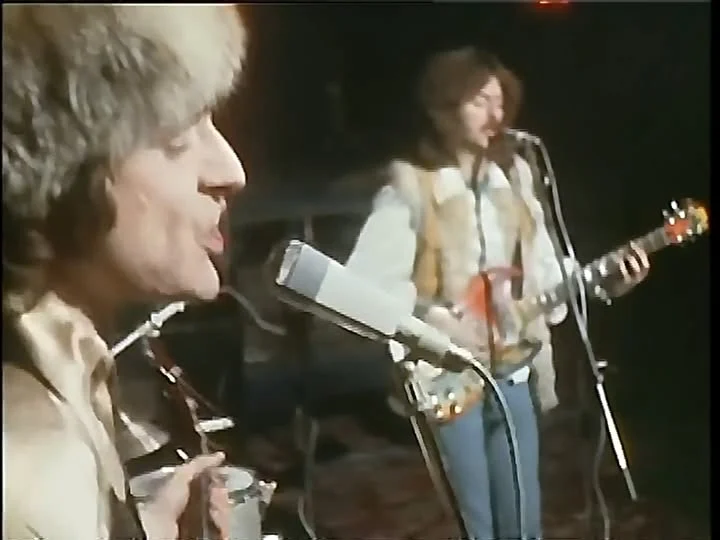
In the pantheon of rock music, few songs have achieved the seismic impact of Cream’s “Sunshine of Your Love.” It is a track that transcends simple listening. It resonates and anchors itself in the listener’s consciousness with a hypnotic groove. Released in 1967 as part of the album Disraeli Gears, this song marked a pivotal moment in music history.
The year 1967 was immersed in psychedelic excess. Yet Cream offered something different. With Eric Clapton on guitar, Jack Bruce on bass and vocals, and Ginger Baker on drums, the trio created a sound that was both heavy and melodic. Recorded in a few frantic days in New York with producer Felix Pappalardi and engineer Tom Dowd, Disraeli Gears represented a new direction. It blended blues roots with a lush, lysergic hue.
At the heart of “Sunshine of Your Love” is Jack Bruce’s bass riff. It is a descending figure that pulses like an engine. This riff serves as the foundation. It locks with Ginger Baker’s drumming. Baker avoids the conventional backbeat. He places emphasis on the third beat instead. This was inspired by the “Indian beat” of Western films. The result is a tribal, ceremonial rhythm that gives the song its unique feel.
Over this rhythmic bedrock, Eric Clapton weaves his guitar work. His fills are restrained. His vocal interplay with Bruce adds an intimate layer. The solo is where the song soars. Clapton builds it with architectural precision. He uses controlled feedback and a warm, sustained tone. The solo is a journey through time and space. The phrases seem to float before snapping back into the pocket. This solo transitioned Clapton from a blues guitarist to a rock icon.
“The central genius of ‘Sunshine of Your Love’ is its transformation of the blues idiom from a wail of personal pain into a heavy, communal chant.”
On the cultural front, the song climbed the US charts slowly but surely. It reached the top 5. It became a soundtrack for the late sixties youth culture. It was played on FM radio. It accompanied long drives on American highways. Its appeal endures and it connects with new generations of listeners.
For those seeking similar musical experiences, consider these tracks from the same era. Jimi Hendrix Experience’s “Voodoo Child (Slight Return)” from 1968 offers similar heavy psychedelic blues distortion. Led Zeppelin’s “Dazed and Confused” from 1969 features a dark descending riff influenced by Cream. Mountain’s “Mississippi Queen” from 1970, with Felix Pappalardi as a member, carries thick blues-rock swagger. Jeff Beck Group’s “Plynth (Water Down The Drain)” from 1969 showcases instrumental interaction. Blue Cheer’s “Summertime Blues” from 1968 represents the extreme end of early hard rock.
In its final moments, the song fades out with the central riff continuing its slow descent. It leaves a lasting sensation. It is a song that demands not just listening but feeling. It is a timeless piece that continues to inspire.