
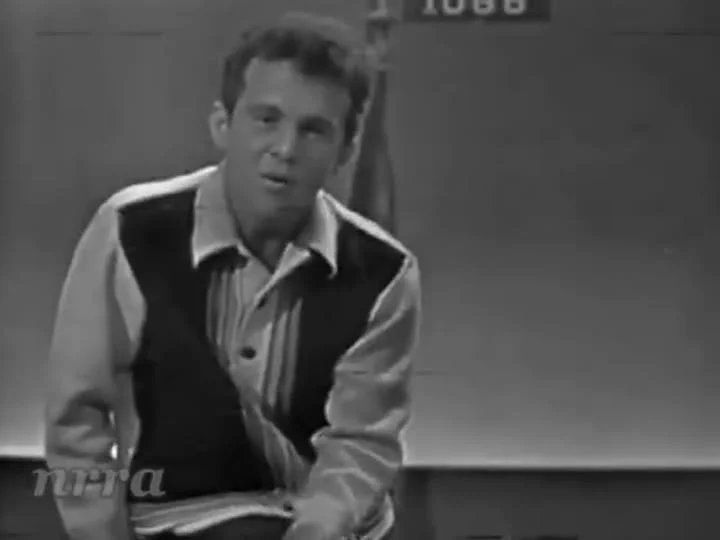
The first time I heard it, the world seemed to pause. A dark highway stretched ahead, the radio crackled to life, and then those opening strings rose like a slow exhale. For two minutes and forty seconds, I was not alone in my loneliness. That is the strange magic of Bobby Vinton’s Mr. Lonely a song that feels like a letter never sent, finally spoken aloud in a perfectly treated room.
The story behind this enduring ballad begins in 1962, when Vinton first recorded the track during his early sessions for Epic Records. It was tucked away as an album cut on Roses Are Red and remained hidden in plain sight. At that time, the label did not hear it as a single. Another singer, Buddy Greco, released his version that same year, and it modestly charted. Two years later, as America’s involvement in Southeast Asia deepened, Epic reversed course. In October 1964, they issued Vinton’s original as a single, and by December it had climbed to No 1 on the Hot 100. The industry is full of what-ifs this one became a happy inevitability.
What makes the record so timeless is its arrangement. Producer Bob Morgan and conductor Robert Mersey crafted a sound that is both grand and gentle. Strings lay long, sighing lines while woodwinds answer in soft filigree. The drums move like a heartbeat rather than a backbeat, and occasional brass arrives like a hand on the shoulder rather than a fanfare. The reverb is a polite early-sixties glow, just enough plate shimmer to imply a large room without swallowing the voice. The orchestration frames Vinton with silken restraint, never fussy, always supportive.
Listen closely to Vinton’s technique and you hear why he owned this lane of pop. His vibrato blooms late in the note, so sustained tones feel like they have discovered grief mid breath. He softens consonants, favoring legato lines that glide rather than jab. Yet he clips key words with a tiny catch that reads as involuntary emotion. The second verse sob effect is widely noted it is theater, yes, but persuasive theater that opens a window into character rather than merely signaling sadness. The harmonic movement is classic pre-Beatles pop, predictable in the best sense, allowing the melody to shoulder the storytelling. Restraint becomes architecture.
The song’s emotional frame is explicit: a man far from home discovers that quiet amplifies absence. Vinton himself began writing it while serving in the Army, and the lyric belongs to a soldier with no mail, no voice on line, and a deepening sense of isolation. Released in late 1964, it resonated with listeners living through news footage of young men shipped across the world, and with anyone who had ever stared at a telephone that refused to ring. The track manages to be both glamorous and gritty the tuxedo cut of the strings, the scuffed shoes honesty of those breathy phrases. In that tension, it lives.
If you were mapping pop’s landscape that year, you would place this record next to the onrushing electricity of the British Invasion and the folk revival’s plainspoken directness. Mr. Lonely opts for another route Sunday best orchestration, cinema screen melancholy, and a vocal that refuses to condescend to its own sentiment. The arrangement is a study in how to sound big while moving gently. The instrumental palette includes a muted bass that moves with the patience of a night watchman, a soft piano cushion that fills gaps like lamplight in a dark corner, and a restrained guitar figure that occasionally brushes the harmony more texture than feature. The mix keeps our attention pinned to the voice, allowing the strings to carry a little extra sheen in the high mids engineered brightness that reads as unshed tears while the low strings ground the harmony in a slow moving tide.
Part of the song’s endurance comes from how well it scales in different listening spaces. On small speakers, it is a voice in a doorway. On a full system, the strings sit shoulder to shoulder and the hall bloom presses gently at the edges. In headphones, the intimacy is almost conspiratorial. We tend to treat loneliness as a private condition this record turns it into a public object you can sit with without embarrassment. Vinton and co writer Gene Allan structure the verses so that tension accumulates without any single melodramatic gesture. The chorus earns release not by going higher but by deepening vowel space and extending sustains. Catharsis arrives horizontally rather than vertically.
Great pop doesn t solve your loneliness it names it so clearly you feel less alone shouldering it.
At a distance of six decades, what surprises me most is how modern the emotional design feels. The record does not wallow it practices economy. It offers a dramaturgical cry but declines melodramatic spectacle. It trusts listeners to bring their own biography to the quiet spaces and to accept consolation without cure. Cynics say that nothing dates faster than sincerity, but Mr. Lonely disagrees, and it does so with warmth.
The song also functions as a hinge in Vinton’s career. By the time it topped the charts in December 1964, he had established himself as a reliable singles artist with a string of smooth, melodically rich ballads. This hit became another pillar in that run and, in retrospect, his last US No 1, a capstone on the early sixties crooner moment just as pop’s center of gravity was shifting. Years later, the label issued a Vinton LP named after the single a neat bit of catalog gravity where success retrofits its own context.
If you have never given the record your undivided attention, try it now. Sit still, dim the room, and follow the breath lines that crawl across the measures. The melody will do the rest. And when the final chord releases its glow, notice what the silence holds and what it returns. The reward is a small human truth that naming an absence can be an act of presence and that truth still lands.