
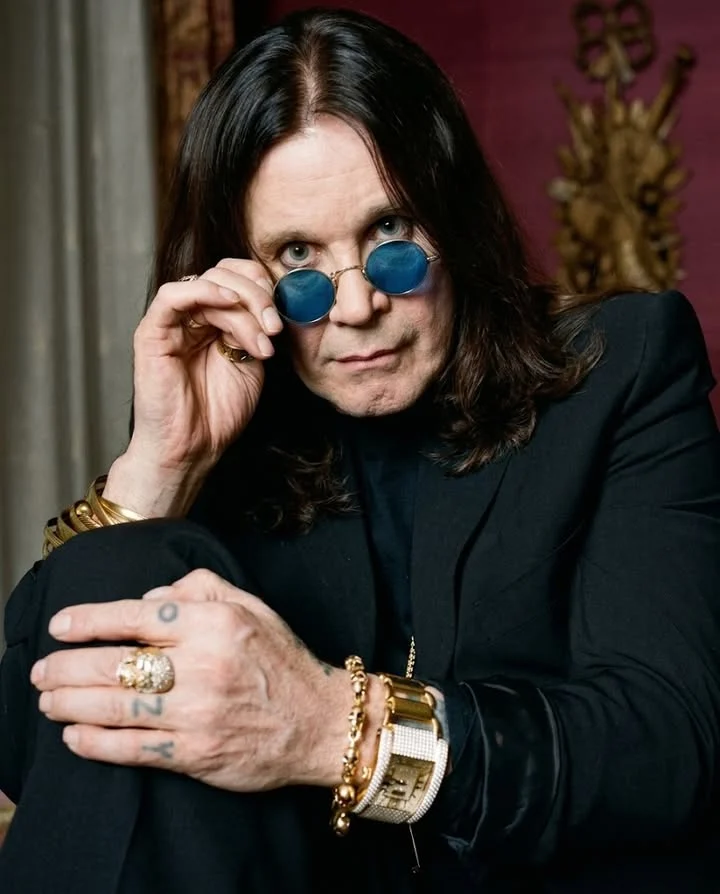
When the lights rose over Birmingham in 2017, Ozzy Osbourne stood at the end of a long road that began in slaughterhouses and plumbing jobs. The heavy metal legend who helped create an entire genre had survived addiction, grief, and self destruction because he finally stopped hiding his flaws.
He did not come from a conservatory or a polished studio world. He came from Aston, a working class district in Birmingham, where the clang of machines and the weight of limited hope shaped his voice. Black Sabbath turned that industrial gloom into songs like “Iron Man”, and Ozzy made a quiet city feel dangerous and alive.
The climb was brutal. By 1979, addiction had cost him his place in the band he helped build. That moment could have ended his story. Instead, it became the turning point. Guided by his future wife Sharon and powered by Randy Rhoads, he released Blizzard of Ozz in 1980 and proved he could command a stadium on his own.
For decades, he wore the title Prince of Darkness while revealing the human fear beneath the theatrics. He launched Ozzfest in 1996 and gave young bands a massive stage. He also carried the shock of Rhoads dying in a 1982 airplane crash. Fans did not follow him only for riffs. They followed a man who fought his demons openly and kept singing.
His survival became part of the music, and his honesty became part of the legend.
The legacy built from factory noise still outlasts eras of rock. Yet the deeper truth is personal. The 1980 revival and the decades that followed were held together by family, love, and a refusal to hide the broken parts. That is how the Prince of Darkness stayed alive to sing another day.