
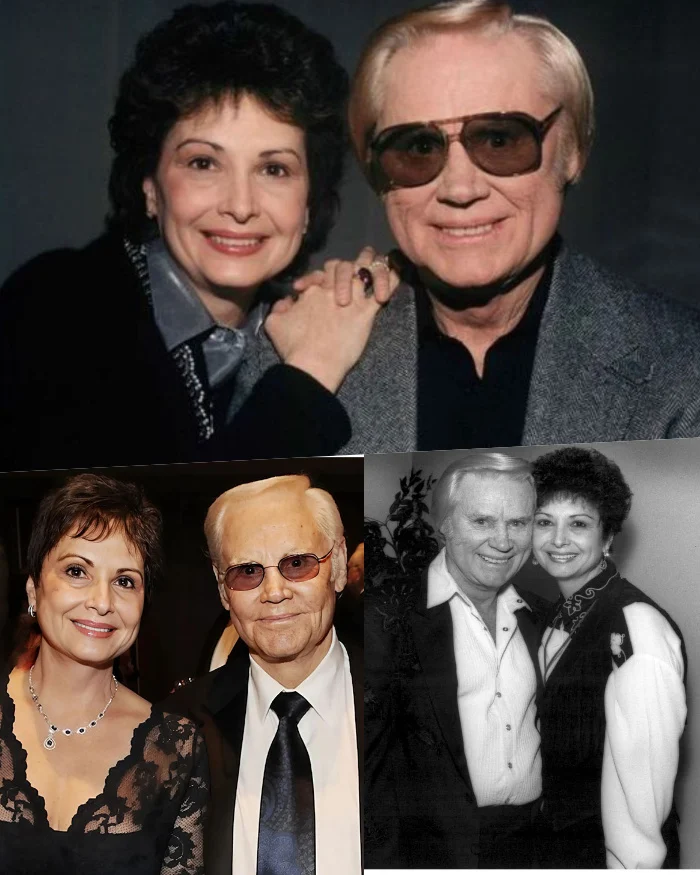

In the sterile glare of a Tennessee hospital room in March 1999, Nancy Sepulvado Jones kept a silent vigil beside the broken body of country music giant George Jones. The crash had left him with a ruptured liver, a collapsed lung, and internal bleeding. Doctors at Vanderbilt University Medical Center were unsure whether his voice or his body would recover. Nancy stayed at his bedside through the intensive care ordeal, and when he opened his eyes, he saw the wife who had refused to leave.
That hospital scene was the climax of a rescue that began sixteen years earlier. On March 4, 1983, George Jones and Nancy Sepulvado married at his sister Helen Scroggins’ home in Woodville, Texas. Jones was fifty-one and already revered as one of the purest voices in country music history. Offstage, his life was sinking under severe alcoholism, cocaine addiction, mounting lawsuits, and missed concert dates.
Promoters had learned to fear his contracts. His chronic cancellations had earned him the painful nickname No Show Jones. Insurance underwriters refused coverage. Venues grew wary. When Nancy became his fourth wife, she did not settle for the role of touring companion. She took command of his daily operations.
Her first decisive move was to clear out the network of enablers who had surrounded him for decades. She dismissed predatory associates, barred uninvited hangers-on from their property, and personally audited his road contracts. To stop impulsive benders, she controlled his daily cash and held his car keys when the urge to flee toward a roadside tavern took hold. She absorbed anger from former friends and from Jones himself.
Behind the scenes, Nancy untangled tax liens, unpaid debts, and missed-concert penalties that threatened to bankrupt him. She negotiated directly with frustrated promoters and personally guaranteed that Jones would walk onto each stage on time. By routing tours carefully and keeping booking revenues accountable, she repaid creditors and restored his commercial standing across the touring circuit.
The intervention brought professional stability through the 1980s and 1990s. Jones returned to the studio with renewed stamina. He headlined major arena bills and recorded hit duets that kept his voice anchored in the national consciousness. Nancy traveled with him on every tour bus, standing near the wings each night with his wardrobe, coffee, and cue sheets.
Old battles did not surrender easily. On March 6, 1999, a severe relapse led to a violent single-car crash along Tennessee Highway 96 near their Williamson County home. Jones was rushed to Vanderbilt University Medical Center in critical condition. Doctors placed him on life support. Nancy maintained her quiet vigil in the intensive care unit.
She chose to stay through the darkest chapters until the music found peace
When Jones regained consciousness and looked up from the hospital bed, seeing his wife standing guard through the wreckage changed something fundamental within him. The crash became the definitive turning point. He was discharged from Vanderbilt and entered treatment, choosing complete sobriety for the remaining fourteen years of his life.
He returned to the stage without the cloud of unpredictability that had shadowed his early decades. He sang with unvarnished clarity and steady phrasing. In later years, Jones earned the Kennedy Center Honors, was inducted into the Country Music Hall of Fame, and received a Grammy Lifetime Achievement Award. Whenever he accepted those honors under national spotlights, he pointed the praise away from his own voice and toward the woman at his side.
George Jones died in April 2013 at age eighty-one. He did not leave behind a tragic cautionary tale. He left an enduring catalog of American music, rescued and sheltered by a wife who made private decisions that rebuilt his finances, protected his voice, and guided country music’s most turbulent icon back to the road.