
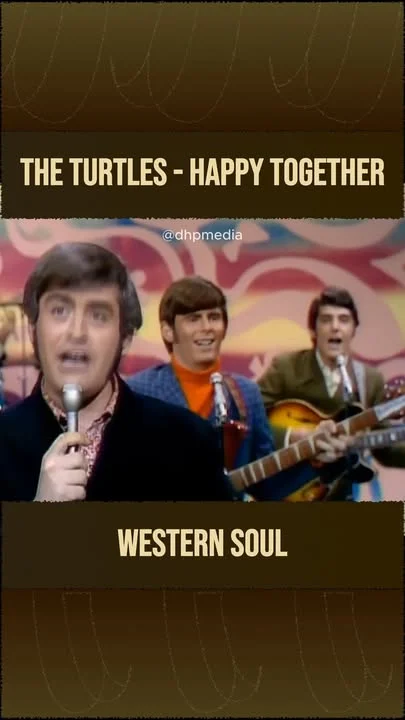
Picture this It is the summer of 1967. The air smells of freedom and possibility. From a crackling radio, a bassline begins to pulse, simple and irresistible. Then voices burst in, layered and joyful, singing about a love so certain it feels written in the stars. That song is Happy Together by The Turtles. From the very first note, it grabs hold and refuses to let go. For more than half a century, this track has been a universal shorthand for pure, uncomplicated happiness.
What makes a song transcend its era? In the case of Happy Together, it is the perfect marriage of simplicity and sophistication. While the late 1960s saw rock music diving into psychedelic experiments and social commentary, The Turtles chose a different path. They offered a melody so bright and a sentiment so warm that it cut through the noise. Written by Garry Bonner and Alan Gordon, the song had been turned down by several artists before landing in the hands of Howard Kaylan and Mark Volman. Their interpretation was electric, and it shot straight to number one on the Billboard charts.
The lyrical hook is deceptively simple. Lines like
Imagine me and you, I do / I think about you day and night, it’s only right
capture a feeling everyone has experienced the daydream of a perfect love. There is no heartbreak here, no ambiguity just the pure glow of romantic optimism. That directness is what makes the song so relatable across generations. A teenager in the 2020s can feel the same flutter as a teenager in the 1960s.
Musically, the arrangement is a masterclass in building joy. It begins with that iconic bassline, then adds layer upon layer of harmony. The brass and strings provide a lush backdrop without ever overwhelming the vocals. The interplay between Kaylan and Volman creates a vocal depth that feels euphoric. Every element is crafted to amplify the theme of love and togetherness. This is why the song has become a staple in commercials, films, and television shows. It instantly evokes a specific feeling a carefree, nostalgic happiness that brands and filmmakers love to borrow.
The cultural footprint of Happy Together is enormous. It has appeared in movies like 50 First Dates and The Simpsons Movie, often used to underscore moments of pure joy or ironic contrast. Advertisers reach for it when they want to associate a product with warmth and positivity. And new audiences discover it every day through streaming playlists and social media trends. The song refuses to fade.
Cover versions have also kept the spirit alive. Artists from Simple Plan to Filter to The Flobots have put their own spin on the track, introducing it to punk, rock, and alternative fans. Each reinterpretation proves the durability of the original melody. No matter the genre, the core message of hopeful love remains intact.
For The Turtles, Happy Together became the crown jewel of their career. Other hits like Elenore and She’d Rather Be With Me are beloved, but none achieved the same iconic status. After the band disbanded, Kaylan and Volman continued as Flo & Eddie, carrying that same playful energy into new projects. But it is this one song that still brings strangers together on dance floors, in cars, and around campfires.
At its heart, Happy Together is about hope. It does not describe a relationship that already exists; it imagines one. It lives in the space of possibility, where love is perfect and endless. That is a powerful thing. It reminds us that happiness does not have to be complicated. Sometimes it is just a melody, a harmony, and a dream.
Me and you and you and me
No matter how they tossed the dice
It had to be
The only one for me is you
And you for me
So happy together
Half a century after its release, Happy Together by The Turtles still sounds fresh. It still makes people smile. It still feels like the first day of summer. That is the mark of a true classic a song that does not age because it captures a feeling that never goes out of style.