
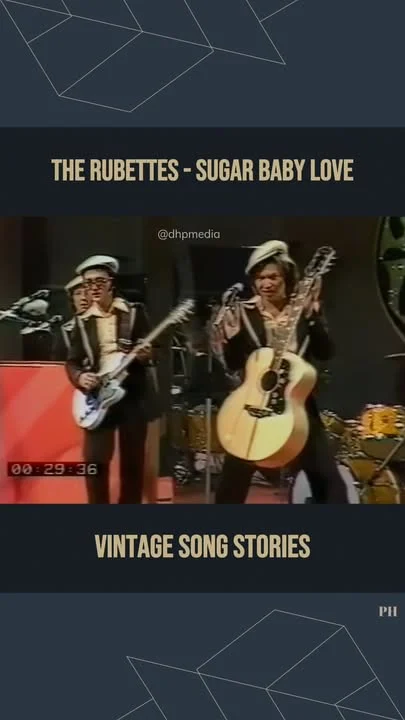
The first time you hear that falsetto—soaring, almost impossibly high—it stops you in your tracks. It is the kind of voice that seems to come from another era entirely, a spectral echo of doo-wop crooners and 1950s street corners. Yet the song belongs firmly to the 1970s, a decade that took retro influences and polished them into glittering pop perfection. That voice belongs to Paul Da Vinci, a session singer who stepped into the studio for the Rubettes and left behind one of the most indelible vocal performances in pop history. The song is Sugar Baby Love, and it has been transporting listeners for nearly fifty years.
Sugar Baby Love is more than just a song. It is a nostalgic journey into the heart of 1970s pop.
The track opened Wear It’s At, the debut album the Rubettes released in 1974. That album arrived at a curious crossroads in music history. Glam rock was still the dominant force on British radio, but a love for older sounds—rockabilly, doo-wop, early rock and roll—was bubbling beneath the surface. The Rubettes, with their distinctive white suits and harmonising vocals, became the band that bridged those two worlds. Producers Wayne Bickerton and Tony Waddington, already legends in the industry, understood the moment perfectly. They took a classic structure and wrapped it in modern production, creating an album that felt both familiar and fresh.
What makes Sugar Baby Love such a masterclass in pop songcraft begins with those elements most people notice first. The falsetto is not just a gimmick. It is the song’s emotional core, a cry of youthful longing that rises above the instruments like a beacon. Beneath it, the piano sets a playful, bouncing rhythm, while the guitar weaves in clean, jangly riffs that never overpower the melody. The rhythm section—tight drums and a grooving bassline—keeps everything moving forward with an irresistible danceability. There is a reason the song still fills floors at weddings and retro nights. It was built to move people.
But the subtle details reward closer listening. The layered backing harmonies, especially in the chorus, echo the doo-wop groups of two decades earlier. The production itself, built with analog tape and careful balancing, gives the song a warmth that digital recordings often lose. Bickerton and Waddington knew how to make every element sit in its own space. The falsetto reverberates just enough. The piano chords ring out clearly. The bass sits deep but never muddies the mix. It is the kind of craftsmanship that was standard in the 1970s but feels almost lost today.
Sugar Baby Love endures because it taps into something universal. The lyrics, simple though they are, speak about love and longing in ways that resonate across generations. The melody is infectious without being cheap. And that blend of nostalgia and modern flair gives the song a timeless quality. It does not sound dated. It sounds like a perfect moment preserved in amber.
For listeners hungry for more music in this vein, there are several tracks that share the same spirit. The Four Seasons classic December, 1963 (Oh, What a Night) captures a similar falsetto energy and celebratory tone. Elton John Crocodile Rock mixes retro rock and roll with glam pop in a way that echoes the Rubettes style. The Beach Boys Surfer Girl offers the lush harmonies and 1950s nostalgia that underpin so much of the Rubettes sound. ABBA Waterloo delivers the same blend of catchy melody and vibrant instrumentation that defined 1974. And Sha Na Na Blue Moon provides a direct line back to the doo-wop roots that the Rubettes so lovingly revived.
To return to Sugar Baby Love itself is to remember why music can feel like time travel. The song carries the listener back to a moment when pop was still brightly optimistic, when a falsetto could stop a party, when a band could revive an old style and make it new again. That is the power of the Rubettes debut. That is the power of a song that refuses to fade.