
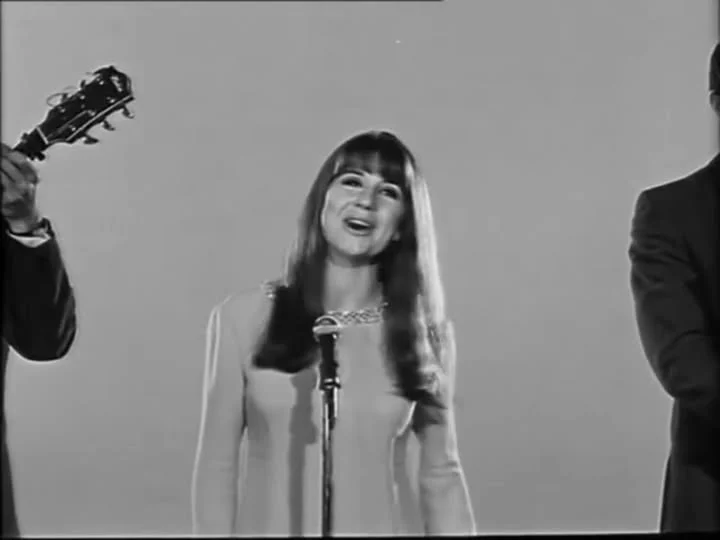
Let them have the noise and the rush. Let them have the chaos. The greatest act of rebellion in the mid-1960s was not a protest march or a radical manifesto. It was the simple, defiant act of closing a door and building a sanctuary of two. That is the enduring magic of The Seekers and their 1965 masterpiece A World of Our Own. In a decade shaking with change, this lilting folk-pop gem offered something far more radical than rebellion. It offered peace.
The song opens with an irresistible invitation. Close the door, light the light, we’re staying home tonight. These words are not just lyrics. They are a whispered promise of shelter. The track, written by Tom Springfield, brother of Dusty, does not shout its message. It draws the listener closer, into a warm circle of harmony where the bustle and the bright city lights simply fade away. This is the genius of The Seekers. They understood that the most powerful escape is not a journey outward but a journey inward, into a shared emotional fortress.
Yet to understand the profound impact of this song, one must first understand the four musicians who gave it voice. The Seekers—Judith Durham on lead vocals, Athol Guy on double bass, Keith Potger on twelve-string guitar, and Bruce Woodley on guitar—were pioneers. At a time when rock and roll dominated the airwaves, they offered something softer yet no less potent. They were the first Australian act to crack the UK and US charts, a feat built not on loud defiance but on crystalline harmonies and folk sincerity. Their music did not follow the trends. It created a gentle counter-current of its own.
The secret weapon was Judith Durham’s voice. In A World of Our Own, her lead vocal floats above the band’s harmonies with a clarity that is both vulnerable and resolute. She sounds not like a performer but like a trusted friend confiding a secret. The arrangement is deceptively simple. Acoustic guitars strum a bright, folk-inflected melody. The rhythm stays soft, unhurried. There is no complex production to distract. The song trusts its own beauty. This restraint is why it has aged like fine wood rather than cheap plastic. It does not belong to any single decade.
We’ll build a world of our own that no one else can share
All our sorrows we’ll leave far behind us there
These lines from the chorus capture the song’s central vision. Love is not just a feeling. It is an act of construction. The couple in the song are architects of a private reality. They plan to leave their troubles on the doorstep. In 1965, this message was especially potent. The world was torn by the Vietnam War, civil rights struggles, and a generational identity crisis. A World of Our Own became an antidote. It climbed to number three on the UK Singles Chart and number nineteen on the Billboard Hot 100. It offered millions of listeners a quiet place to breathe.
But the song’s legacy is not merely historical. It lives in the way it continues to feel urgently relevant. In an age of constant digital noise and relentless information, the desire to close the door and build a world of our own has only grown stronger. The Seekers crafted a blueprint for emotional sanctuary. They showed that a simple melody, sung with conviction, can create a space untouched by time. The song does not preach. It simply invites. And that invitation has never expired.
In the end, A World of Our Own is not just a song about love. It is a song about agency. It reminds us that even in the most turbulent times, we have the power to create a pocket of stillness. We can choose our own company. We can define our own peace. Over half a century later, the voices of The Seekers still ring out, offering that same gentle, radical truth. The world may be loud. But we can always build our own quiet corner. Close the door. Light the light.