
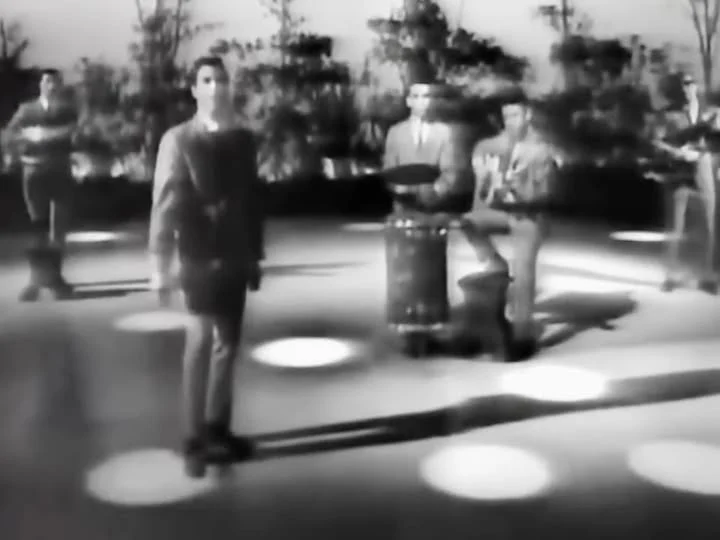
One night in 1961, a haunting falsetto echoed from American radios, carrying a melody that had already traveled thousands of miles and decades. That voice belonged to Jay Siegel of The Tokens, and the song was “The Lion Sleeps Tonight.” Few could have guessed that this pop sensation, with its hypnotic “Wimoweh” chant and dreamy jungle imagery, was born from a Zulu hymn composed by a man who never saw a penny of its fortune. The story of this tune is not just about music but about resilience, exploitation, and the strange alchemy of cultural exchange.
“In the jungle, the mighty jungle, the lion sleeps tonight.”
Before the shimmering harmonies of The Tokens conquered the charts, the song was rooted in the rich soil of South Africa. In the 1930s, Solomon Linda, a Zulu singer and songwriter, created “Mbube” — meaning “lion” in Zulu — with his band the Evening Birds. Recorded in 1939, the track blended traditional choral music with Western influences, giving birth to what later became known as Isicathamiya, a powerful a cappella style still revered today. Linda’s voice rose and fell in a captivating rhythm, a sound so unique it caught the ear of American folklorist Alan Lomax.
Lomax passed a copy to Pete Seeger of The Weavers, who adapted it as “Wimoweh” — a phonetic attempt at the Zulu chorus. The Weavers’ version found modest success in the 1950s, but it was not until The Tokens took hold that the song exploded. In 1961, George David Weiss, Hugo Peretti, and Luigi Creatore transformed the raw material into a polished pop masterpiece. They added lush vocal layers, a soaring falsetto lead, and the now-iconic opening hum that evokes a tranquil wilderness.
The result was immediate magic. “The Lion Sleeps Tonight” climbed to No. 1 on the Billboard Hot 100, becoming a global phenomenon. Its appeal crossed generations and cultures, appearing in films from The Lion King to countless commercials. Yet behind the success lay a painful truth: Solomon Linda received neither credit nor compensation while his creation enriched others. For decades, his family lived in poverty as the song generated millions.
This injustice finally surfaced in 2004 when Linda’s heirs filed a lawsuit against the music corporations holding the rights. A settlement in 2006 brought some restitution, but the case ignited a broader conversation about cultural appropriation and the exploitation of African artists. It underlined a simple but profound lesson — every global hit carries a history that must be honored.
Musically, the song remains a marvel. The interplay of bass, falsetto, and the grounding “Wimoweh” chant creates a soundscape both ethereal and rhythmic. It fuses doo-wop, pop, and Isicathamiya into a timeless blend that feels both ancient and fresh. More than six decades later, the melody endures, covered by artists like Ladysmith Black Mambazo and R.E.M., each adding their own twist while paying homage to the roots.
Today, “The Lion Sleeps Tonight” is a cultural artifact — a testament to the resilience of a song that crossed borders, survived exploitation, and still brings joy. It reminds us that music’s greatest power lies not just in its notes but in the stories it carries. The lion may sleep, but the song never fades.
Video
Lyrics
Weeheeheehee dee heeheeheehee weeoh aweem away
Weeheeheehee dee heeheeheehee weeoh aweem away
In the jungle, the mighty jungle
The lion sleeps tonight
In the jungle the quiet jungle
The lion sleeps tonight
Wee heeheehee weeoh aweem away
Wee heeheehee weeoh aweem away
Near the village, the peaceful village
The lion sleeps tonight
Near the village, the quiet village
The lion sleeps tonight
Wee heeheeheehee weeoh aweem away
Rrr, la la la weeoh aweem away
Hush, my darling, don’t fear, my darling,
The lion sleeps tonight
Hush, my darling, don’t fear, my darling,
The lion sleeps tonight
Wah oh oh, wah oh oh, wah oh wimoweh
Weeheeheehee dee heeheeheehee weeoh aweem away
Weeheeheehee dee heeheeheehee weeoh aweem away