
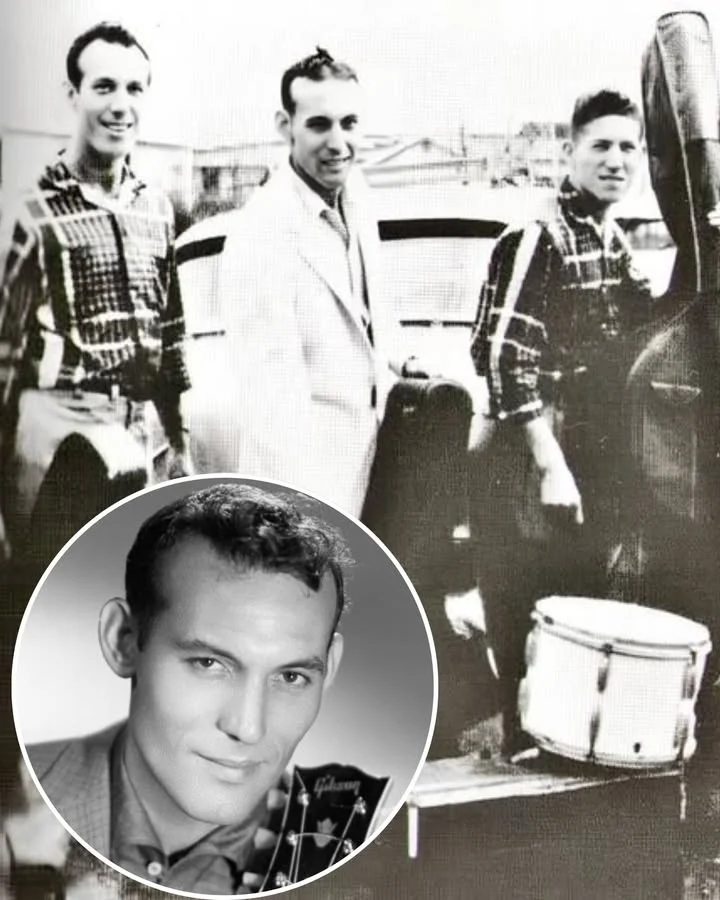
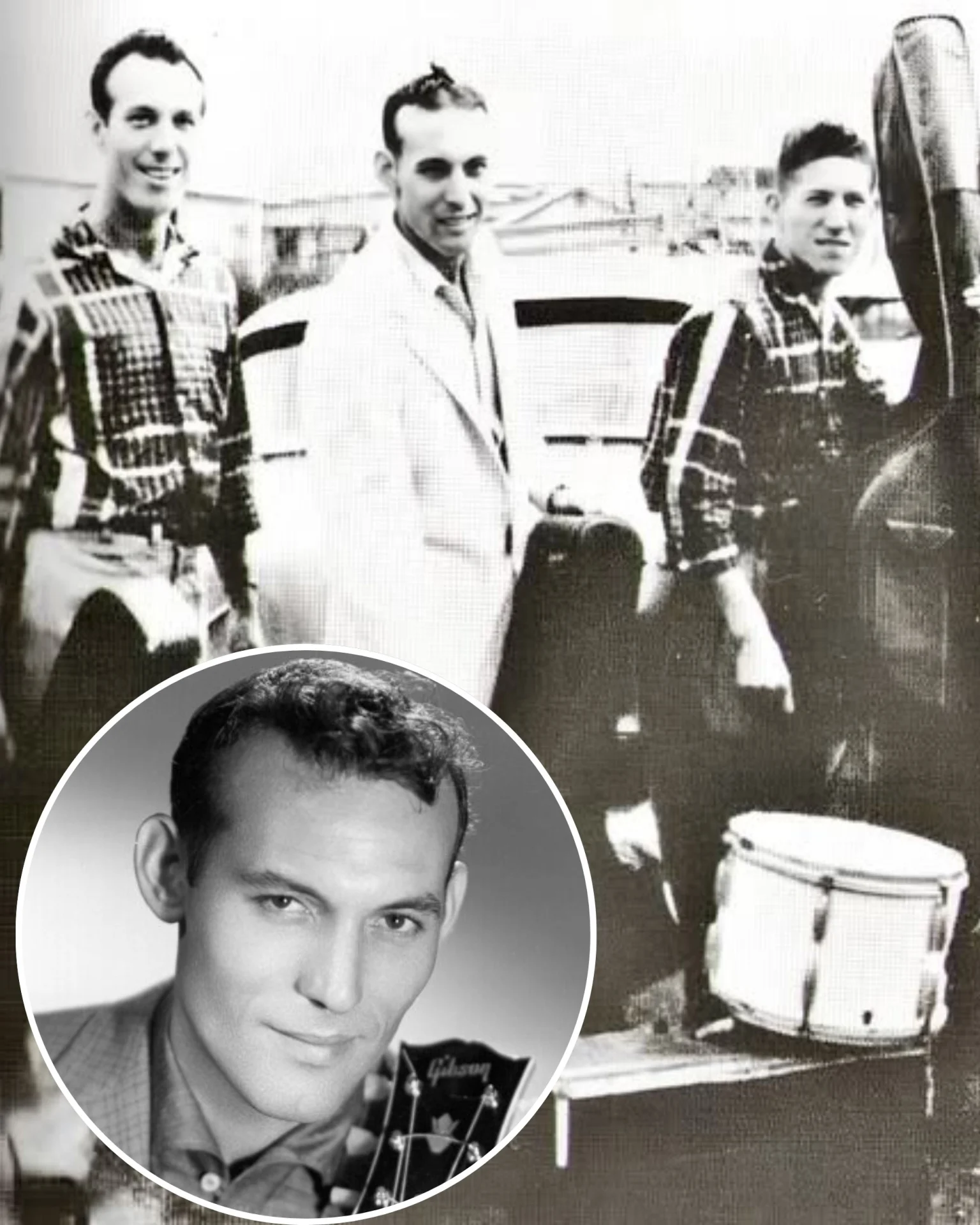
The roar of a car engine near Dover Delaware in 1956 was the last sound the Perkins family band heard together before everything changed. Carl Perkins was inside with a broken collarbone and fractured skull. His brother Jay was bleeding in the front seat, a brain tumor silently growing that would take him just two years later. The family band that helped build the sound of rock and roll was shattered before the world even knew their names.
“Jay’s death became one of the reasons I leaned harder on alcohol,” Carl later admitted.
The Perkins brothers came from the fields of Jackson Tennessee before they ever stepped onto a stage. Carl, Jay, and Clayton grew up in a tenant farming family where music was a release valve from hard labor. Carl stood out front. Jay played rhythm guitar. Younger brother Clayton worked the upright bass.
They started playing together in the 1940s long before Sun Records entered the picture. They were working men carrying the hard habits of field work into honky tonks at night. Music was not separate from survival. It was part of the same attempt to get through.
When Carl heard Elvis Presley’s first Sun records, he recognized a mixture of country and rhythm and blues that the Perkins brothers had already been perfecting in Tennessee dance halls. Jay and Clayton went with him to Memphis to audition for Sam Phillips. The family unit remained intact.
When Carl recorded Blue Suede Shoes in December 1955, the record carried the distinct imprint of the Perkins Brothers Band. Jay’s rhythm guitar and Clayton’s bass sat underneath a track that crossed country, pop, and R&B charts, launching them into the heart of the rockabilly movement.
“The brothers did not have to invent chemistry. They had grown up inside it.”
Then came the trip to New York. National television appearances were finally on the horizon. Near Dover Delaware the car crashed. Carl suffered serious injuries, and Jay was badly hurt as well. He returned to the stage but never fully healed. A brain tumor was diagnosed, and Jay died in 1958.
The career continued. Carl toured, wrote songs, played sessions with Johnny Cash, and earned the admiration of the Beatles. But the original family band had been profoundly altered. The person who helped build the sound before anyone outside Tennessee knew their names was gone.
Years later Carl was still surrounding himself with family onstage. By the 1980s his sons Stan and Greg were playing in his road band carrying the Perkins name into another generation. The lineup had changed but the instinct had not. Carl Perkins kept making music with people who came home with him when the show was over.
The deepest part of Carl Perkins’s rise is not simply that Blue Suede Shoes helped define rockabilly. It is that the record still carried the sound of a family band. A sound built by three brothers who started with very little found a rhythm together and reached the edge of enormous possibility before accident and death altered the shape of the dream forever.