
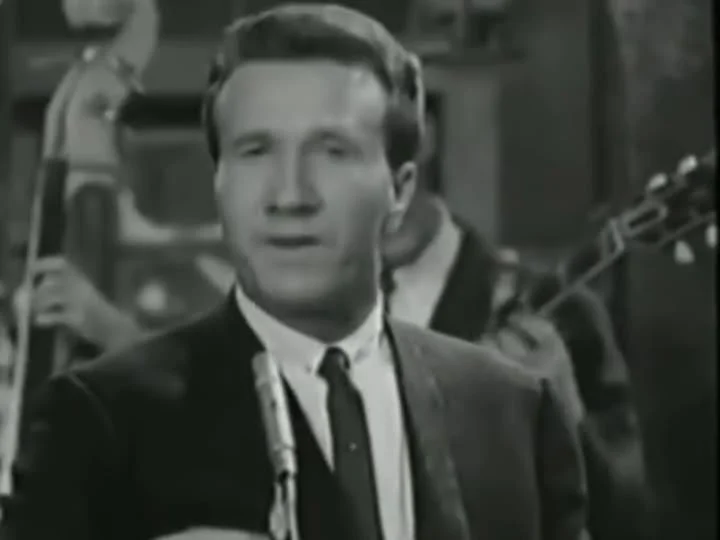
The torment begins with a single plea, a desperate cry trapped in the amber of 1962: “Devil Woman, let me be / And leave me alone, I want to go home.” Marty Robbins immortalized that ache in a song that still sends chills across generations. A man haunted by forbidden love, a woman who embodies temptation like a dark coral reef, and the faint glimmer of redemption waiting in a shack by the sea — this is the raw emotional landscape of “Devil Woman.” Released on an album of the same name, it quickly climbed to number one on the Billboard Hot Country Singles chart and crossed over into the Top 20 of the Hot 100, cementing Robbins as a master storyteller whose voice could carry both sweetness and sorrow.
Long before this dark ballad, Robbins had already earned his place in country music. Known for his smooth tenor and a knack for weaving narratives around love, loss, and second chances, he took a sharper turn with “Devil Woman.” Where earlier songs often leaned toward hopeful redemption, this track plunged into the shadows of betrayal and compulsion. Yet Robbins never lost his grip on sincerity. The song unfolds from the perspective of a man ensnared by a lover he calls his “Devil Woman.” His words feel like confessions whispered in the dark — raw, fragmented, and soaked in shame. The religious symbolism is unmistakable: he speaks of being under a spell, cursed, trapped by something beyond his control. It is not merely a love story; it is a moral struggle set to a haunting melody.
“Devil Woman, you’re evil, / Like the dark coral reef. / Like the winds that bring high tides, / You bring sorrow and grief.”
The musical arrangement complements the weight of those words. A simple but steady rhythm, sweeping guitar lines, and Robbins’ voice — filled with both anguish and resignation — create a sense of inevitability. The listener feels the protagonist’s helplessness, as if he is being pulled toward his fate with no power to stop it. This emotional honesty is what makes the song resonate more than six decades later. Everyone has known a relationship that felt intoxicating and inescapable, where love and pain become indistinguishable.
But beneath the surface of heartbreak lies a deeper yearning for redemption. The protagonist longs to break free and return home, a place that symbolizes innocence and peace before the entanglement began. “Mary is waitin’ and weepin’ / Down in our shack by the sea” — Mary represents forgiveness, a second chance. Yet the song does not offer a clean resolution. The final verse shows him running along the seashore, determined to leave the Devil Woman behind, but the lingering uncertainty remains. Robbins leaves listeners with that sense of ambiguity, reflecting how real-life relationships rarely offer tidy endings.
Over the years, “Devil Woman” has been covered by many artists, each bringing a different shade to the narrative. Yet Robbins’ original remains untouched — his voice carries the weight of a man who has lived the pain he sings about. The song endures not only because of its craftsmanship but because its themes are universal: regret, the allure of the forbidden, the struggle for forgiveness. New generations discover it and find their own stories mirrored in the lyrics.
In the realm of country and western music, storytelling is everything. Marty Robbins proved with “Devil Woman” that a simple song can explore the most complex corners of the human heart. It is a ballad that haunts long after the last note fades — a true classic, bound to stay with you like the tide pulling at the shore.
Video
Lyrics: “Devil Woman”
I told Mary about us.
I told her about our great sin.
Mary cried and forgave me,
Then Mary took me back again,
Said if I wanted my freedom
I could be free ever more.
But I don’t want to be,
And I don’t want to see
Mary cry anymore.Oh, Devil Woman,
Devil Woman, let go of me.
Devil Woman, let me be,
And leave me alone.
I want to go home.Mary is waitin’ and weepin’
Down in our shack by the sea.
Even after I’ve hurt her,
Mary’s still in love with me.
Devil Woman it’s over,
Trapped no more by your charms,
Cause I don’t want to stay.
I want to get away.
Woman let go of my arm.Oh, Devil Woman,
Devil Woman, let go of me.
Devil Woman, let me be,
And leave me alone.
I want to go home.Devil Woman, you’re evil,
Like the dark coral reef.
Like the winds that bring high tides,
You bring sorrow and grief.
You made me ashamed to face Mary.
Barely had the strength to tell.
Skies are not so black.
Mary took me back.
Mary has broken your spell.Oh, Devil Woman,
Devil Woman, let go of me.
Devil Woman, let me be,
And leave me alone.
I want to go home.Runnin’ along by the seashore,
Runnin’ as fast as I can.
Even the seagulls are happy,
Glad I’m comin’ home again.
Never again will I ever
Cause another tear to fall.
Down the beach I see
What belongs to me,
The one I want most of all.Oh, Devil Woman,
Devil Woman, don’t follow me.
Devil Woman let me be,
And leave me alone.
I’m goin’ back home.