
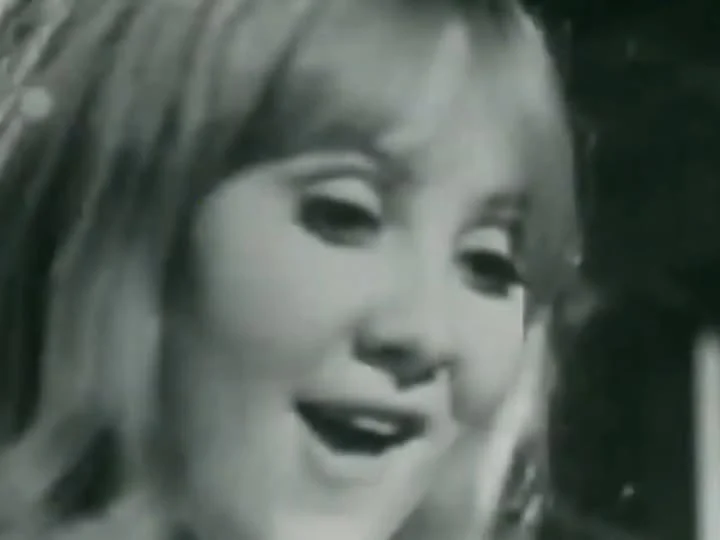
The studio air crackled with barely contained energy. A teenage girl from Glasgow, just fifteen years old and carrying a voice that could rattle bones, stood before a microphone. Her name was Marie Lawrie, soon to be known as Lulu. That moment in 1964, captured on tape with The Luvvers, produced a record that didn’t simply enter the British pop conversation—it detonated. Her cover of The Isley Brothers’ 1959 gospel-R&B stormer Shout became something far greater than a debut single. It was a sonic call to arms, a declaration that British pop had found its wild, untamed heart.
Released on Decca, the single powered into the UK Top 10, peaking at number seven. Yet its chart position tells only half the story. This was the foundation stone of Lulu’s entire career, proving she was no fleeting novelty. Producer Peter Sullivan understood the assignment: instead of polished Merseybeat, he went for a sound that felt live, savage, and deeply rooted in American rhythm and blues. The result was a record that felt less like a studio creation and more like a live wire left exposed.
A Voice That Refused to Be Polite
Listen to Shout on quality equipment today and the mix still feels gloriously chaotic. The track opens with a sharp, almost aggressive burst. The Luvvers lock into a rhythm that is punishingly simple—a bassline that pounds like a fist on a table, drums miked too close, capturing every snare snap and cymbal splash. Two electric guitars spar: one chunky and rhythmic, anchoring the groove; the other cutting through with blues-inflected fills, channeling the call-and-response of the original gospel source. A Hammond organ swirls beneath, subtle but soulful. No strings, no woodwinds, no sophistication. This is sweat-and-leather rock and roll.
It was participatory music that broke the polite fourth wall of pop.
But the real event is the voice. Lulu does not sing Shout so much as attack it. Her Scottish accent cuts through the phrasing, injecting a grit that contrasted sharply with the smoother female voices of the era. She moves from a conversational opening to a full-throated ecstasy, and at the famous breakdown—when she commands the room to get louder, lower—she becomes an R&B preacher, defiant and irresistible. It’s a masterclass in controlled abandon.
Liberation on the Dance Floor
Picture a school dance in a provincial town. The air is thick with adolescent awkwardness. Then the DJ drops Shout. Suddenly, stiff-backed teenagers drop to their knees, shouting the refrain as Lulu instructs them. This record gave young people a script for communal release. It wasn’t just music to listen to; it was music to inhabit.
For Lulu and The Luvvers, the single’s success ensured their debut album Something to Shout About (1965) became a highly anticipated event. It was the moment she transcended the regional band circuit and became a fixture in British pop, a path that would later lead to Bond themes, collaborations with David Bowie, and international fame. Yet the raw, unpolished energy of Shout remains the benchmark. It’s a teenage roar preserved in amber, the sound of an artist finding her voice by stealing the voice of an entire genre and making it her own.
This is less about technical studio wizardry and more about capturing lightning in a bottle.
The song’s narrative drive is built on a simple, powerful premise: catharsis through collective movement and sound. It builds, drops, and explodes—a complete emotional journey in under three minutes. The heavy backbeat and insistent guitar riff give it timeless swagger. It screams “live performance” from the speakers, a true artifact of the British R&B boom.
Recommended Listening: The Grit and The Glory
If the raw energy of Lulu’s Shout speaks to you, these tracks share a similar spirit of defiant, unpolished R&B and rock:
Them – “Gloria” (1964): Garage-rock rawness driven by Van Morrison’s powerful vocal attack.
Dusty Springfield – “I Only Want to Be with You” (1963): A touch more polished but equally pivotal in translating American soul to the UK.
The Animals – “Baby Let Me Take You Home” (1964): Another British Invasion R&B cover brimming with grit and blues-based energy.
The Liverbirds – “Diddley Daddy” (1966): A rare female-led beat group delivering unpolished R&B.
The Who – “Anyway, Anyhow, Anywhere” (1965): Explosive defiance and propulsive energy in its core rhythm.
The Isley Brothers – “Shout” (1959): Essential to understand the gospel roots and call-and-response dynamics of Lulu’s source material.