
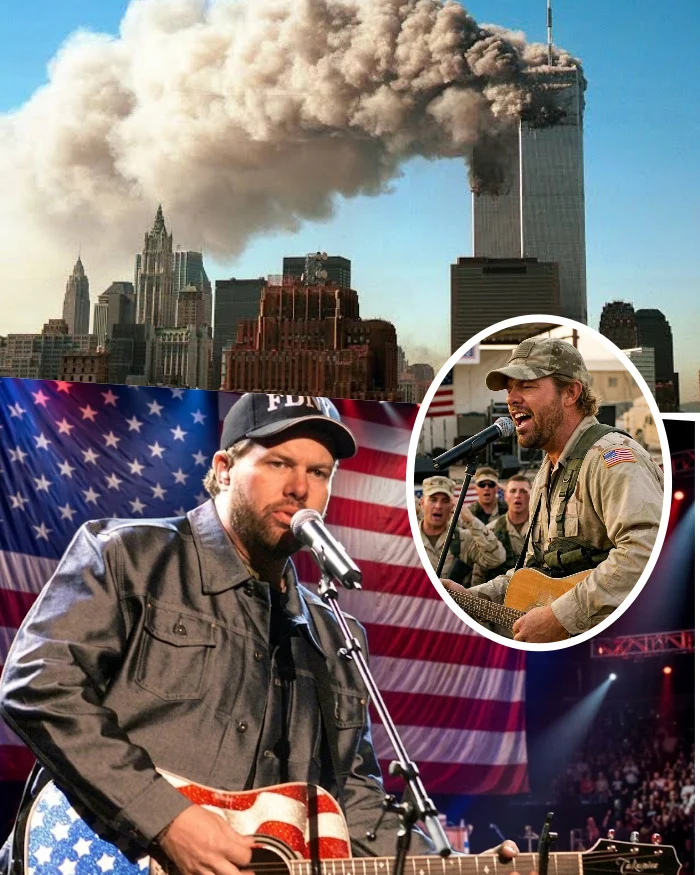
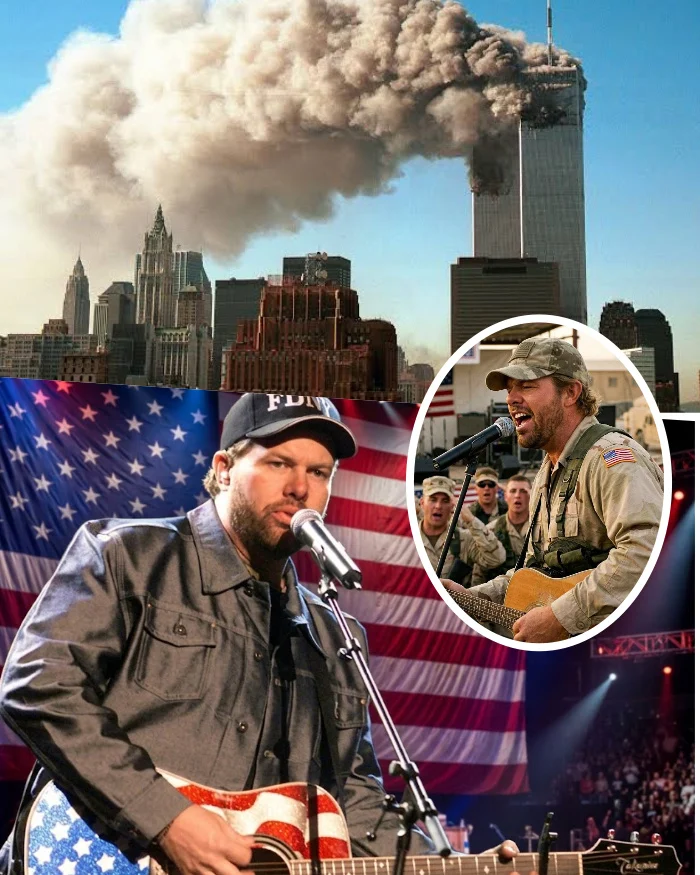
He sold out the biggest stadiums of America, but his most important performances happened on plywood stages where the applause was interrupted by incoming mortar fire.
Toby Keith sold out stadiums across America, but his most important stages were built in the dust of Iraq and Afghanistan. Over the course of a remarkable career, Toby Keith did not just sing about patriotism from the safety of a recording studio. He backed his words with action, completing 11 USO tours over more than a decade and performing for over 250,000 service members across 17 countries, including some of the most volatile combat zones in the world.
He willingly left the comfort of climate controlled arenas and comfortable arenas to board military helicopters flying low over the hostile terrain of Iraq and Afghanistan. Instead of playing exclusively at large and secure military headquarters, he played at large military installations and actively sought out the most remote Forward Operating Bases and traveled to some of the most remote outposts.
These were isolated and dusty outposts where running water was scarce, entertainment was nonexistent, and the threat of danger was a daily reality.
That commitment was frequently tested under real fire. During a 2008 show in Kandahar, a sudden mortar attack forced the concert to abruptly halt as alarms echoed across the base. There were times he had to pause a set to take shelter from incoming mortar fire, only to walk back to the microphone and finish the song.
Instead of rushing to an extraction point, Keith spent over an hour sheltering in a concrete bunker alongside the troops. He passed the time signing autographs and lifting spirits until the all clear sounded, and then he simply walked right back out to the microphone and finished his set.
His patriotism was not a performance, but a lifelong promise kept for the men and women who held the line.
That unwavering dedication to the military was rooted in a deeply personal and specific family history. His father, Hubert Keith Covel, was a military veteran and an Army veteran who had lost an eye during his service and during a military training mission in the 1950s.
Growing up in an Oklahoma household, Keith was raised by a man who taught his children that respecting those who wore the uniform was an absolute and nonnegotiable duty. Long after his father passed away in a tragic accident in 2001, that foundational lesson and that background continued to direct the path of the singer and of Keith, pushing him to bring his music directly to the front lines.
He viewed the grueling travel schedules and dangerous overseas flights not as a publicity requirement, but as a personal obligation to the memory of his father. It pushed him to show up for a new generation of soldiers who were fighting far from their own families, and he turned a personal loss into a decade of showing up for American troops.
The reality of those combat zone tours extended far beyond the music itself. After the acoustic sets ended, the interactions often shifted into something profoundly heavy, as service members frequently approached him to press the dog tags of fallen comrades into his hands. Instead of standard fan encounters, soldiers pressed their dog tags into his hands.
Those unrecorded conversations happened quietly, far away from any media cameras or press handlers. Soldiers would step up to share the stories of who those fallen men were before the war, detailing the hometowns and families they had left behind.
The country star simply listened, accepting the heavy metal tags and keeping them close as a silent promise to carry their memories safely back to American soil.
He never exploited those encounters for headlines. For the men and women handing over those precious mementos and in the crowd who were fighting a war, Keith was more than a visiting celebrity. He was a trusted guardian of their grief, providing a brief but powerful slice of home and a piece of home for troops who had been deployed for months in austere conditions, for a couple of hours a guy from Oklahoma brought them home.
His sustained dedication to troop morale eventually earned him the Spirit of the USO Award in 2014, and in 2014 he received the Spirit of the USO Award for this sustained commitment. The military community recognized that his presence in combat zones was not a brief promotional phase, but a sustained commitment to standing in the mud alongside them.
Yet the true measure of his legacy was never found in the formal recognition or the plaques. It was found in those quiet moments on makeshift stages, where a guy with a guitar looked out at a sea of camouflage and saw the reflection of his own veteran father. The specific routes he took through those combat zones and the unrecorded conversations he had with the soldiers who handed him those dog tags reveal a side of his career that no chart record could capture.
The music charts will forever record his massive commercial hits, and the history books will note the roar of the stadium crowds. But his truest legacy was built in the dust of the Middle East and in the dust of Iraq and Afghanistan, where he proved that his patriotism was not a performance, but a lifelong promise kept for the men and women who held the line.