
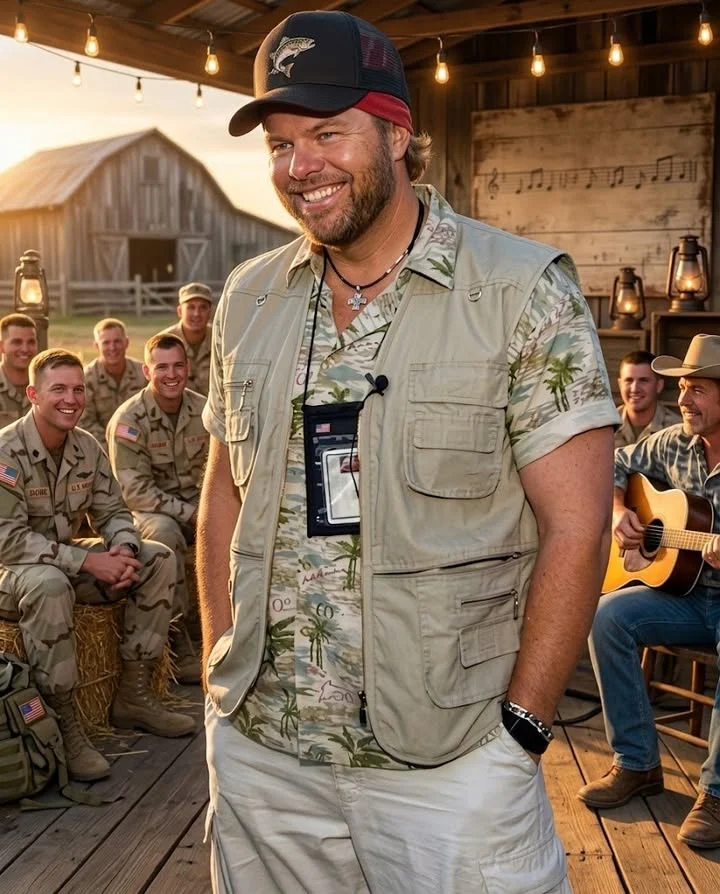
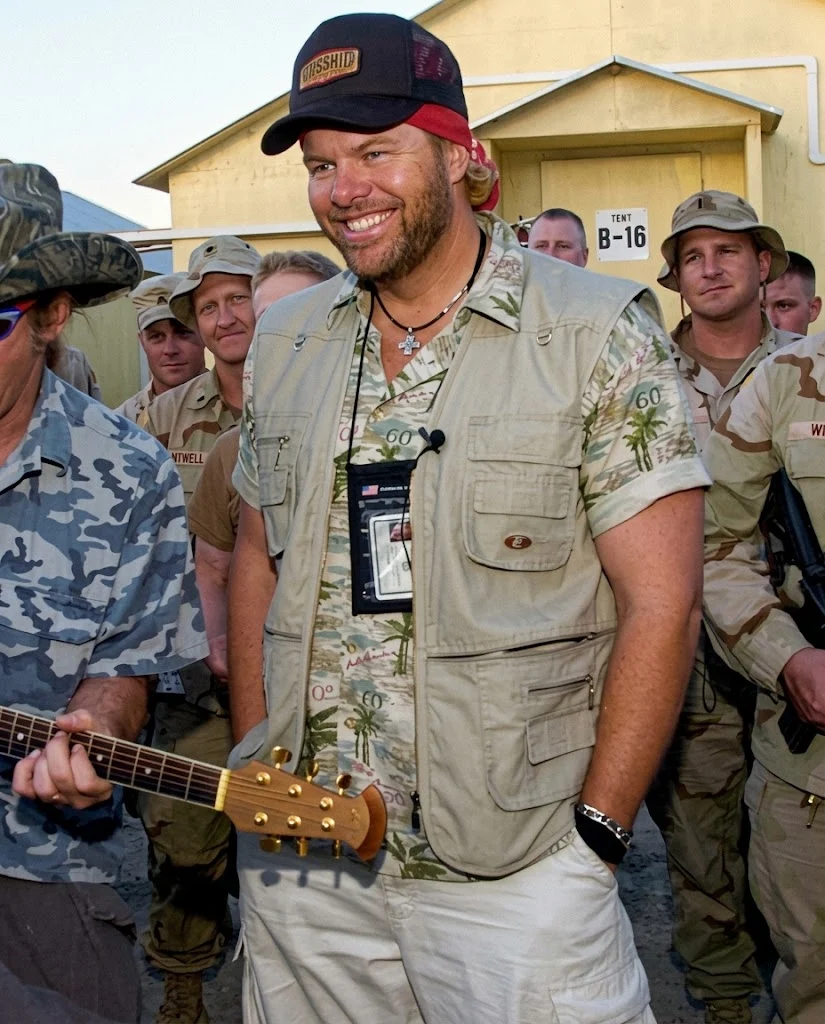
Stacks of handwritten letters arrived from spouses, parents, and grandparents across America, and each note carried a quiet plea answered in a war zone. Toby Keith had spent years bringing a piece of home to service members who stood under a harsh desert sky, and those letters revealed the human weight of his road schedule.
He was a country music giant who could fill arenas across the United States, yet the crowds that demanded the most from him were not waiting under bright lights. They were soldiers at remote military checkpoints in Iraq and Afghanistan, where dust, heat, and danger framed every performance.
Beginning in the early 2000s, Keith joined more than 11 global USO tours. He bypassed comfortable stops and traveled directly into active combat zones, performing for hundreds of thousands of service members over many years. In 2014, the USO honored that long commitment with the Spirit of the USO Award.
The shift from polished stages to wartime entertainment was stark. Keith left behind elaborate pyrotechnics and controlled arenas. He stepped onto makeshift wooden platforms in the desert, where his acoustic guitar often had to compete with the roar of helicopter blades and the distant rumble of military operations.
These shows were not glamorous. There were no massive video screens or dazzling light rigs. Often, it was just a man, a guitar, and a crowd dressed in camouflage, standing shoulder to shoulder beneath a punishing sky. For two hours, the dust and danger faded. The soldiers became young men and women from Oklahoma, Texas, and Ohio, singing along to radio hits they grew up with.
Yet the music was only half of the mission. When the final chord rang out, Keith did not retreat. He walked through quiet halls in military hospitals in war zones and stateside bases. He spent hours shaking hands at isolated outposts, looking troops in the eye and offering a firm reminder that they had not been forgotten by the country they were defending.
That drive came from a personal foundation. Keith grew up watching his father, an Army veteran, and understood the weight of military service. He knew the sacrifices demanded of soldiers wearing boots and of families waiting around kitchen tables for a phone call.
The 2014 award recognized his physical time overseas, but the deeper measure arrived quietly in the mail. Handwritten notes came from families living with the daily anxiety of deployment. They thanked a singer for doing what they physically could not do, standing beside their loved ones in a war zone and bringing their children a few minutes of peace and normalcy when they needed it most.
For a man who dominated radio and box office charts, those letters carried more weight than platinum records. His career will always be measured by millions of tickets sold and decades at the top of the charts. His truest legacy was built far from the spotlight.
He did not just sing about the country, he carried a piece of it directly to the people who needed it.